
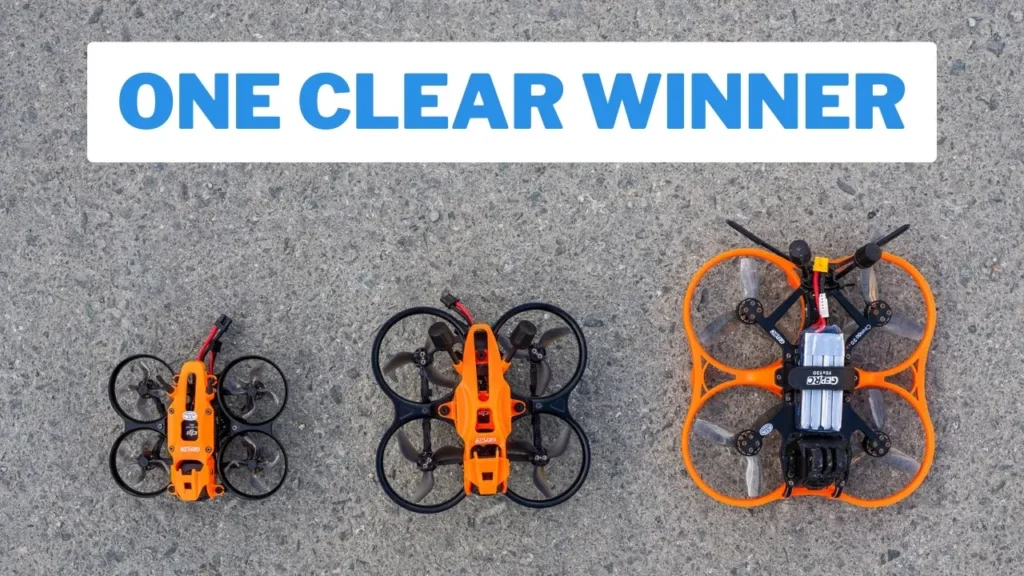
So, you’re looking to buy a cinewhoop and you’ve come across three popular options from GEPRC. At first glance, they all look similar compact, sub-50 cinewhoops but once you fly them, you quickly realize they behave very differently.
Each drone is designed with a specific flying style in mind. In this article, we’ll break GEPRC DarkStar 16 vs DarkStar 22 vs Cinelog 30 V3, how each drone flies, how they’re built, and which one best suits your needs before you decide to buy.
Purpose & Use Case
The DarkStar 16 is the smallest of the three and is ideal for tight indoor flights or low-risk cinematic shots where space is limited. It’s quick, nimble, and a lot of fun to fly, but flight times are short, averaging around three and a half minutes.
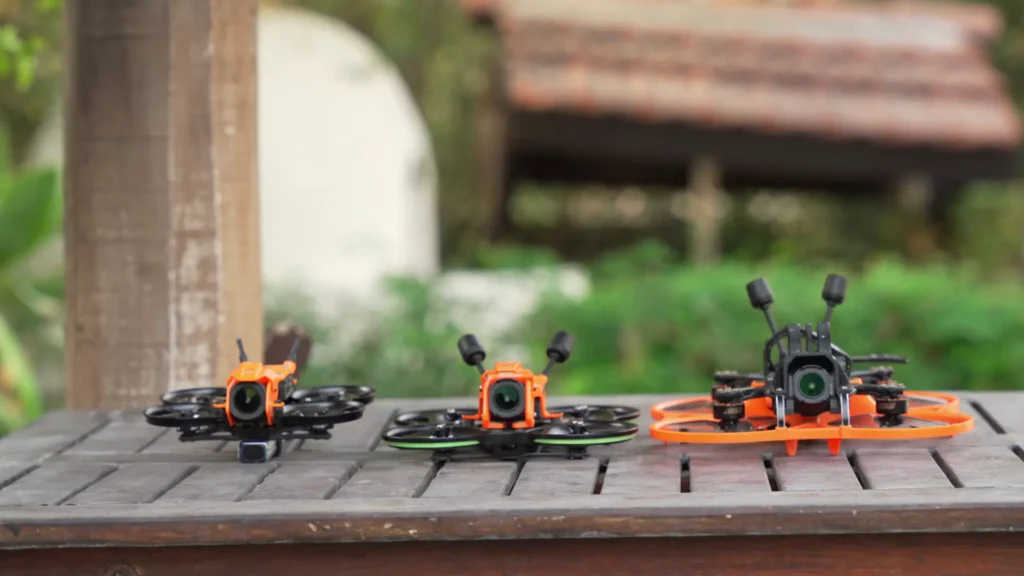
The DarkStar 22 really hits the sweet spot. It’s lightweight, sub-250 grams, and delivers noticeably longer flight times anywhere from three to seven minutes depending on your setup. It offers a great balance of power, endurance, stability, and agility, making it a true all rounder.
Then there’s the Cinelog 30 V3. It’s slightly heavier but incredibly stable. This pusher style drone, with its motors mounted upside down, delivers a smooth and cinematic flight feel. What really separates these drones isn’t just how they fly, but also how they’re built.
Build & Design
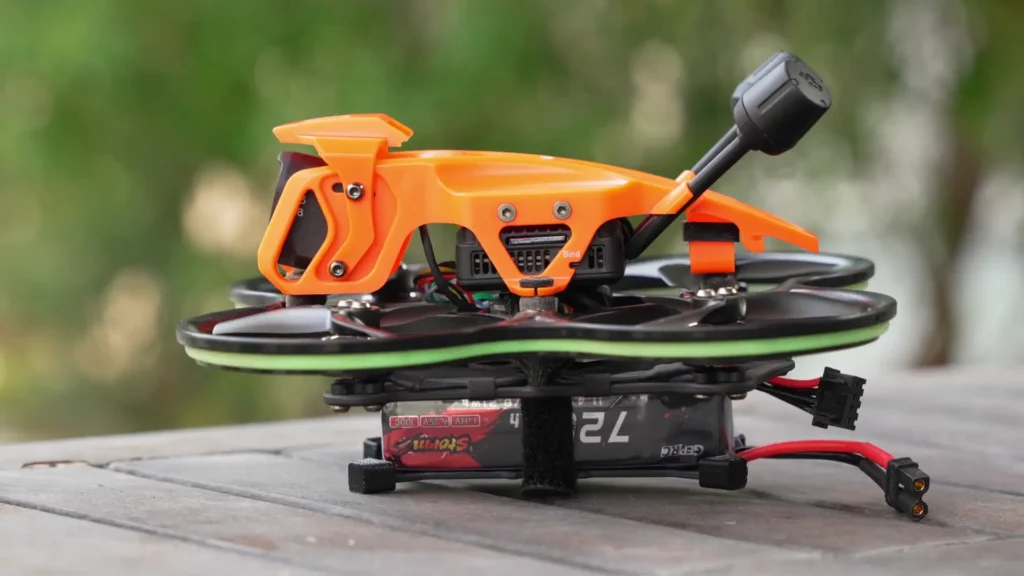
Each drone has a distinct design philosophy, and you can feel it in the air. The Cinelog 30 V3 follows GEPRC’s more traditional cinewhoop design. It’s a pusher drone with a top mounted battery and a camera dampening system that helps keep footage smooth.
However, this system is also one of its weak points. Along with the antenna mounts, these components can pop loose during hard landings or even get caught in the props if you’re not careful. Despite this, it remains a smooth, stable, and enjoyable drone to fly.

- Equipped with O4 Pro Air Unit delivering ultra-sharp 4K/120fps footage, superior color accuracy, and enhanced low-light …
- Aluminum-reinforced frame with wrap-around electronics compartment, dust-proof port covers, and impact-resistant camera …
On the other end, the DarkStar 16 uses GEPRC’s newer frame design with a four-point dampening system and an underslung battery. It runs a polar configuration on a 2S lithium high-voltage pack. Even though it still uses a micro-USB port, it feels quiet, solid, and surprisingly well-tuned for such a small drone.
The DarkStar 22 takes things a step further with a five-point dampening system, a proper battery tray, and GEPRC’s new all in one flight controller. It connects via a USB-C adapter using a five-pin cable, which isn’t ideal but works fine. You also get LEDs, sub-250-gram weight, and overall, it’s the best-feeling drone of the three when flying.
Camera & Footage
This is where all three drones are essentially on equal footing. Each one supports the DJI O4 Pro system, which is widely considered one of the best VTX systems on the market. You get excellent image quality with recording up to 4K at 120fps, RockSteady stabilization, D-Log M, and a powerful transmission signal that performs well outdoors and offers excellent penetration indoors.
There’s no noticeable jello or prop visibility on any of the drones thanks to their dampening systems. During testing, the camera was mostly left in auto mode, but for full control, shooting at 4K 60fps in manual mode with Freewell ND filters helps manage exposure. Everything is recorded in D-Log M, then a custom LUT is applied in post, making editing fast and efficient with just one click.
Flight Feel & Performance
This is where the differences really become clear. The DarkStar 22 feels zippy and responsive, especially when flown on 4S, while still remaining smooth and controlled. It’s the most balanced drone of the three. You can fly it indoors with a gentle touch, though angle mode is recommended for better control.
Outdoors is where it truly shines. On 3S or 4S, it has plenty of punch and can deliver six to seven minutes of flight time depending on the setup. When flying 4S, limiting throttle is advised to avoid motor strain. While it can run on 2S, it feels noticeably underpowered.

- Equipped with O4 Pro Air Unit delivering ultra-sharp 4K/120fps footage, superior color accuracy, and enhanced low-light …
- Aluminum-reinforced frame with wrap-around electronics compartment, dust-proof port covers, and impact-resistant camera …
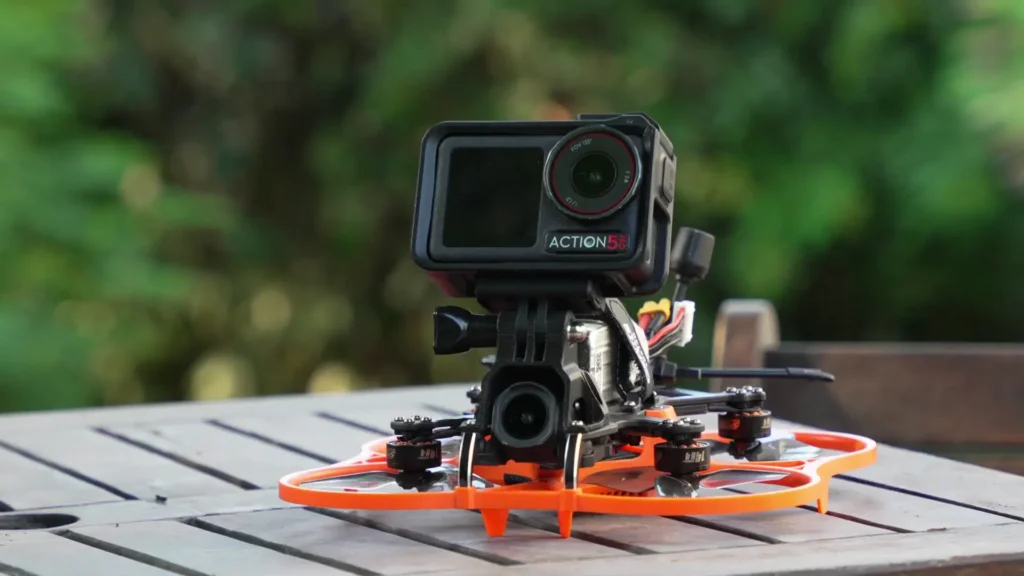
The Cinelog 30 V3 is the most planted and stable of the group. Thanks to its pusher configuration, it floats beautifully and is one of the easiest drones to fly. It excels at smooth cinematic shots and is ideal for indoor fly throughs. While it’s not sub-250 unless you use a very small battery, it can carry a full DJI Action 5 or GoPro, making it suitable for dedicated camera work beyond the O4 feed.
The DarkStar 16 may be tiny, but it’s still mighty. It’s perfect for indoor flying and close-quarters shots. Flight time is short around three minutes on a 2S pack, so planning your flight path beforehand is important. The upside is that its small size and light weight make it unlikely to cause damage, either to itself or its surroundings. Noise wise, all three drones remain reasonably quiet.
Reliability & Durability
All three drones can handle small bumps and crashes, but the Cinelog 30 V3 is the weakest in terms of durability, particularly around the camera mount and antenna points. Beginners may run into issues here, so securing antennas with electrical tape, zip ties, or a TPU mount is recommended. Crossfire users should be especially careful, as antennas can get caught in the rear props.
The DarkStar 16 and DarkStar 22 feature stronger frame designs with smarter antenna placement. ELRS antennas stay tucked out of the way, reducing the risk of prop damage. The DarkStar 16’s frame is slightly less rigid, but its light weight minimizes crash damage. The DarkStar 22 feels more solid overall, with thicker ducts and a tougher structure.
GEPRC includes plenty of spare parts with each kit, and replacements are easy to order. None of the drones come with GPS pre-installed. The DarkStar 22 has a dedicated GPS mount, though it sits close to the VTX and may cause interference. GPS can also be added to the Cinelog 30 V3 with a TPU mount.
Portability & Practicality
When it comes to travel, the DarkStar 22 is the clear winner. It’s lightweight, compact, easy to pack, and offers the longest flight time. Being sub-250 grams also makes it easier to fly in more locations, making it the most practical and fun option overall.
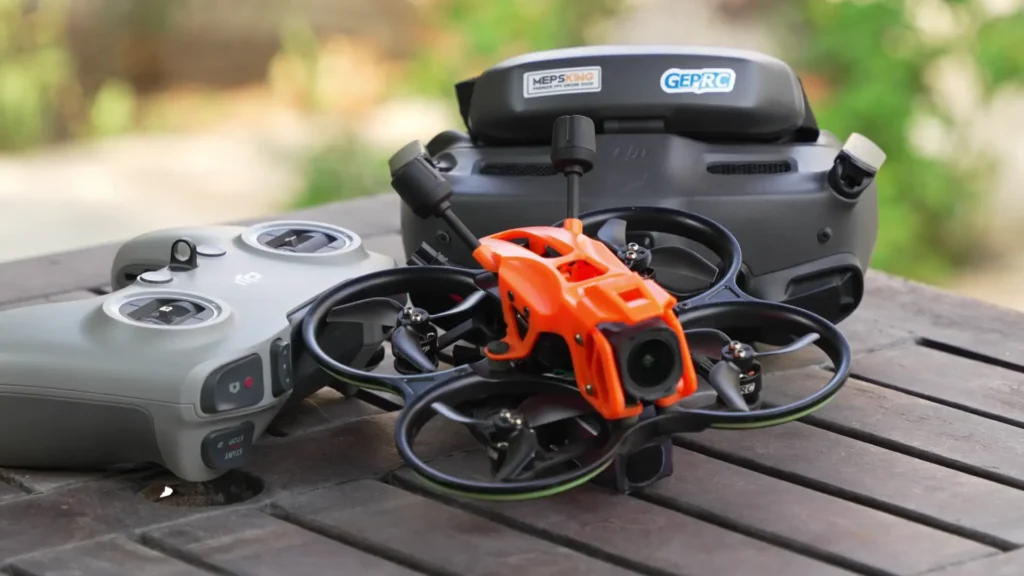
The DarkStar 16 is even easier to carry due to its size, but short flight times limit its practicality unless you carry multiple batteries. It’s best suited for short, close range flights or indoor sessions.
The Cinelog 30 V3 is still portable but struggles to stay under 250 grams without sacrificing flight time. Realistically, it sits between 260 and 300 grams without an extra camera. It’s also the most delicate, requiring extra care during transport, as camera mounts and antennas can shift. It feels more “professional” and purpose built for smooth indoor cinematic work.
Price & Value
All three drones are priced very closely, hovering between $390 and $400 for the DJI O4 Pro versions. At this price point, the decision really comes down to use case. The DarkStar 16 is ideal for fun, tight spaces, and close quarters flying. The DarkStar 22 offers the best all-round performance with balance, efficiency, and versatility. The Cinelog 30 V3 is best suited for cinematic work or carrying heavier cameras.

- O4 Air Unit Pro Integration: Features an advanced imaging system with a larger CMOS sensor, delivering sharp, clear visu…
- Superior Stability for Smooth Footage: An integrated four-point damping ball system efficiently minimizes vibrations, si…
It’s also worth noting that the DarkStar 22 O4 version includes an ND filter in the box, which is a nice bonus. Battery shipping restrictions may apply when ordering internationally, with a maximum of two batteries per drone.
Table of Contents
Article Summary
If you’re new to cinewhoops and want one drone that does almost everything well, the DarkStar 22 is the best choice. It’s sub-250, well-balanced, quiet, and performs exceptionally outdoors. If you already own a Cinelog 30 V3, the DarkStar 22 still feels lighter, more playful, and far less fragile.
The DarkStar 16 is pure fun and perfect for learning, practicing, or getting creative indoors. The Cinelog 30 V3 remains a reliable cinematic workhorse, provided you’re willing to address its weak points. After all, this is FPV most problems are solved with a bit of TPU printing or electrical tape.
Read More: GEPRC DarkStar 22 Review