
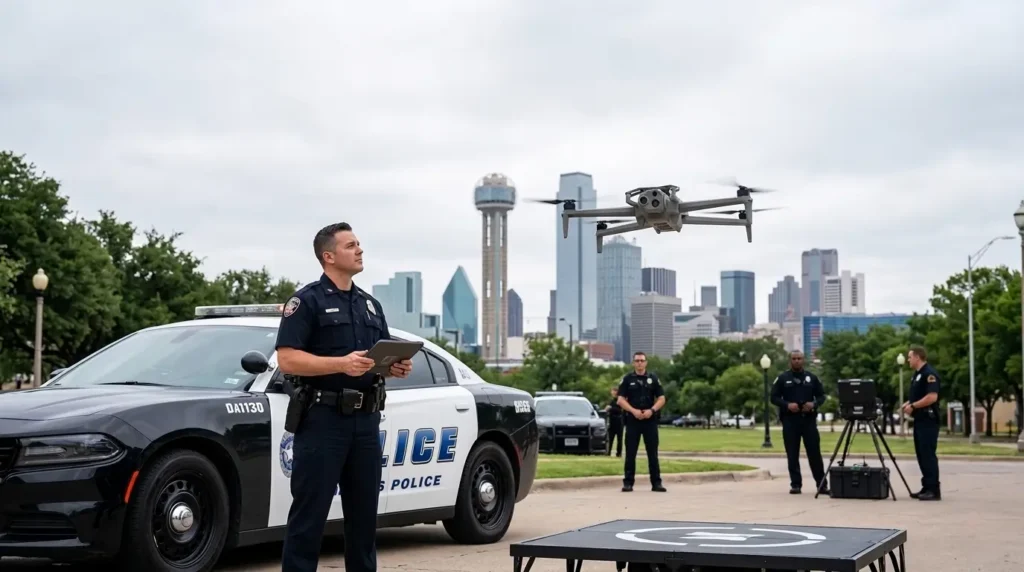
The Dallas Police Department is implementing a drone-based first responder program as part of a comprehensive effort to integrate unmanned aerial systems with its existing data-collection infrastructure.
In December, the Dallas City Council approved a $120 million security package upgrade for the department. The package, developed in partnership with security software company Axon, includes the purchase of nine Skydio drones along with other artificial intelligence-enabled technology, such as body cameras equipped with real-time translation features.
The department plans to integrate the unmanned aerial systems with its current Axon platforms, including the Evidence.com digital evidence platform and Fleet 3, an in-car video and data-management system, according to Dallas PD Sgt. Adam Reinhart.
This integration strategy reflects a broader trend among police agencies nationwide to combine drone-based systems with other data-collection tools, including body cameras and license-plate reading systems.
The department is still determining which types of emergency calls will trigger drone deployment. The new Skydio drones will be positioned throughout the city to test their functionality and response capabilities to 911 calls.
Officials aim to have the system, designated First Responder Drones (FRD), operational before FIFA World Cup-related events begin in the city in early June. The department chose the FRD designation to avoid confusion with Dallas Fire Rescue, which uses the acronym DFR.
“The acronym of drones as first responder or DFR doesn’t mix well in Dallas because we call Dallas Fire Rescue, DFR. So, we’re going to call it the FRD just because we don’t need people mixing that up over the radio,” Reinhart explained.
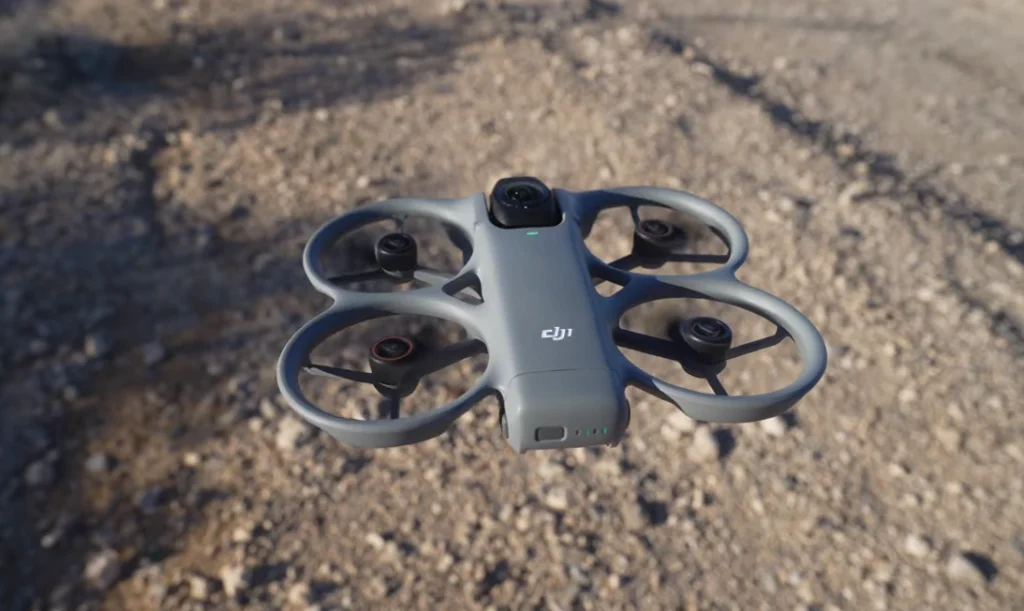
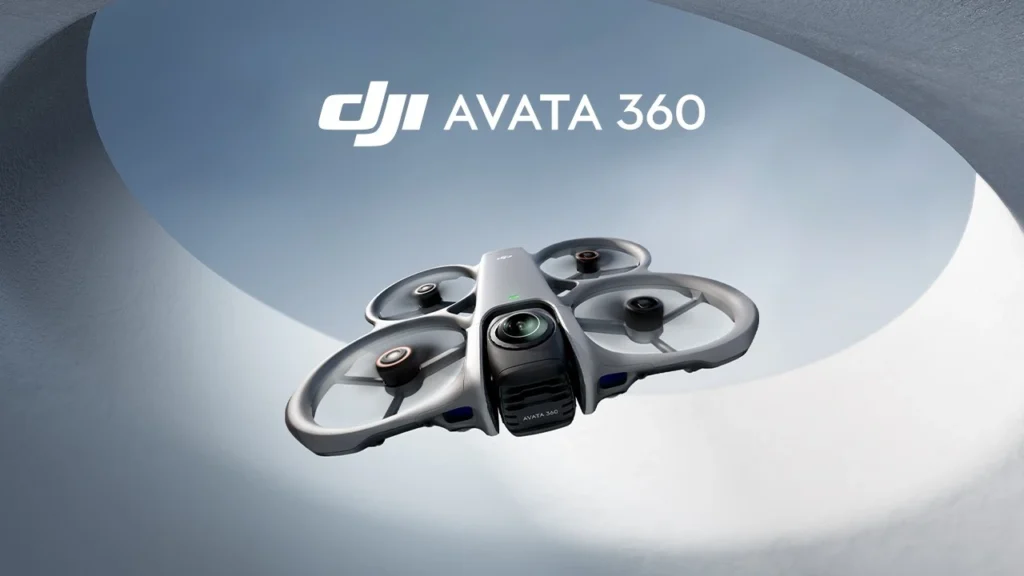
This marks Dallas PD’s first purchase of Skydio drones. The department previously relied on DJI products for its extensive drone operations. Currently, the fleet includes 10 Matrice M30Ts for outdoor high-zoom operations, 33 Mavic 3Ts for quick response situations, 82 Mini 2s for indoor patrol, 12 Avatas for tactical response, and two Lemur 2s for SWAT operations.
Police agencies across the United States are transitioning away from DJI products due to security concerns and supply constraints.
Under the standard operating procedure, when an eligible emergency call is received, a Skydio drone will be launched to the location to provide initial aerial intelligence, which will then be broadcast to patrol units.
The department’s existing Axon contract covers body cameras, Fleet 3 in-car cameras, and interview room camera systems, with all data streams collected on the Evidence.com platform.
“With the body cameras, Fleet 3 and Interview Rooms, all the video that is recorded is uploaded to Evidence.com. So, one URL, one platform,” Reinhart said.
Once fully tested, the FRD drones will be integrated into the Evidence.com platform to create a unified data-management system. While the integration details are still being finalized, Reinhart noted that the connection between Skydio and Evidence.com is well-established.
The Dallas PD also plans to establish counter-drone capabilities before the World Cup begins. One sergeant has been sent to the FBI’s National Counter-Unmanned Training Center at Redstone Arsenal in Huntsville, Alabama, for specialized training in drone-mitigation operations.
Travis Scott, vice president of commercial sales at Dedrone, an Axon subsidiary, said the company is prepared to expand its relationship with Dallas PD. The goal is to continue providing necessary resources and technology to enhance the department’s coverage and improve overall safety and security.
Read More: Kansas City Police Adopt Drones for Emergency Response