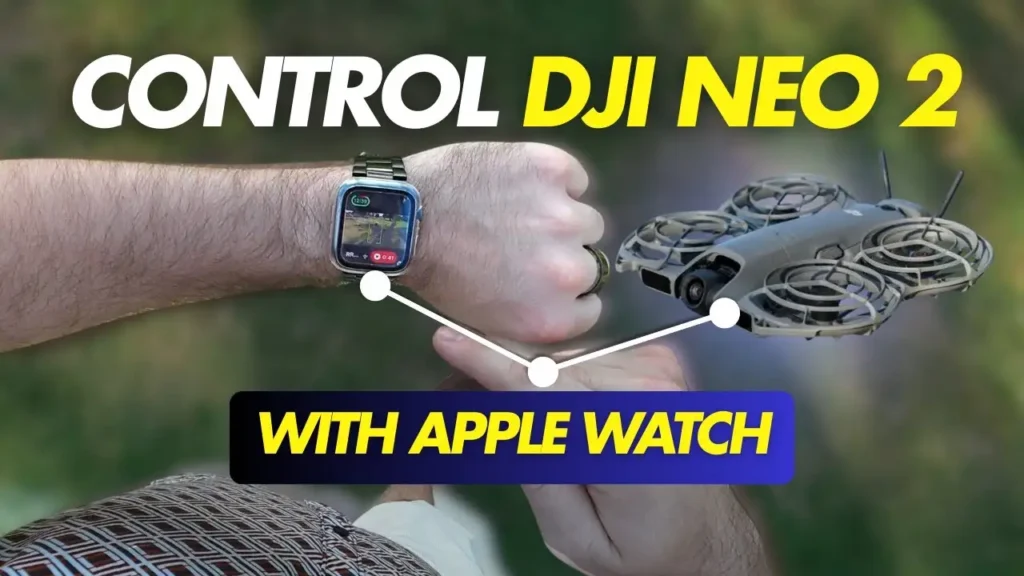

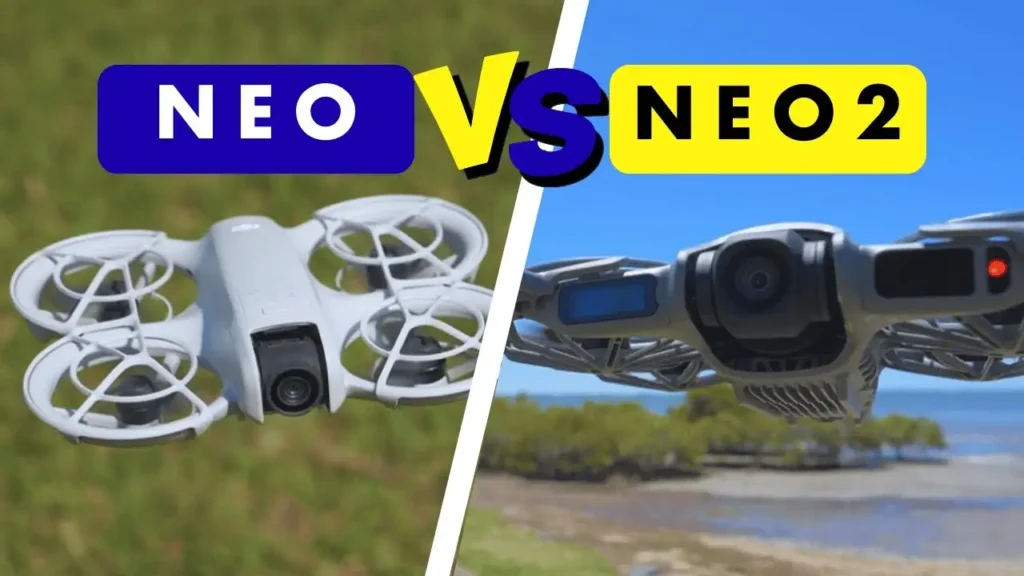
The original DJI Neo was one of those rare drones that managed to surprise just about everyone who flew it. From the moment it launched, it became a crowd favourite and for many pilots, it still is. Whether you were a complete beginner picking up your first drone or an experienced flyer looking for something lightweight and fun, the Neo had something to offer. Even today, it remains a drone that gets flown regularly, and for good reason.
But DJI has now released the Neo 2, and the question on everyone’s mind is whether the sequel genuinely improves on what was already a fantastic drone, or whether it’s simply a marginal upgrade dressed up in new packaging. This article breaks down every significant difference between the two drones in detail from camera performance and wind resistance to new flight modes, design changes, and connectivity — so that by the end, you’ll know exactly which drone makes sense for you.
Whether you’re someone who doesn’t own either drone yet and is trying to decide between the two, or someone who already has the original Neo and is wondering whether the upgrade is genuinely worth it, this DJI Neo 2 vs Neo 1 comparison covers everything you need to make an informed decision.
What Made the Original Neo So Special
To appreciate how much the Neo 2 has improved, it’s worth revisiting what made the original Neo such a compelling product in the first place. The level of functionality packed into such a small and affordable package was genuinely impressive. You could fly the Neo from your mobile phone without needing a dedicated controller. You could hand-launch it and let it fly autonomously without any device connected to it at all. There was voice control, full FPV mode support, compatibility with DJI goggles, and a variety of controller options depending on how you wanted to fly.
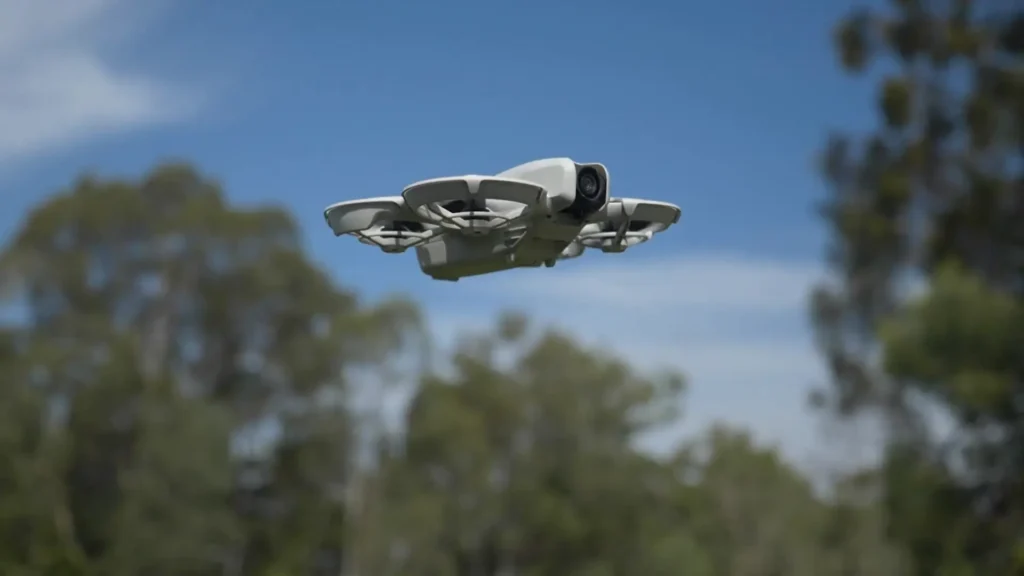
That sheer flexibility in control options was something that really set the original Neo apart. Most drones at this price point offered one or two ways to fly. The Neo offered half a dozen. It was the kind of drone that could be an FPV trainer one afternoon and a simple palm-launch follow-me drone the next morning. All of those control options have carried over to the Neo 2, which is a reassuring sign that DJI understood what people loved about the original and chose to build on that foundation rather than strip it away.
Design and Build
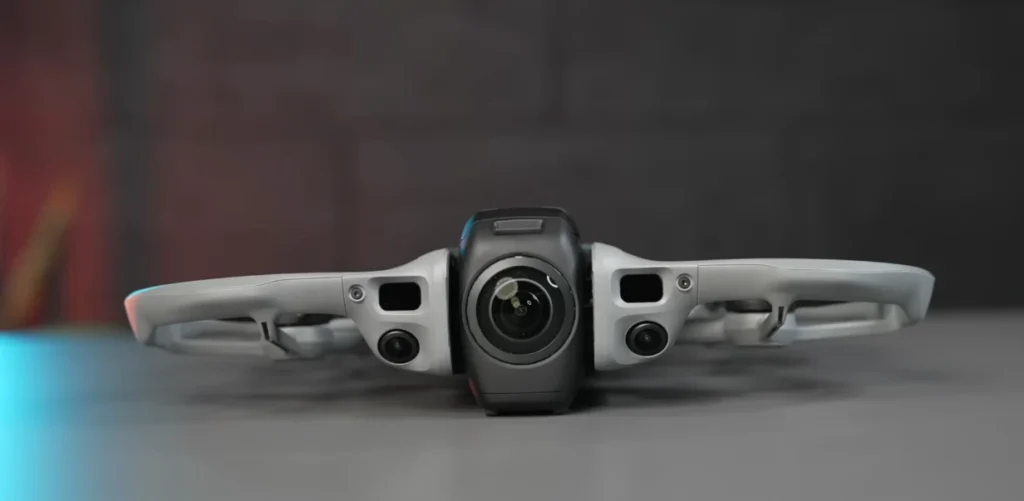
At first glance, the Neo 2 has a recognisable form factor. It clearly belongs to the same family as the original, and anyone who has flown the first generation will immediately feel at home. But look a little more closely and the differences become apparent. The Neo 2 has been redesigned with a unique look that sets it apart most noticeably because of the LiDAR-assisted ranging (LAR) sensor on the front and the addition of a screen on the face of the drone.
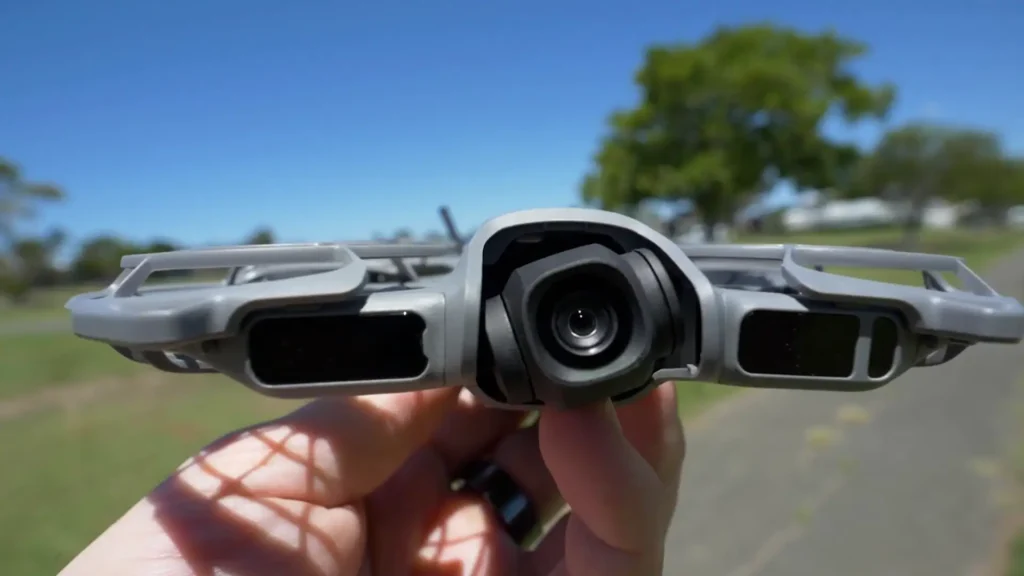
The Neo 2 does weigh slightly more than the original, but it still sits comfortably under the critical 250-gram mark, which matters enormously for regulatory reasons in many countries. Staying below that threshold keeps the drone accessible and easy to fly without the burden of additional paperwork or licensing requirements.
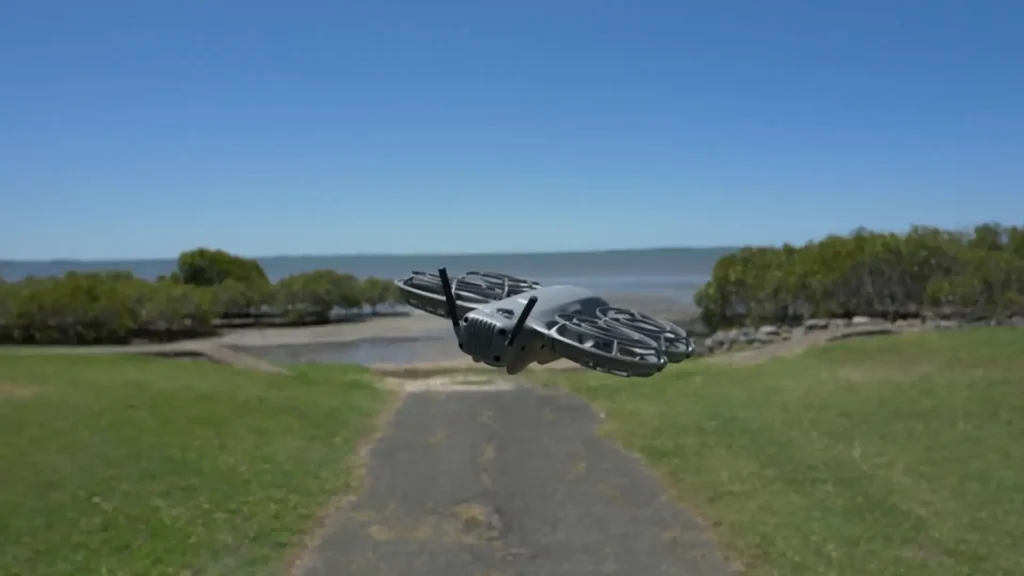
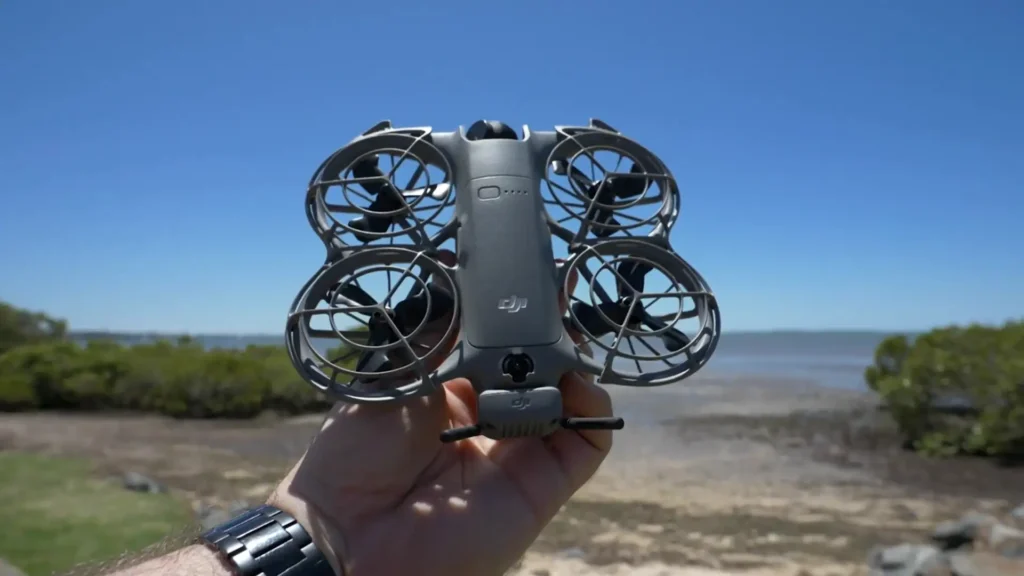
One design change worth noting is how the Neo 2 handles its antenna system. On the original Neo, the transceiver was built directly into the body of the drone. On the Neo 2, it’s been made into an external component — a separate antenna module that plugs in and screws into place at the back. This means that without the transceiver attached, the Neo 2 has limited functionality when used with a controller. It’s an important consideration, particularly for buyers who aren’t going for the FlyMore combo, which includes the transceiver as part of the package. If you pick that option, the transceiver is already accounted for and you don’t need to think about it separately.

Wind Performance
If there was one thing that held the original Neo back from being a truly reliable drone in a wider range of conditions, it was its performance in high wind. The original Neo could handle moderate wind conditions reasonably well, but anything more intense than that was a gamble. Flying in strong gusts with the original Neo wasn’t something you’d want to do regularly, and it introduced a level of uncertainty that made it difficult to trust the drone in more demanding environments.
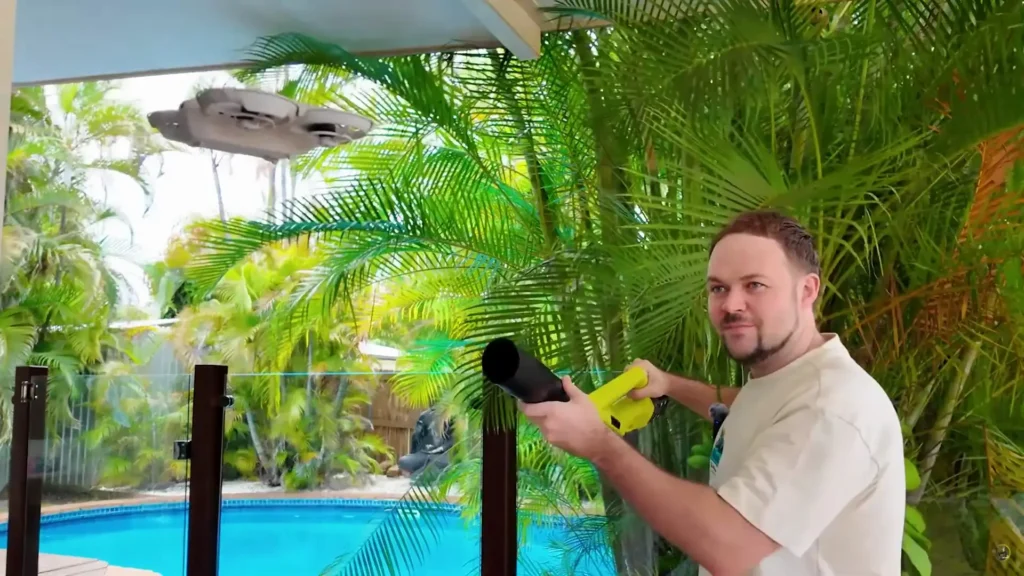
The Neo 2 has addressed this problem comprehensively. It is substantially more capable in high wind, to the point where its performance in challenging conditions is comparable to some of DJI’s higher-end drones. That’s a meaningful statement, because it means the Neo 2 is no longer a fair-weather-only device. You can take it out in genuinely windy conditions and trust it to hold its position, maintain its tracking, and deliver stable footage. This alone is one of the strongest arguments for upgrading if you’ve felt limited by the original Neo’s wind tolerance.
DJI Neo 2 vs Neo 1 Camera System
The camera on the original Neo was always a topic of mixed feelings. It was capable of 4K footage at up to 30 frames per second, and for beginners or casual users, it was perfectly adequate. Most situations were handled well enough. But when you compared it directly to other 4K drones on the market especially other DJI products — it was clear that the Neo’s camera was a lower-tier offering. The footage didn’t have the same clarity, detail, or dynamic range as what you could get from pricier alternatives.
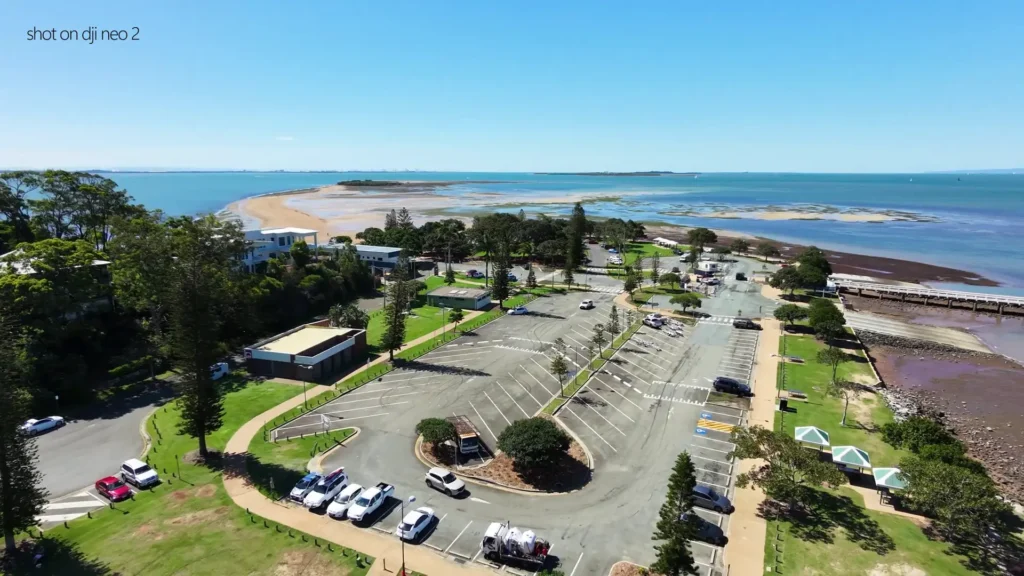
The Neo 2 has resolved this issue convincingly. The new camera captures 4K footage at up to 60 frames per second, and there’s also a 4K slow-motion mode at 100 frames per second, which opens up a whole new creative avenue for capturing fast-moving subjects with cinematic smoothness. The improvement in overall image quality is visible and significant. The Neo 2’s footage holds up in a way that the original’s simply didn’t, and it’s no longer something that feels like a compromise just because the drone is small and affordable.

Gimbal System
The gimbal system has also been upgraded. The original Neo used a one-axis gimbal, which was functional but showed its limitations in strong winds or when tilting the camera. The Neo 2 now features a two-axis gimbal, which provides considerably better stabilisation. That said, it’s worth being transparent about the limitations: in certain wind conditions or when the camera is tilted downward, you may occasionally see part of the drone — a leg or the edge of a prop guard enter the frame.
This happened with the original Neo more frequently, and while the Neo 2 has improved the situation significantly, it hasn’t been eliminated entirely. It’s a rare occurrence, but it’s worth knowing about. A three-axis gimbal would resolve it completely, but that would likely push the drone into a different weight and price category.
The Neo 2 also gains a LAR sensor on the front, which improves performance in lower-light tracking situations another thoughtful addition that enhances the drone’s usefulness in real-world conditions.
Obstacle Avoidance
The original Neo had no obstacle avoidance at all. This was one of the more significant limitations for pilots who wanted to fly in complex environments or use autonomous modes without worrying about the drone colliding with something. The Neo 2 addresses this with omnidirectional obstacle avoidance, meaning the drone can sense and avoid objects in every direction — front, back, left, right, above, and below.
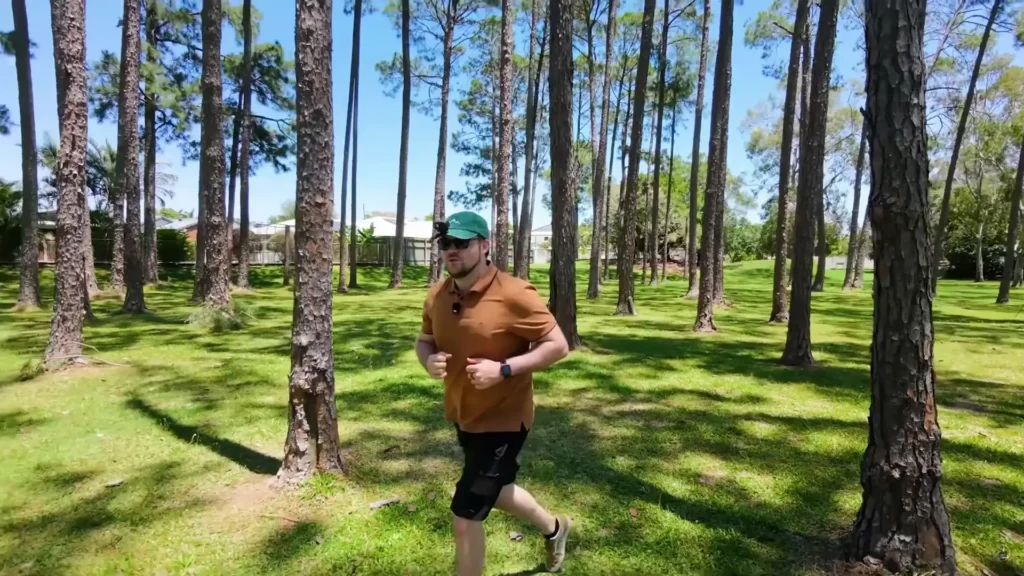
In most situations, the obstacle avoidance works reliably well, performing similarly to what you’d expect from other DJI drones. There was one instance where the drone, while flying backwards, failed to detect a tree behind it — likely because the rear transceiver was blocking the sensor’s view and it made contact with the tree. However, thanks to the full-coverage propeller guards, there was no damage whatsoever, and the drone was immediately relaunched without issue. That one incident aside, obstacle avoidance has worked impressively well across a wide range of flying environments. As with any drone, being aware of your surroundings and flying with care remains important, but the safety net provided by omnidirectional sensing adds a genuinely useful layer of protection.
Read More: DJI Neo 2 Tracking Gauntlet Test
Flight Modes: More Options, More Creativity
Both the original Neo and the Neo 2 include Spotlight and Point of Interest modes, and the original Neo also allowed basic follow-me functionality through palm launching. But the Neo 2 takes the autonomous flight capabilities to a noticeably higher level with a more advanced Active Track mode. This works through the controller interface and behaves comparably to Active Track on DJI’s more premium drones. Because of the improved wind performance, the tracking is far more seamless and reliable than anything the original Neo could manage. Whether you’re tracking a cyclist, a runner, or someone on a scooter, the Neo 2 handles it with confidence.
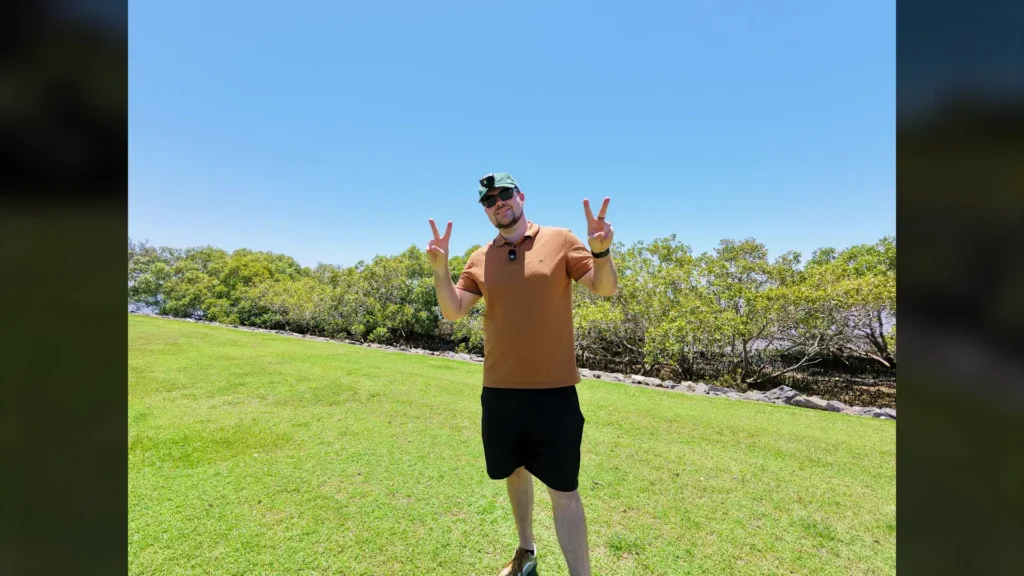
Beyond Active Track, the Neo 2 introduces several new flight modes that simply don’t exist on the original. Selfie Shot is a mode designed specifically for capturing creative selfie-style photos from the drone, offering a range of distances and angles — close-up, medium, and long-range — which can be customised to suit the moment. It’s an ideal feature for families, friends on holiday, or anyone who wants dynamic aerial portraits without manually programming every shot. The mode sends the drone off on its own and returns a selection of images that would otherwise require significant planning and expertise.
Dolly Zoom and Master Shots are also new additions to the Neo 2. Dolly Zoom creates the well-known cinematic effect where the subject stays the same size in the frame while the background appears to stretch or compress a stunning visual technique that was previously only achievable with much more expensive drones or complex post-processing. Master Shots automatically captures a series of cinematic movements in one go and edits them together, making it straightforward to produce polished results without hands-on flying experience.

Gesture Control
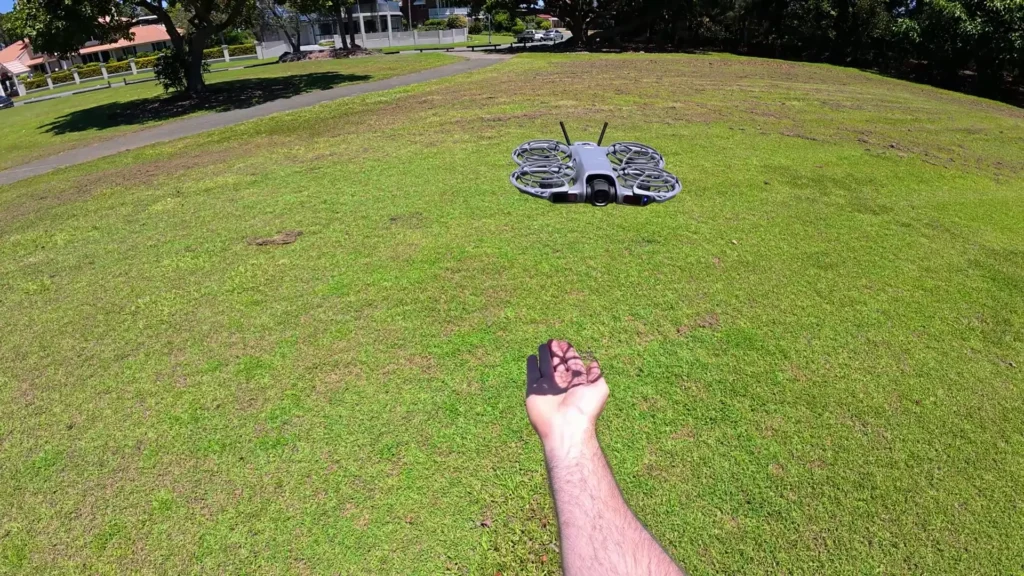
One of the most talked-about new features on the Neo 2 is gesture control, and it lives up to the excitement. Using your hand like a wand, you can direct the drone simply by moving your palm in different directions. Want the drone to move right? Gesture right. Want it to gain altitude? Gesture upward. The drone reads your hand movements and responds accordingly, allowing you to reframe shots, change direction, or adjust position without needing a controller in your hand at all.

Gesture control is a feature that DJI introduced a long time ago with the original DJI Spark, and it captured the imagination of many drone enthusiasts at the time. Since then, it had largely disappeared from DJI’s lineup, making its return on the Neo 2 a genuinely welcome and nostalgic moment. Seeing it come back on such a compact and accessible drone is a reminder of how intuitive and fun drone flying can be when the interface gets out of the way.
Read More: DJI Neo 2 Gesture Controls Test
Return to Palm
Complementing gesture control is the new Return to Palm feature. Once you’re done flying, you can simply hold your palm out and the drone will recognise the gesture, fly back toward you, and land gently in your hand. This makes the whole experience feel fluid and seamless — you can go from gesture-controlled flight to active following mode to a clean palm landing without ever picking up a controller. In practice, this works reliably and without issues.
The New Screen: Small Feature, Big Difference
On the original Neo, navigating between modes was done using a single button that cycled through options, with a small indicator light to let you know which mode was active. It worked, but it wasn’t the most intuitive or informative system. The Neo 2 replaces this with a small screen on the front of the drone that clearly displays the current mode and allows you to customise parameters directly.
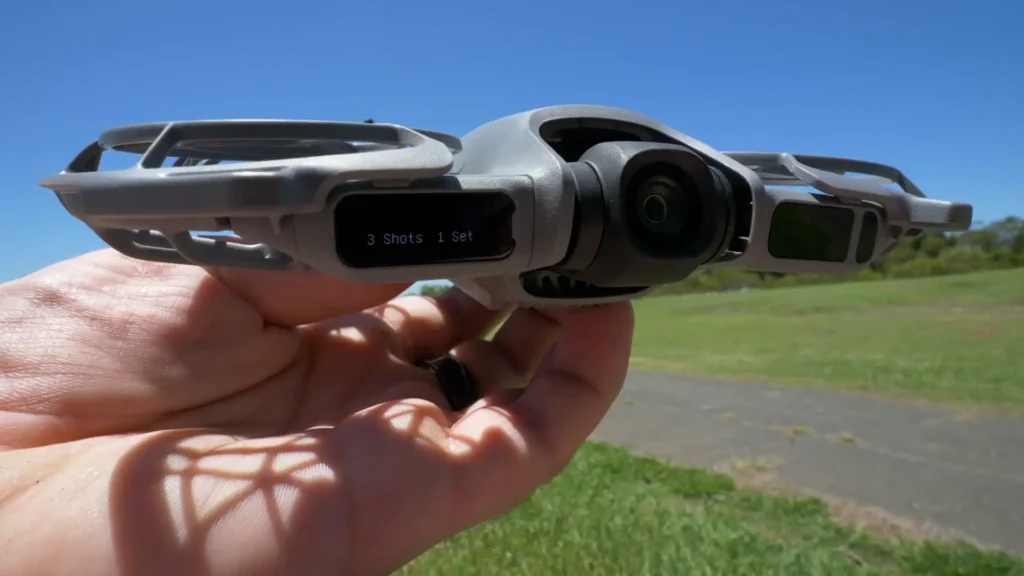
Without connecting to a phone or a controller, you can now use the screen and the buttons alongside it to adjust settings like the drone’s distance, altitude, and angle for following. It’s a simple addition that makes a significant difference in day-to-day usability. For a drone that’s specifically designed to be flown autonomously and without accessories, having that level of direct control over the settings is genuinely useful. It reinforces the Neo 2’s identity as a drone that works beautifully on its own, without relying on a phone or controller to function at its best.
Battery Life
Battery life has seen a modest improvement with the Neo 2, going from approximately 18 minutes on the original to around 19 minutes. It’s an extra minute of flight time, and while that’s not a dramatic leap, it’s a welcome addition nonetheless. It would be fair to say that battery life remains one area where there’s still room for improvement in future iterations, but for now, it’s incrementally better.

Range
The Wi-Fi range, however, has improved dramatically. The original Neo offered a Wi-Fi range of around 50 metres, which was modest by any standard. The Neo 2 extends this to 500 metres — a tenfold increase. While relying entirely on Wi-Fi over that kind of distance still requires some caution, the improvement is significant and gives users far more flexibility when flying without a dedicated controller. When using OcuSync 4 with a controller, both drones offer a range of around 10 kilometres, but the improved wind performance of the Neo 2 means you can now actually explore that range more confidently without worrying about the drone struggling to hold position or return safely.
Internal Storage
Internal storage has also received a meaningful upgrade. The original Neo came with 22 GB of built-in storage. The Neo 2 bumps this up to 49 GB, which provides considerably more room for footage before you need to clear space or transfer files. Given the higher resolution and frame rate options on the Neo 2, this increased storage is especially appreciated shooting at 4K 60fps or 4K 100fps produces larger files, and having nearly 50 GB available on the drone itself offers genuine peace of mind.
Tracking Speed
Tracking speed is another area where the Neo 2 pulls ahead. The original Neo could track subjects at up to 8 metres per second, which was fine for walking or light jogging but began to show limitations with faster-moving subjects like cyclists or people on scooters. The Neo 2 raises this to 12 metres per second, which opens up tracking possibilities for a wider variety of activities. Whether you’re capturing someone mountain biking, skateboarding, or moving at a brisk pace through an urban environment, the Neo 2 is better equipped to stay locked on and keep up.

Who Should Buy the Neo 2 — And Who Might Stick with the Original
If you don’t currently own either drone and are trying to decide between them, the answer is fairly straightforward: the Neo 2 is the better drone in almost every respect, and unless the price difference is a significant barrier, it’s the one to go for. The improvements to wind resistance, camera quality, obstacle avoidance, autonomous flight modes, and connectivity all point clearly in the same direction.
For those who already own the original Neo, the upgrade question is more personal, but still leans heavily toward the Neo 2. Many drone upgrades in the industry feel marginal the kind of improvements that are technically measurable but don’t change the experience in a meaningful way. The Neo to Neo 2 transition is different. The wind performance improvement alone changes what you can do with the drone. The camera quality improvement changes what your footage looks like.
DJI Neo |
DJI Neo 2 |
|
|---|---|---|
| Wind Resistance | Moderate winds only | High winds |
| Video Resolution | 4K @ 30fps | 4K @ 60fps + 4K slow-mo @ 100fps |
| Gimbal | 1-axis | 2-axis |
| Low-Light Tracking | No LAR sensor | LAR sensor on front |
| Obstacle Avoidance | None | Omnidirectional |
| Wi-Fi Range | 50 metres | 500 metres |
| Tracking Speed | 8 m/s | 12 m/s |
| Internal Storage | 22 GB | 49 GB |
The addition of obstacle avoidance, gesture control, and a proper screen all enhance day-to-day usability. These are real, felt improvements, not just numbers on a spec sheet. If you can sell the original Neo privately and put that money toward the Neo 2, it’s genuinely worth looking into.
The Neo 2 is also an interesting proposition for pilots who already own more professional drones and are looking for something lighter, more portable, and more fun for certain occasions. The Neo 2 gives you advanced features alongside a go-anywhere form factor, and it even doubles as an FPV trainer — letting you learn first-person-view flying in a controlled and affordable way without risking an expensive racing drone. The versatility it offers is genuinely impressive for a drone at this price level.
Table of Contents
Article Summary
The DJI Neo was a drone that took the market by surprise. It punched well above its weight, offered a remarkable number of ways to fly, and built up an enthusiastic community of users who continue to fly it and share their experiences online. That original reputation is well-deserved, and the drone remains popular for very good reason. The Neo 2, however, has taken everything that made the original great and improved upon it across the board. Better wind resistance. A significantly improved camera with higher frame rates and slow-motion capability. A two-axis gimbal. Omnidirectional obstacle avoidance. Gesture control. Return to Palm. New flight modes including Selfie Shot, Dolly Zoom, and Master Shots.
Read More: DJI Neo 2 Honest Review