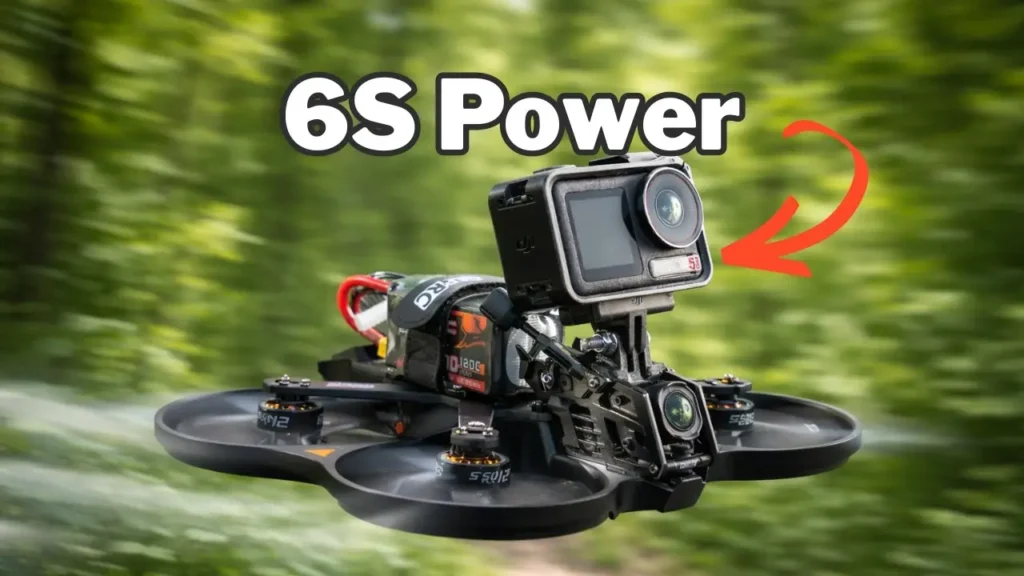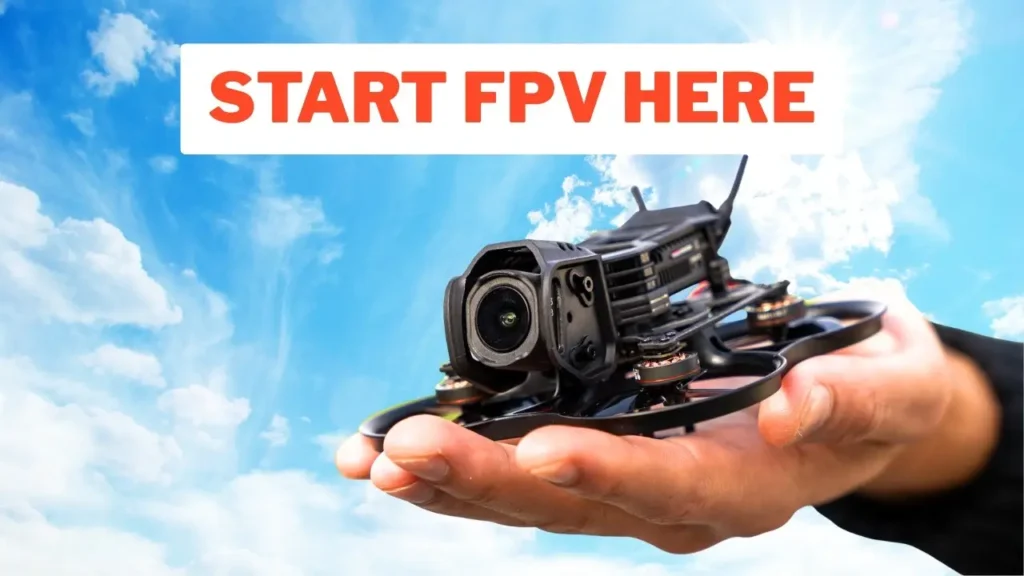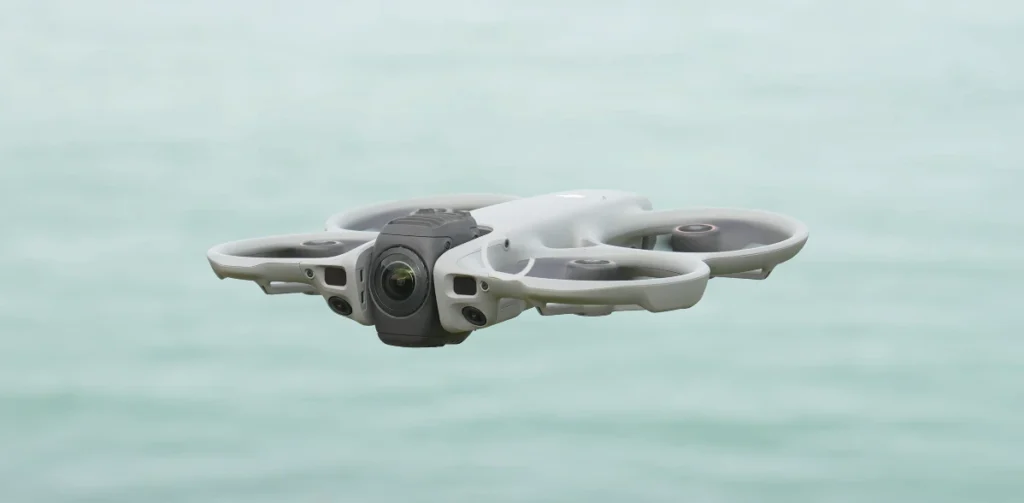

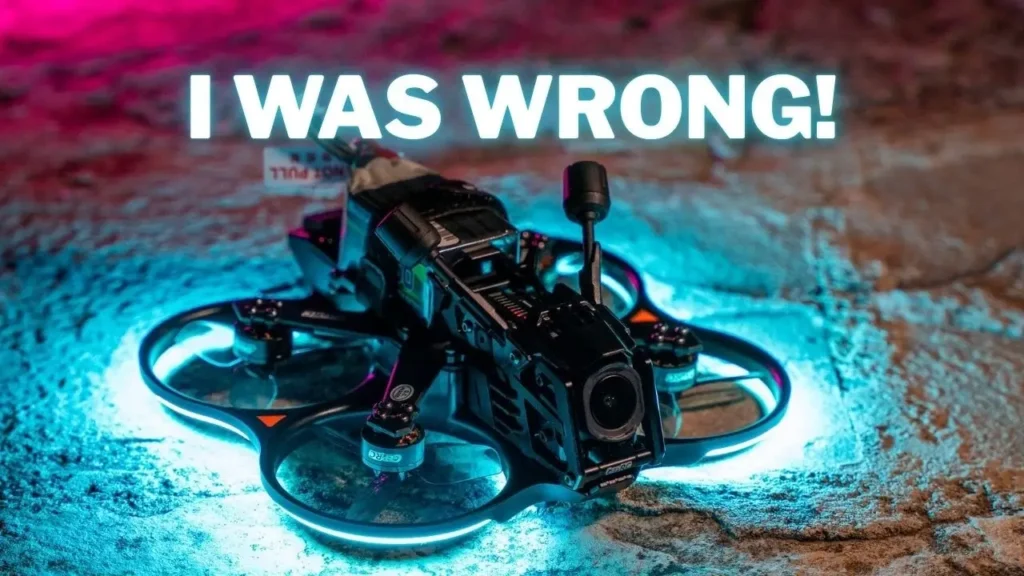
GEPRC has kicked off 2026 with one of the most thoughtfully designed cinematic FPV drones in its class — the GEPRC Cinebot25 V2. At first glance, the new modular camera nose raised a few eyebrows, including mine. The concern was straightforward: would all that extra hardware up front make the drone nose-heavy and unpleasant to fly? After putting it through proper testing with multiple batteries, different flying styles, and varied conditions, the answer is a clear no.
The GEPRC Cinebot25 V2 is not just a minor refresh. It is a genuinely impressive machine that improves on its predecessor in ways that matter, and it hints at something bigger coming from GEPRC across their wider lineup.
What Is the GEPRC Cinebot25 V2?
The Cinebot25 V2 is a 2.5-inch cinematic FPV drone built around the DJI O4 Pro video transmission system. It comes with GPS built in, integrated LED strips, and a brand new modular camera nose designed to improve stability and reduce vibrations during flight. This is not a freestyle drone, and it is not built for speed. It is designed specifically for smooth cinematic flying, and it is engineered to be forgiving — particularly for pilots who are still developing their throttle control and landing technique.
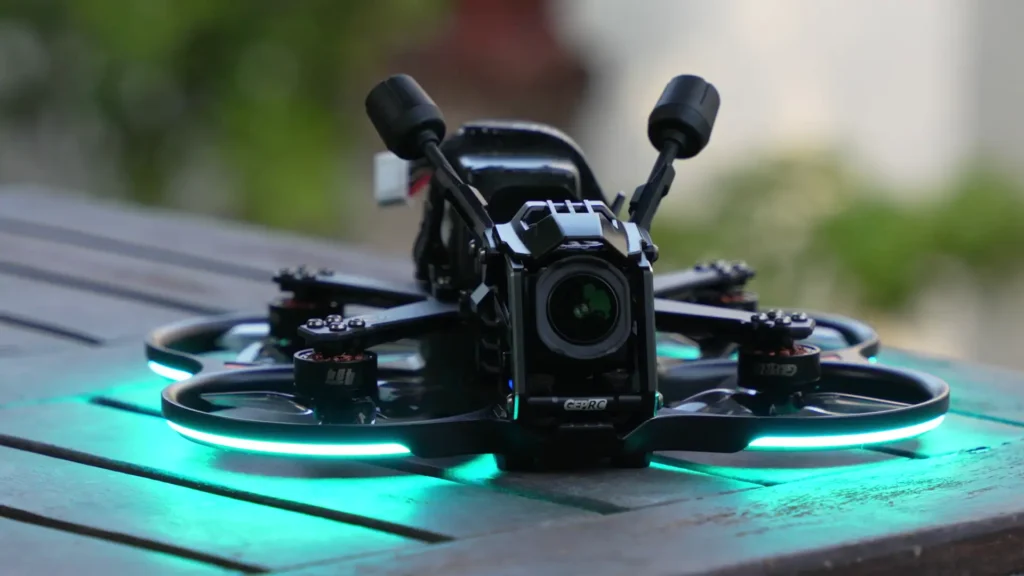
What’s in the Box
GEPRC has always been solid when it comes to packaging and accessories, and the Cinebot25 V2 is no exception. The drone arrives held down with a clear wrap, with all accessories stored neatly underneath. Inside, you will find documentation including a GPS rescue setup guide, the classic GEPRC stickers, spare HQ props (the same design used on the Cinelog30 V3, just smaller), a 15x150mm battery strap, a battery anti-slip pad, a 1.5mm L-shaped hex wrench, a binding pin, a spare screw pack, injection-moulded landing pads for the front and rear, the front top cover, injection-moulded O4 antenna mounts, clear acrylic plates, and dampening balls.
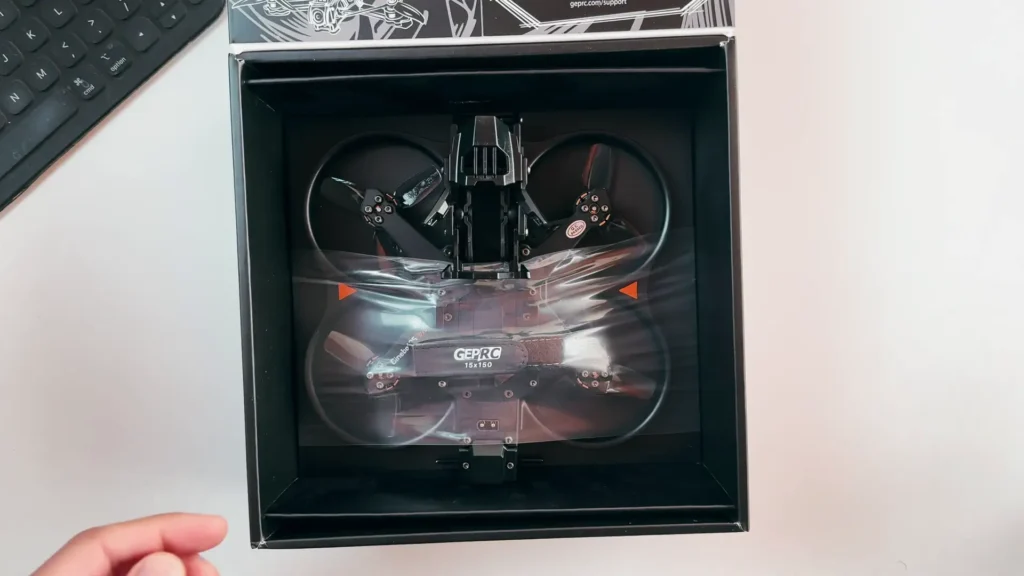
Review units also include an antenna mount for the DJI O4 Light Air unit, and the STL file for that installation is available directly on GEPRC’s website for anyone who wants to print their own.
Build Quality and the Modular Camera Design
This is where the Cinebot25 V2 genuinely stands out. The drone is very well built — solid, strong, and durable — with a flat underside and a significant amount of plastic throughout its construction. That does mean it is not going to come in under the 250g threshold, but the trade-off is a drone that feels built to last.
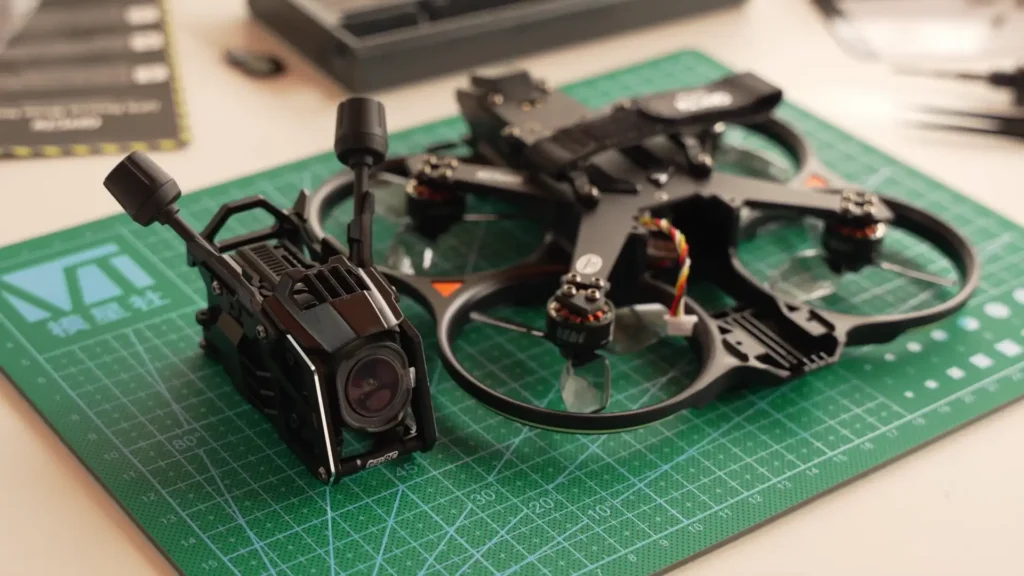
The headline feature is the modular camera unit. The entire nose assembly is held in place by just four screws and a single cable, making it remarkably easy to remove. This design is clearly intentional and feels like GEPRC is setting the stage for future releases that share the same system.
The thoughtfulness extends to the finer details too: SD card access is available from the top of the unit, USB access is available from underneath, and a six-point dampening system keeps footage smooth. There is even a small pass-through window that lets you check the receiver status LED when running the ELRS version — a small touch, but one that shows genuine attention to practical usability.
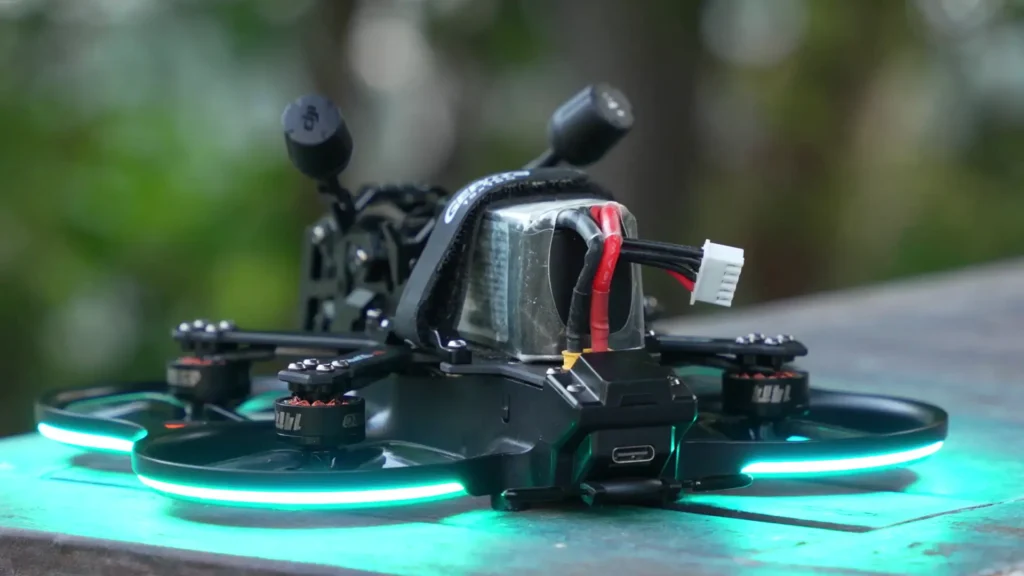
At the rear, you will find an XT30 connector and a USB-C port through a dedicated function board, alongside the LED strip, which genuinely looks great in low-light conditions. The motors are Speedex 2404 4600KV units, paired with HQ Prop D63x3 props in a pusher configuration. Battery mounting is flexible, offering both vertical and horizontal options through the built-in tray, though it is worth noting that larger batteries may require longer leads. Under the hood, the drone runs a TekF722 35-amp 32-bit all-in-one board. Overall, the build feels overengineered — but in the best possible way.

Weight and Battery Compatibility
GEPRC recommends 4S lithium high-voltage batteries in the 750–850mAh range. The drone was tested across several battery options. GEPRC’s own lithium high-voltage 720mAh technically works, but it blocks access to the XT30 port unless mounted horizontally, at which point cable length becomes an issue. An extension cable is really the practical solution here, and GEPRC’s hardware pack includes the necessary cables if you want to build your own.
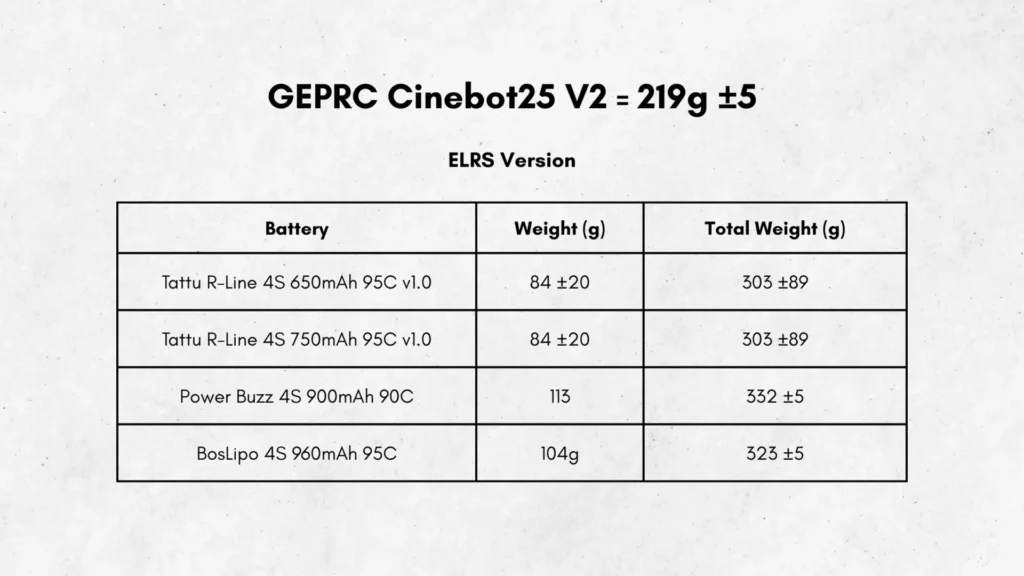
Even with smaller packs, the Cinebot25 V2 is not a sub-250g drone. Realistically, you are looking at around 300 to 330 grams all in, depending on your battery choice. Given the amount of plastic in the construction, the modular canopy, the GPS module, and the LED strips, this is not surprising at all.
Compare that to something like the Cinelog30 V3, which can come in under 250g with a small pack, and it becomes clear that the Cinebot25 V2 has simply prioritised durability and stability over meeting that regulatory weight threshold.
Read More: GEPRC DarkStar 22 Review
Flight Performance
This was the real test, and the Cinebot25 V2 passed with flying colours. Going in, there was a genuine concern that the modular camera nose would shift the weight balance too far forward and make the drone unpleasant to fly. That concern turned out to be completely unfounded.
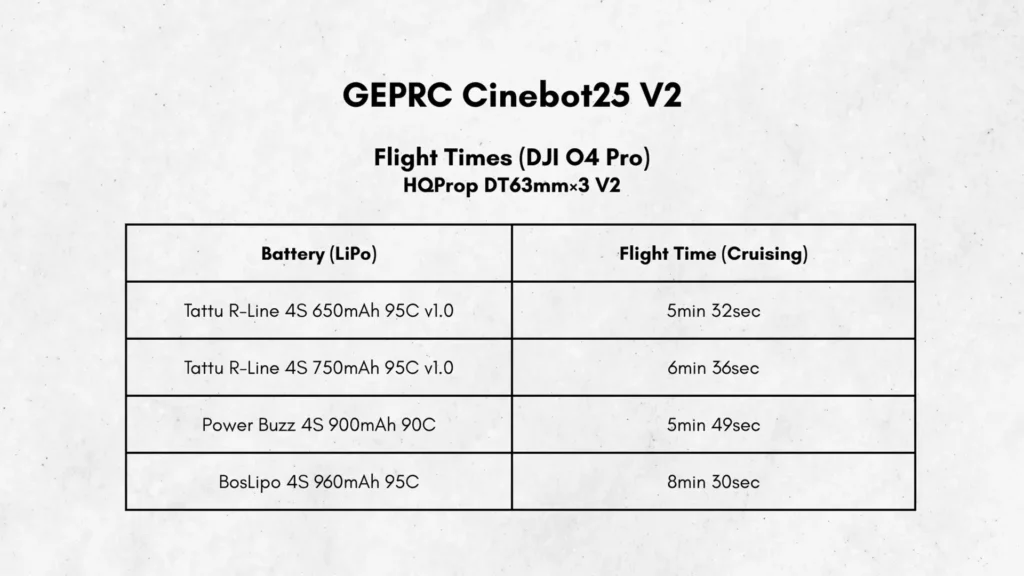
The Cinebot25 V2 flies beautifully. It is very well tuned, easy to control, and the throttle response is particularly forgiving — which makes it an excellent option for newer pilots who are still working on their landings. It is smooth in the air, efficient in the way it uses power, and stable in a way that makes capturing cinematic footage feel natural rather than like a constant fight with the controls. It can do flips, rolls, and power loops, though it is worth being honest that there are other GEPRC drones better suited to that kind of flying.
Flight times with the tested battery selection aligned well with GEPRC’s own claims of approximately five to eight minutes depending on flying style. The Tattu 750mAh delivered solid results, though the Boss LiPo actually felt more stable in the air due to the added weight. The Boss Power Pack underperformed, which is likely down to either cell quality or the age of that particular pack — a good reminder that battery choice has a meaningful impact on this drone’s performance and feel.
VTX Options and Camera Setup
The Cinebot25 V2 is clearly designed around the DJI O4 Pro, and it shows. Nearly every major FPV drone release right now is built around this system, and for good reason — the image quality and reliability are excellent. The drone can be purchased with the O4 Pro already installed, or without, allowing you to fit your own unit.
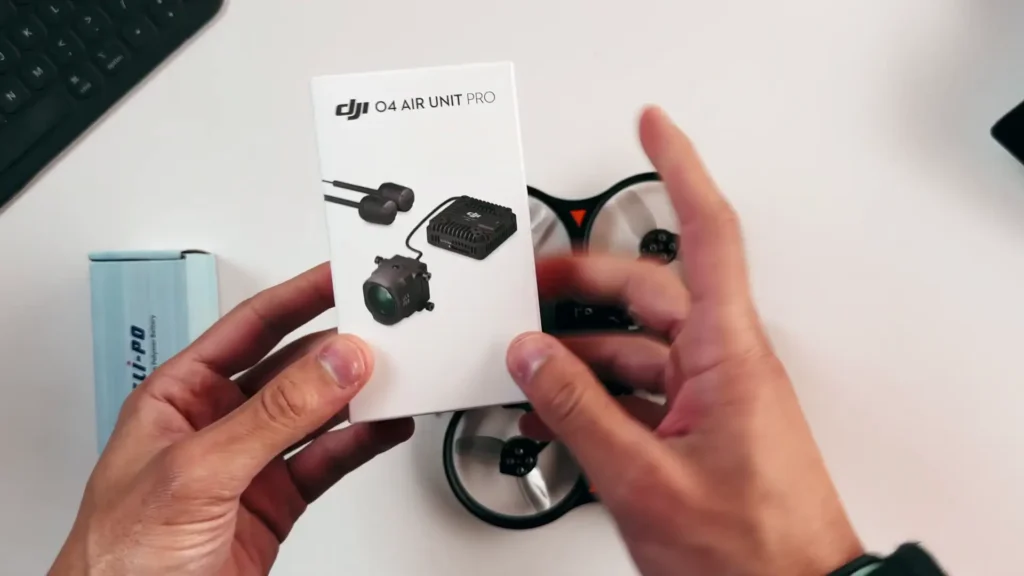
Installation is straightforward. The SD card slot should face upward, the antenna cable connectors go toward the rear, and the existing mounting points handle everything neatly. The camera module uses M2 screws — M210 on the right side, M26 on the left — and the camera itself is secured with M24 and M26 screws. The image quality is, as expected, excellent.
The real advantage of this modular design goes beyond this one drone. If and when GEPRC releases more drones in 2026 using the same system, the ability to move your O4 Pro between builds by removing just four screws and one cable could save a significant amount of money over time. It is a genuinely forward-thinking approach to how these systems are integrated.

For those looking to save on weight and cost, the Flywoo O4 Light Wide kit is also a compatible option. It is cheaper, but the trade-offs are real: no D-LOG M, no SD card slot, and storage is internal at 24GB only. GEPRC also recommends soldering the power connection directly to the 5V rail for that setup, which means it is no longer hot-swappable — something worth factoring in before committing to that route.
Read More: Cinelog 30 V3 Review
Transmission, Control, and GPS
The version tested was the ELRS variant, and it has been a solid performer. Flying with a RadioMaster GX12, the out-of-the-box switch layout required some adjustments in Betaflight to match a preferred setup, but that is a minor and very standard task. The OSD works fine from the factory, though adding more telemetry and GPS information to the display makes practical sense — especially if something goes wrong mid-flight and you need to review the Goggle recording for context.
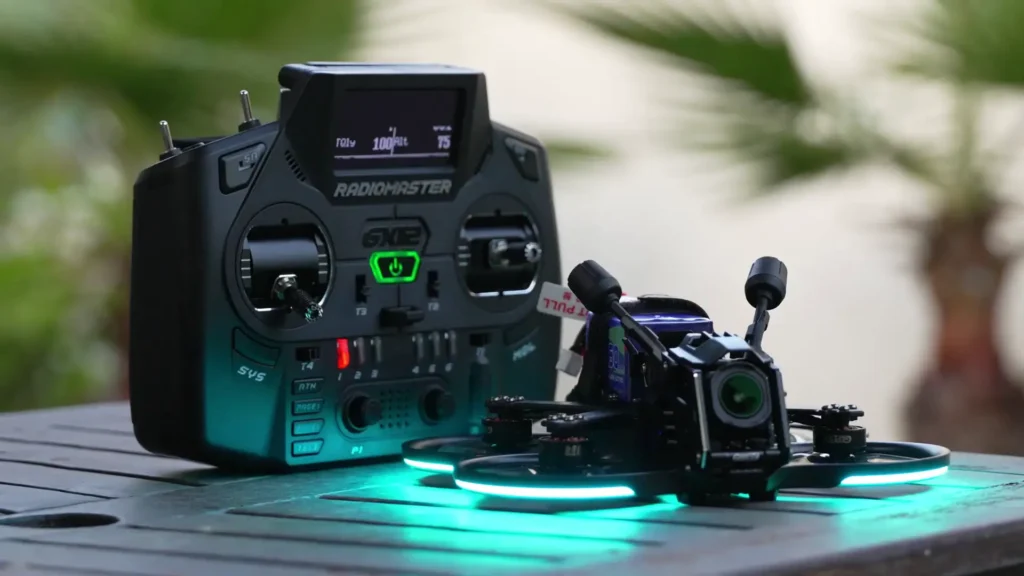
ELRS signal strength and reliability have been excellent throughout testing, with no dropouts or issues. For those who fly DJI and prefer a cleaner setup, the PNP version is also available, allowing you to use the RC3 remote directly with your goggles.
The GPS module is the GEPRC M10 Nano, and it works as intended straight out of the box. For anyone new to GPS-equipped drones, following a proper setup guide before flying is strongly recommended. One important default behaviour to be aware of is that the drone will arm before reaching the minimum satellite count, which means if the home point is not set before takeoff, the return-to-home function will not be accurate.
This can be changed in the settings so that the drone only arms once the minimum satellite count is reached. For local flying where return-to-home precision is not critical, the default setting is fine.
Who Is This Drone For?
The GEPRC Cinebot25 V2 sits in an interesting and well-defined position in the market. It is a lot of fun to fly first and foremost — that is what FPV is about. The built-in LEDs are a genuine bonus for low-light flying, adding a visual appeal that makes the drone stand out at dusk and in shaded environments.
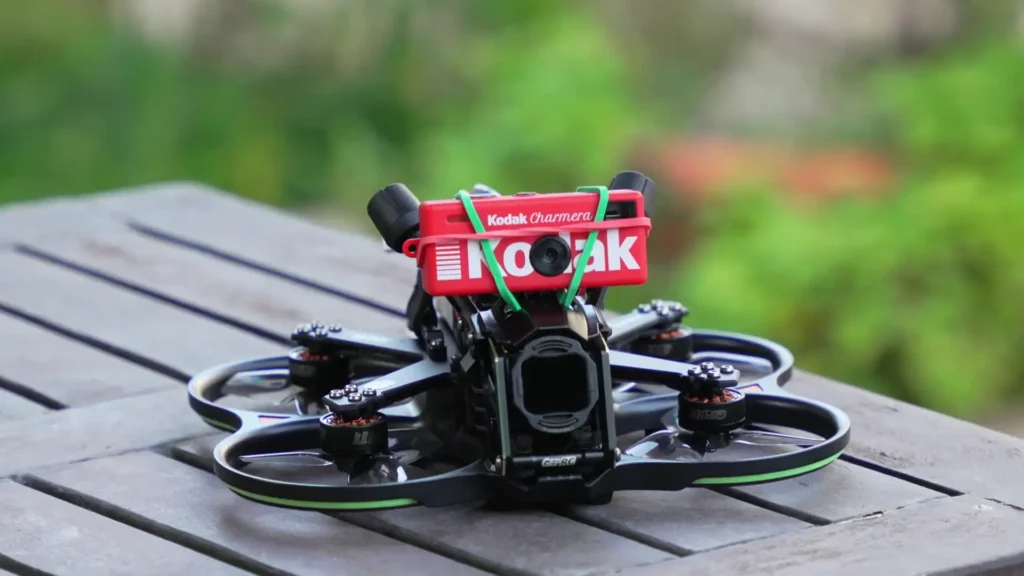
In terms of ease of flying, the GEPRC Cinebot25 V2 is comparable to the Cinelog30 V3, but it has a clear edge when it comes to takeoffs and landings, making it more accessible for newer pilots.
The Cinelog30 V3, on the other hand, has the advantage of being able to go sub-250g with a small pack and supports external cameras via a 3D-printed TPU mount. No such TPU mount currently exists for the GEPRC Cinebot25 V2, though that will almost certainly change as the community gets familiar with the drone.
Table of Contents
Article Summary
The GEPRC Cinebot25 V2 is a fantastic drone. The new modular camera design looks overengineered at first glance, but it is well thought out, practical, and likely a preview of what is coming from GEPRC across their 2026 lineup. It flies smoothly, handles throttle forgivingly, and is packed with features — GPS, LEDs, a solid flight controller, and excellent video transmission — at a size that remains manageable and portable. It is not a sub-250g drone, and it is not designed for aggressive freestyle flying. But within its intended purpose — smooth, cinematic FPV footage with a forgiving flight experience, it does everything right.
Read More : GEPRC DarkStar 16 vs DarkStar 22 vs Cinelog 30 V3