
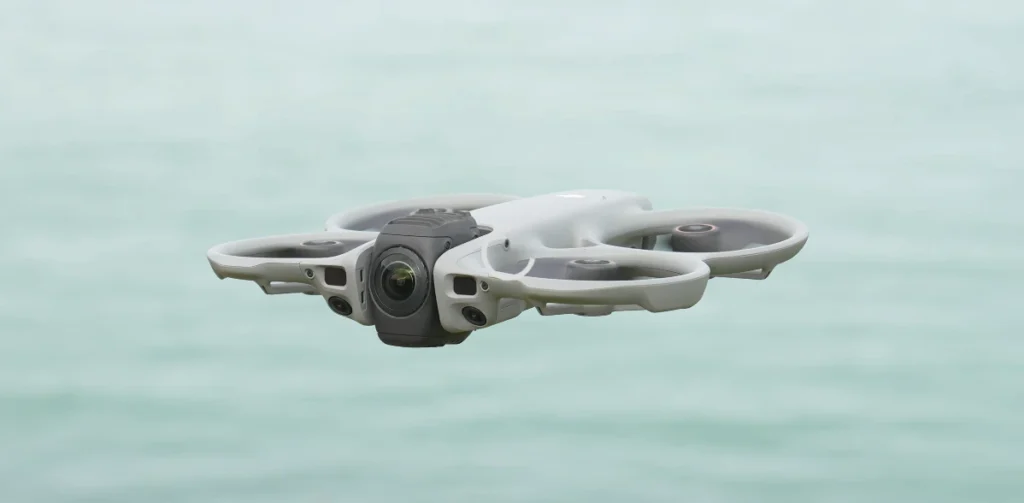
The DJI Avata 360 comes at an exciting time in the consumer drone market. For the first time, a well-known drone maker has added full spherical 360-degree capture to a cinewoop platform. This creates a drone that combines creative flexibility, FPV flying ability, and the post-production options that content creators usually find only with dedicated 360 camera systems.
But how does it really perform compared to DJI’s own well-known models? This comparison looks at the Avata 360 side by side with the Avata 2 and Mini 5 Pro in key areas like imaging, flight experience, tracking, battery life, obstacle avoidance, and overall creative value. The goal is to provide you with a clear, evidence-based answer.
Single Lens vs 360 – Understanding the Trade-Off
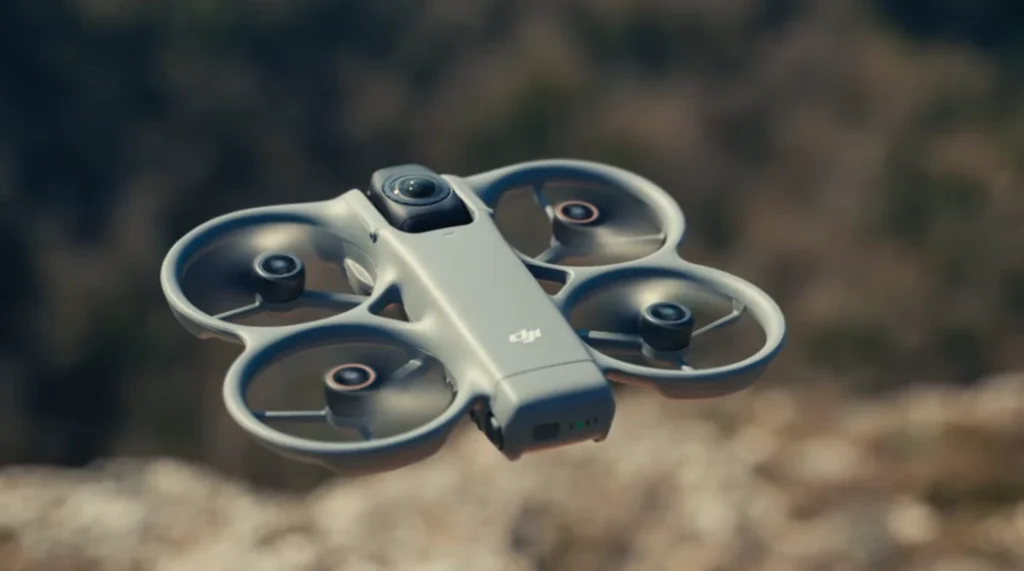
Before any direct comparison starts, we need to clearly frame the main question that the Avata 360 brings to the drone market. The choice between a single-lens drone and a 360 drone is similar to the choice action camera users have faced for years, and the same advantages and disadvantages apply in the aerial context.
A single-lens drone, like the Mini 5 Pro or Avata 2, captures one direction at a time with the highest possible resolution for its sensor size. The operator makes all framing and composition choices while flying. In contrast, a 360 drone captures everything at once, though it has a slightly lower effective resolution for any given export direction.
All framing decisions are made during post-production. The question is not about which method is better overall, but which method better meets the specific creative goals and workflow of the individual operator.

Avata 360 vs Mini 5 Pro – Image Quality
The Avata 360’s biggest advantage over the Mini 5 Pro is the unlimited post-production reframing that 360 capture allows. The Mini 5 Pro can shoot in vertical format, which is increasingly important for social media, but the operator must choose that format before the flight.
In contrast, the Avata 360 captures everything at once, letting the final output be reframed to square, vertical, horizontal, or any other aspect ratio later, with total freedom.
A classic forward flight with an upward camera tilt is one of the most popular and visually effective moves in aerial cinematography. This difference shows clearly. On the Mini 5 Pro, getting this shot requires precise manual camera tilt during the flight. If the timing or rate of tilt is off, the shot has to be repeated.
With the Avata 360, the entire move is reconstructed during post-production using keyframes in DJI Studio. From a single flight pass along a building facade, six or more completely different shots with various angles, perspectives, and framing decisions can be created during editing, all from one battery, one take, and one flight.
Spherical photos also highlight this difference. The Mini 5 Pro can take 360 panoramic photos, but it does so sequentially. The drone must capture individual frames while rotating and stitch them together, which is time-consuming and prone to motion artifacts. The Avata 360, on the other hand, captures the entire spherical scene in one moment.
However, for traditional non-spherical photography, the Mini 5 Pro still has a clear advantage. Its conventional framing flexibility and better single-lens image quality make it a stronger tool for still photography overall.
Avata 360 vs Avata 2: FPV Flight Performance
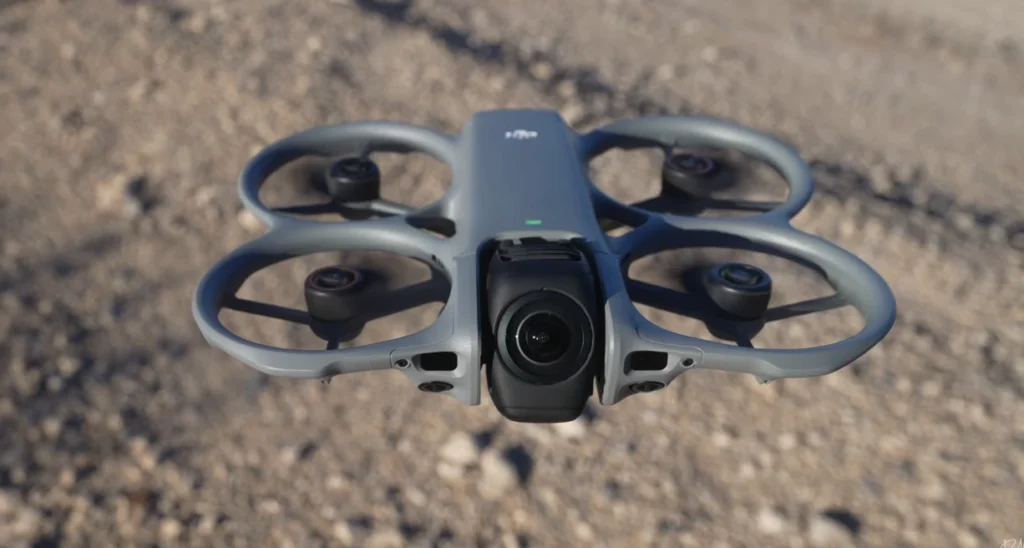
The biggest drawback of the Avata 360 when compared to the Avata 2 is that it lacks a full manual FPV flying mode. The Avata 2 can perform dives, rolls, and altitude changes in full manual acro mode, all of which create a type of aerial footage that looks raw, exciting, and physically real.
The stabilized sport mode cannot match this quality. Manual FPV captures images that truly seem three-dimensional and convey speed and movement in ways that automatic flight modes cannot.
The Avata 360 does not provide this mode, reportedly because of motor power limits. The simple acro features on the Avata 360 mimic flip and roll effects through in-camera processing instead of actual drone movements. Experienced FPV pilots will notice this difference right away and may find it unsatisfying. While these virtual acro modes are interesting, they do not have the physical authenticity that makes real manual FPV flying so engaging.
The practical effect is clear: for operators whose artistic vision relies on the dynamic, fast, and raw shooting style that full manual FPV allows, the Avata 2 is still the best option. The Avata 360 cannot take its place.

The Avata 360’s Best Control Option
After testing all available control configurations, the Motion Controller 3 stands out as the best way to fly the Avata 360. It provides an intuitive and natural flight experience, delivering results that are much closer to manual FPV than the FPV Controller 3 in sport mode.
The shots taken with the Motion Controller are genuinely usable and visually appealing. While they are not equivalent to full manual flying, they offer a reasonable and creative alternative for operators who do not fly manual FPV.
Flying the Avata 360 in 360 mode with FPV goggles and the FPV Controller takes practice and requires adjusting your orientation. My initial attempts at FPV flying in 360 mode with goggles led to a disorienting experience that resulted in a tree collision during testing.
This confirmed that the immersive 360 goggle experience, combined with managing FPV flight, has a significant learning curve. Replacing the lens after the crash was simple and took only a few minutes using the included suction cup tool. This offered a practical solution to an frustrating moment.
Head Tracking: A Genuine Advantage for the Avata 360
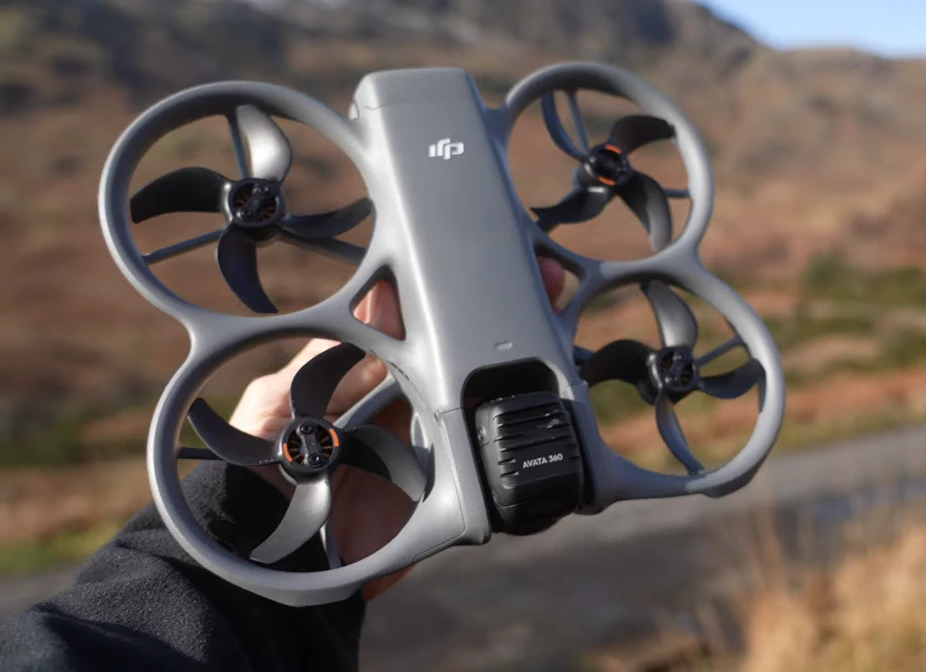
Both the Avata 360 and Avata 2 support head tracking through the Goggles 3, but the implementation quality differs substantially between them. On the Avata 2, head tracking requires the entire drone to physically rotate to point the camera a mechanical approach that produces slow, imprecise, and disorienting results.
On the Avata 360, head tracking works by moving the virtual camera within the 360 sphere while the drone maintains its flight path producing a genuinely responsive and effective experience.
A forward direction vision assist in the corner of the goggle display prevents the pilot from losing orientation or flying into obstacles. This is one of the more quietly significant advantages of the 360 format in practical flying contexts.
Easy Acro vs Real Acro
The Avata 360’s easy acro modes produce virtual flips and rolls through in-camera processing triggered by motion controller inputs. The Avata 2’s equivalent moves are physically executed by the drone real rolls and flips that produce genuine kinetic footage.
The difference in creative impact is significant. Virtual acro moves are visually interesting but lack the physical authenticity that makes real FPV maneuvers compelling. After the initial novelty, they are likely to see limited use in serious creative workflows.
Free Spotlight Mode: The Avata 360’s Standout Feature
One of the most genuinely impressive capabilities of the Avata 360 is its Free Spotlight mode a feature that was previously exclusive to the professional-grade DJI Inspire 3 and represents a meaningful step forward for the consumer drone category.
Free Spotlight decouples the drone’s flight direction from the camera’s pointing direction, displaying the drone’s forward-facing view in the main screen while showing the locked subject view in a corner inset. This effectively simulates the experience of a dual-operator drone one pilot flying, one controlling the camera within a single aircraft operated by a single person.
The result is genuinely dynamic tracking shots that follow subjects at high speed while maintaining perfect subject framing throughout. Testing over a moving vehicle demonstrated the feature’s effectiveness clearly the subject remained locked in frame across an aggressive, high-speed flight path.
This is one of the Avata 360’s most compelling differentiators and a feature that justifies serious consideration from solo content creators who produce tracking and action footage.
Tracking Performance
Both the Avata 360 and Mini 5 Pro offer active tracking with subject-following path automation and an auto mode in which the drone selects its own movement paths. Performance quality across both platforms is broadly comparable.
The Avata 360 holds a clear advantage in tracking speed it can execute tracking sequences at significantly higher speeds than the Mini 5 Pro, which produces more dynamic and visually energetic results in action contexts.
Battery Life
Hover testing to critical battery produced the following real-world results. The Avata 2 landed first at approximately 18 minutes. The Avata 360 landed next at approximately 19 minutes a marginal one-minute difference that makes the two platforms essentially equivalent in endurance.
The Mini 5 Pro’s standard battery delivered approximately 26 minutes and 30 seconds, with the Plus battery estimated at approximately 41 minutes a substantial endurance advantage over both FPV platforms.
Read More: DJI Avata 360 Unboxing & First Look
Obstacle Avoidance
The Avata 360 features omnidirectional obstacle avoidance, including a forward LiDAR sensor. Forward-facing obstacle detection performed reliably across the majority of test scenarios.
Two limitations were identified: backward obstacle avoidance struggled with moving objects, and obstacle sensing performance degraded in conditions with strong direct sunlight behind the moving subject.
Following the direct impact test with obstacle avoidance disabled, contact with the drone at normal flying speeds produced no injury to the operator a practical safety confirmation relevant for proximity and people-adjacent flying.
Size, Weight, and Portability
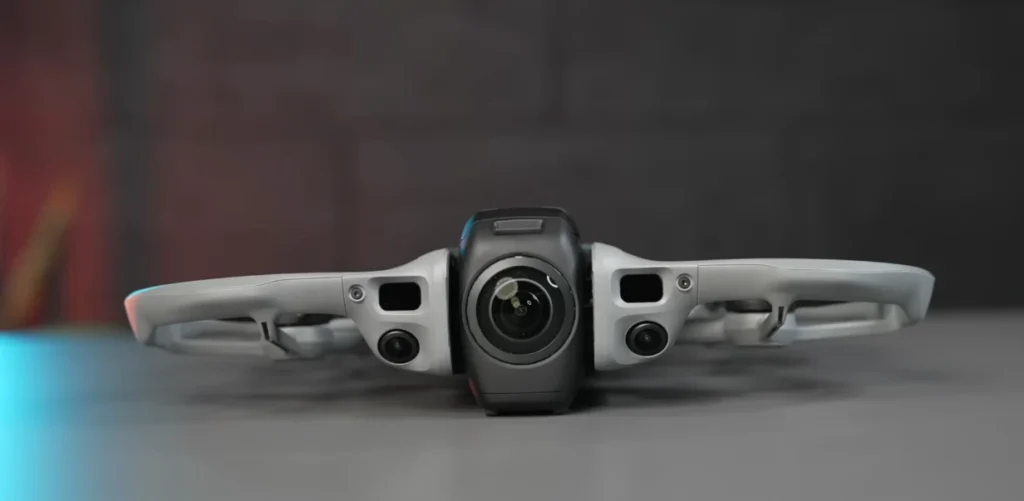
The Avata 360 has a marginally larger footprint than the Avata 2 and is slightly heavier as a consequence of the 360 camera assembly and associated mechanical components. The drone is thinner in profile to accommodate the dual lens configuration.
The Mini 5 Pro, when folded for travel, is substantially smaller and lighter than either FPV platform a meaningful practical consideration for operators who travel frequently with multiple drones and prioritize packing efficiency.
The Avata 360 is also the loudest of the three aircraft noticeably higher-pitched than both the Avata 2 and Mini 5 Pro which is relevant for shooting environments where drone noise is a concern.
Table of Contents
Final Verdict: Which Drone Is Right for You?
Choose the DJI Avata 360 if your priority is creative flexibility, multi-angle output from single flights, post-production reframing freedom, the Free Spotlight tracking feature, or immersive VR-style head-tracked flying. It is the right drone for solo content creators, social media-focused operators, and anyone whose workflow benefits from getting multiple shots from a single flight pass.
Choose the DJI Avata 2 if full manual FPV flying is central to your creative identity. The dynamic, physically raw footage that manual acro produces is something no other DJI platform at this price point can replicate, and the Avata 2 does it better than anything else in its class.
Choose the DJI Mini 5 Pro if maximum image quality, superior battery endurance, travel portability, and conventional cinematic drone capability are your primary requirements. It is the strongest all-around performer across the three platforms for operators who are not specifically drawn to the FPV flying experience.
Read More: FCC Opens Proceeding to Advance U.S. Drone Dominance