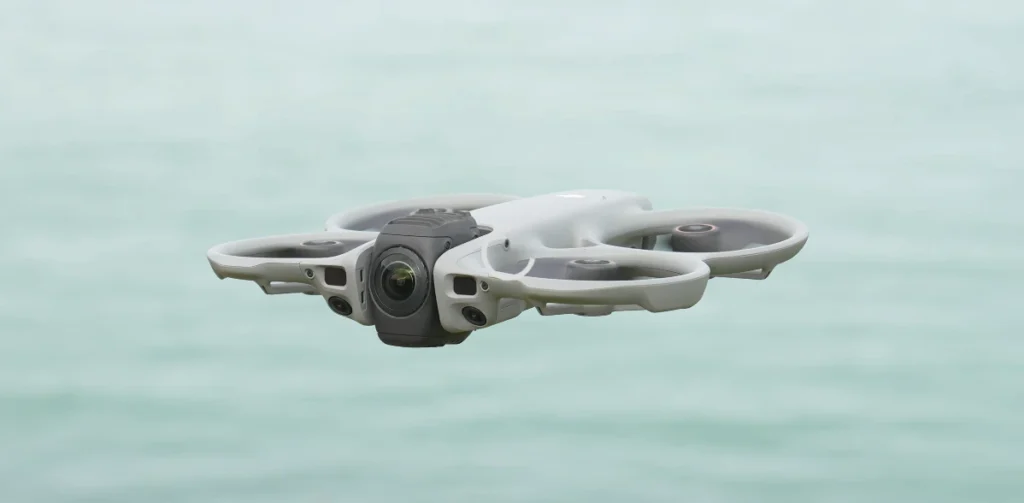

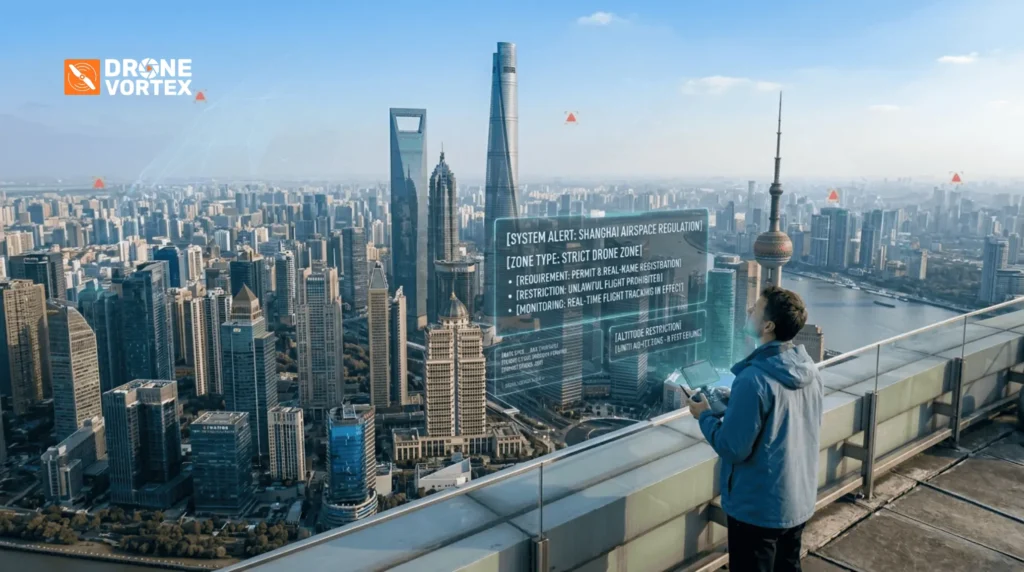
China is the undisputed leader in global drone manufacturing, home to the world’s largest drone maker and millions of registered operators. Yet the country is rapidly transforming itself into one of the most restrictive places on Earth to fly one. A sweeping wave of new regulations is reshaping the skies over Chinese cities, drawing sharp criticism from hobbyists, entrepreneurs, and industry experts who warn that the crackdown could undermine the very industry Beijing helped build.
Tighter Rules, Harsher Penalties
Since January, Chinese authorities have escalated enforcement against unauthorized drone flights, raising penalties to include possible jail time. Beginning in May, all operators must register their aircraft under their real names, linking equipment to official identification or cellphone numbers. Permits must be secured at least one day in advance in restricted zones, which cover most Chinese cities, and flight data will be transmitted to the government in real time.
Limited exceptions exist for small drones below 400 feet in certain open areas, but such locations are few. Most casual or recreational flights in urban settings now require navigating a complex bureaucratic process before any flight can take place.
Beijing went further in March, announcing a near-total ban on drones within the capital. Drones and their key components cannot be sold, rented, or brought into the city, and travelers from other provinces will have their bags inspected.
Existing owners may keep their aircraft only if they register with police by April 30, with no single address permitted to hold more than three registered drones. China had already required registration and zone-based restrictions since 2024, but enforcement has intensified sharply in recent months, catching many operators off guard.
A Crackdown Felt on the Ground
The human cost of these policies is visible across Chinese social media, where platforms are flooded with accounts of drone owners being questioned, fined, detained, or having equipment confiscated without clear explanation. A widely shared meme on Douyin parodies a DJI marketing slogan, recasting “Don’t let the sky wait too long” as “Don’t let the police wait too long.” A video featuring the parody has been liked and shared more than 60,000 times.
Several drone users, speaking anonymously for fear of harassment, described troubling encounters. Cat Yang of Shanghai obtained preliminary approval for her school-age son to fly a drone, only to be denied final clearance on the day of the flight with no explanation. “The police even made fun of me, telling us to buy a toy instead,” she said.
A drone owner from northern China submitted over three dozen applications and received approval for only two, both limited to below 30 feet and within line of sight. In Beijing, residents reported receiving police calls the moment they powered on their drones, even before the city’s new rules were announced.
For one 35-year-old enthusiast in northeastern China, the restrictions ended an entrepreneurial dream. After investing roughly $2,000 in a DJI drone hoping to start a photography business, more than two dozen rejected applications forced him to abandon the plan entirely.
The Official Justification
The Ministry of Public Security has defended the rules as necessary for public safety, citing risks from hacked drone systems and incidents that endangered civil aviation. Officials pointed to a case in which an operator flew within 800 meters of a commercial aircraft, another involving a drone flown into a no-fly zone near an airport, and a midair collision last year in which two drones crashed onto a Shanghai skyscraper. “The skies are not above the law,” the ministry stated.
Authorities have also framed the regulations as groundwork for China’s “low-altitude economy,” covering commercial drone use in food delivery, agriculture, and power line maintenance, a vision featured in China’s latest five-year plan. Li Mo, director of the Low-Altitude Economy Research Center at the Hong Kong University of Science and Technology, compared the approach to tidying a room before guests arrive.
“We need to first put the airspace in order before embracing larger-scale, low-altitude economy activities,” he said.
while acknowledging the rules could cause short-term confusion. By the end of 2025, China had over three million registered drones, a 50 percent increase from the prior year.
Security Concerns Behind the Curtain
Analysts believe national security considerations are also driving the crackdown. Conflicts in Ukraine and elsewhere have demonstrated how inexpensive consumer drones can become effective tools of surveillance and attack, a reality Beijing has closely observed.
Drew Thompson, a former Pentagon official and senior fellow at Singapore’s S. Rajaratnam School of International Studies, said the military effectiveness of consumer drones in Ukraine “undoubtedly raises concerns in Beijing about this risk to the physical security of its senior leaders.”
The irony is significant. China is the world’s largest producer of consumer drones and has supplied drones and components used in various conflict zones. While Beijing claims strict control over dual-use exports, Ukrainian officials have alleged that Chinese companies cut off supplies to them while continuing to supply Russia. This geopolitical dimension suggests authorities are responding to a perceived broader threat, not merely managing domestic airspace.
Industry Fallout and Pushback
The regulations are leaving visible scars on the domestic drone market. Dealers report sales have dropped sharply, while online secondhand listings have surged as owners offload equipment they can no longer use.
DJI, the world’s dominant drone manufacturer, faces pressure on two fronts: its domestic customers are being grounded by their own government, while the United States banned new DJI products in December on national security grounds.
DJI filed a lawsuit in February seeking to overturn that decision. For readers tracking how these shifts are affecting drone manufacturers and the broader market, Drone Vortex provides up-to-date industry news and developments worth following.
Some in China’s business community are pushing back. The chairman of Xpeng recently proposed distributing airspace management to regional governments rather than keeping it centralized. Wang Yadi, who leads a drone industry group in Huainan, Anhui province, summed up the contradiction bluntly: “We haven’t developed the low-altitude economy yet, but already the sky is locked up.”
A Debate Without Easy Answers
China’s drone policies reflect a genuine tension between public safety, economic ambition, national security, and individual freedom. Military commentator Song Zhongping argued that loosening restrictions would serve defense interests, reasoning that civilian drone practice in peacetime helps build a reserve of skilled operators for future conflicts. Others contend the approach is self-defeating, as cracking down before the commercial ecosystem matures risks suppressing the very activity the low-altitude economy initiative aims to generate.
Conclusion
China’s drone crackdown reflects a government asserting control over a technology it simultaneously champions and fears. The concerns behind the rules are real, but the speed and severity of enforcement have trapped ordinary users in a tightening net, stalling legitimate activity and chilling market confidence.
Whether Beijing can find a workable balance between security and commerce will determine not only the fate of millions of Chinese drone enthusiasts, but also the future of an industry China built from the ground up and now risks grounding in its own backyard.
For those following the rapidly evolving world of drone regulations, technology, and industry news, staying informed has never been more important. As governments around the world recalibrate their approach to drone policy, resources like The Drone Vortex offer essential coverage and analysis to help enthusiasts, professionals, and businesses navigate an increasingly complex aerial landscape.