
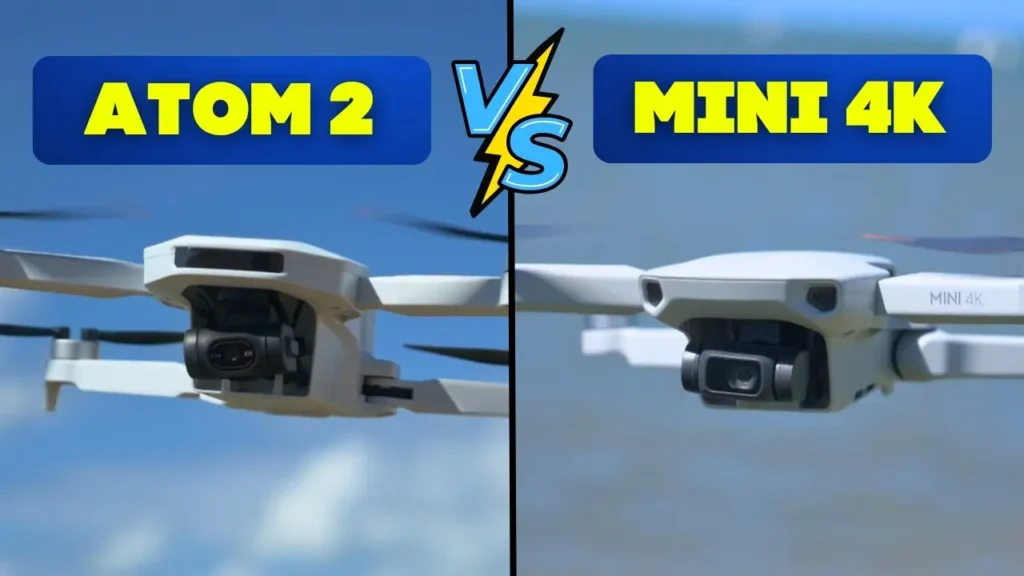
If you have been asking for a mini drone comparison, this one is for you. Today we are looking at the Potensic Atom 2 vs DJI Mini 4K. Both drones sit at a similar price point, share a similar footprint, and have a lot in common on the surface. However, there are also some notable differences between these two drones, and many people are genuinely torn between the two when making a purchase decision. So let us break it all down.
Form Factor and Build Quality
Starting off with the form factor and build quality, both drones feel extremely solid in the hand. They both feature a folding, portable design, which makes them easy to carry around and travel with. The order of the legs and the way they fold out is slightly different between the two, but overall the footprint is very similar across the board. At a glance, they look quite alike and it can actually be a little hard to tell them apart.
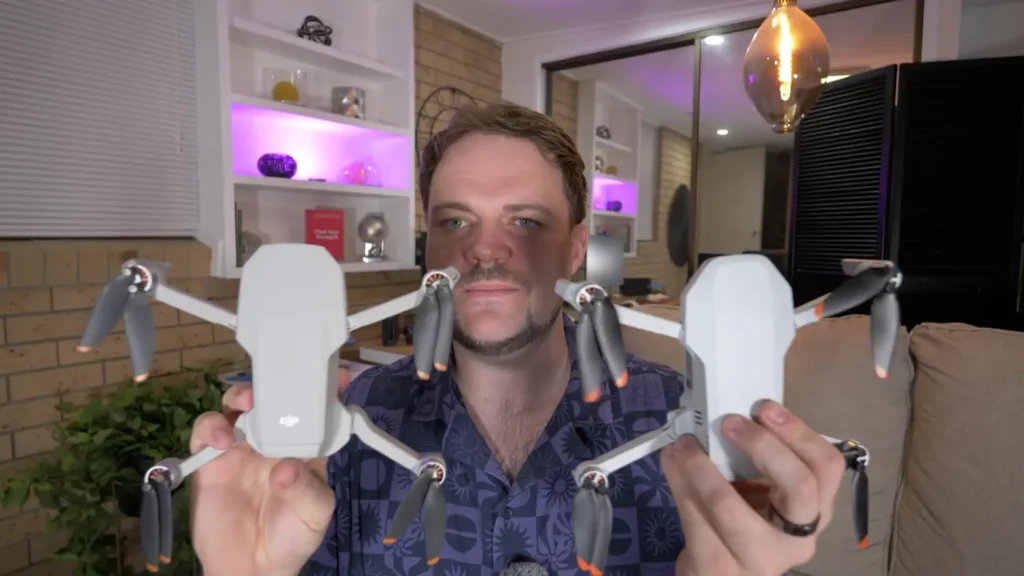
It is worth noting that the DJI Mini 4K is essentially a rebranded Mini 2. So if you already own the Mini 2, you are looking at a very similar drone. It captures 4K video and carries over most of the same offerings from the Mini 2, with a few minor tweaks here and there. The Potensic Atom 2, on the other hand, feels like a completely different drone compared to the original Atom. It is a significant step forward in almost every way.
Read More: Potensic ATOM 2 Long-Term Review
Key Similarities Between the Two Drones
Before getting into the differences, it is worth recognizing what these two drones share. They are both under 250 grams, which is a big deal for regulations in many countries. They both feature a three-axis gimbal for stable footage.
They both shoot 4K video. And they both have a folding, compact design that makes them great for travel and on-the-go shooting. On paper, they seem very evenly matched, but the deeper you dig, the more the Potensic Atom 2 starts to pull ahead.
Camera and Sensor Comparison
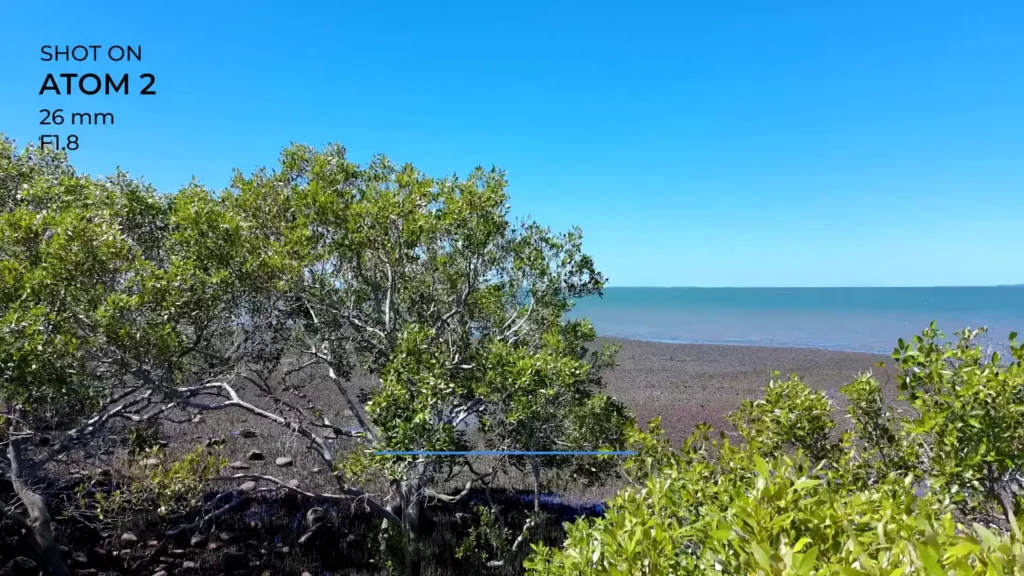
This is where things start to separate in a meaningful way. The Potensic Atom 2 is equipped with a 1/2 inch CMOS sensor and an aperture of f/1.8, while the DJI Mini 4K features a smaller 1/2.3 inch CMOS sensor with an aperture of f/2.8. The Atom 2 has a significantly better camera sensor, and you do notice the difference in real-world shooting.

It is not a leaps-and-bounds gap where one looks professional and the other looks terrible, but there is a visible improvement with the Atom 2, particularly in lower light situations.
Looking at the full spec breakdown, the Potensic Atom 2 can capture 4K at 30 frames per second and shoots 8K photos thanks to its 48-megapixel sensor. It also supports 1080p slow motion at five times speed and vertical video up to 2.7K at 30 frames per second. The DJI Mini 4K, by comparison, is limited to 4K at 30 frames per second with a 12-megapixel sensor.
There is no vertical video support and no slow motion options. You can shoot 2.7K up to 30 frames per second, which is a slight advantage over the Atom 2 in that specific resolution, but the lack of vertical video and slow motion, combined with the smaller sensor, may be enough to push buyers toward the Atom 2.
Read More: DJI Mini 4K – 34 Tips & Settings
Flight Performance and Battery Life
When it comes to flight performance, both drones are very well matched. The DJI Mini 4K offers a flight time of 31 minutes, while the Potensic Atom 2 gives you 32 minutes, so practically identical. Wind resistance is also the same on both, rated at level five, which means both can handle winds up to 38 kilometers per hour.
Neither drone features obstacle avoidance, so that is something to be aware of regardless of which one you go with. In terms of the actual flying experience, both drones handle beautifully and offer great range from their respective controllers.

Features and Intelligent Modes
This is where the clearest divide between the two drones becomes apparent. The Potensic Atom 2 offers a significantly more feature-rich experience. It includes cine roll, an AI night mode, and full subject tracking, where the drone will follow you, a car, a boat, or whatever you want it to track.
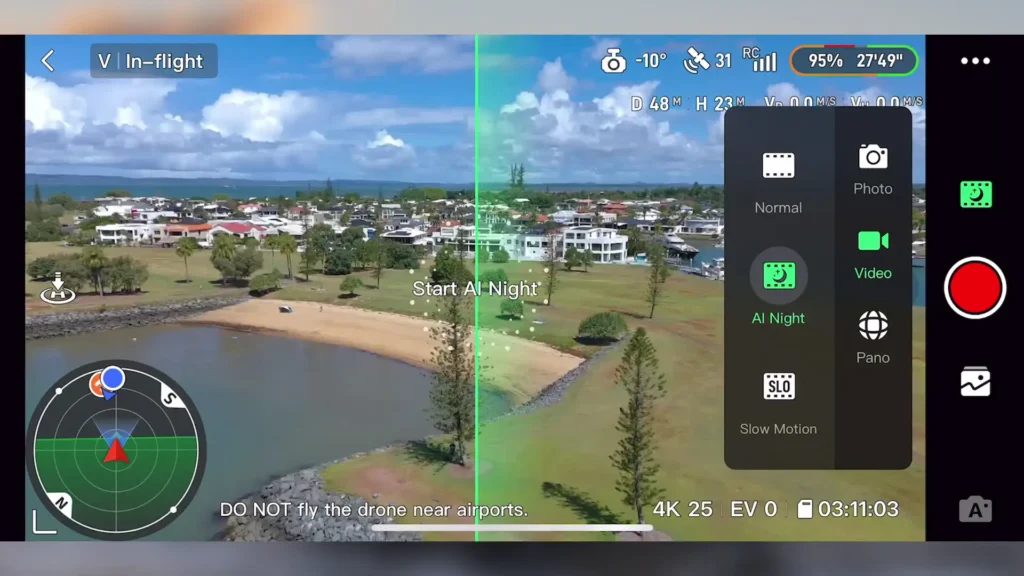
That tracking works flawlessly. It also received a waypoints feature in a recent update, which is more of a pro-level capability that you would not normally expect at this price point. There are also a bunch of other smart modes built into the Atom 2 that make it a genuinely exciting drone to fly.
The DJI Mini 4K, in contrast, is quite limited on the features front. There is no subject tracking, no waypoints, and no advanced modes like cine roll or AI night mode. It does include some basic intelligent flight modes like rocket and circle, but these are the same features that have been on the Mini 2 for years. There is nothing groundbreaking here, and compared to what the Atom 2 is offering, the Mini 4K feels a bit dated in this department.
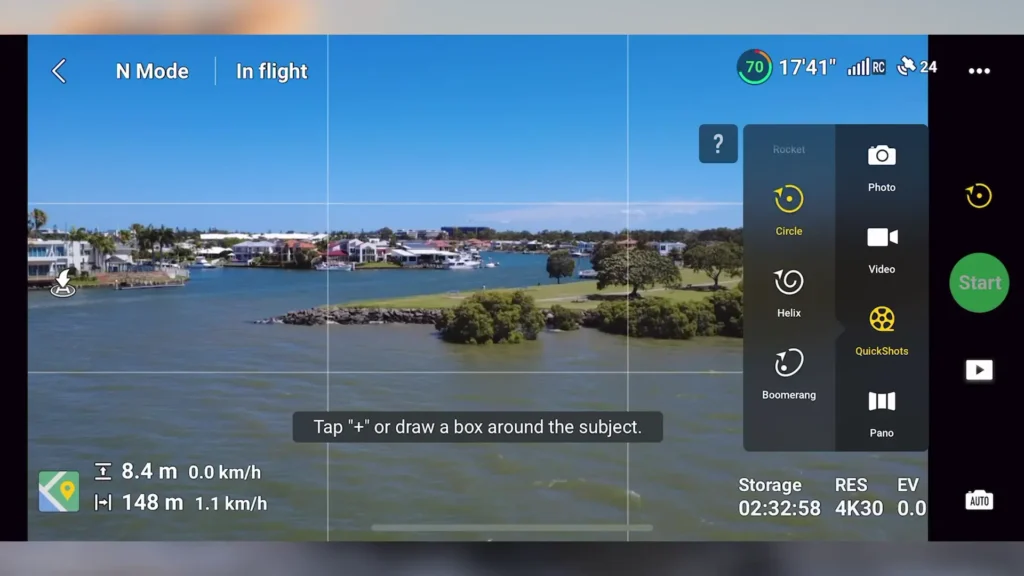
Both drones do offer digital zoom. The DJI Mini 4K supports 4K at two times zoom and 1080p at four times zoom. The Potensic Atom 2 is very similar, offering 4K at up to two times and 1080p at up to four times. However, the Atom 2 also includes a dolly zoom mode, which is another feature the Mini 4K simply does not have.
Controller and Smart Controller Option
Both controllers feel solid in the hand and deliver a good flying experience. The range from both drones is great, and the overall flight performance feels comparable when using the standard controllers. However, the Potensic Atom 2 goes a step further by offering a smart controller option.
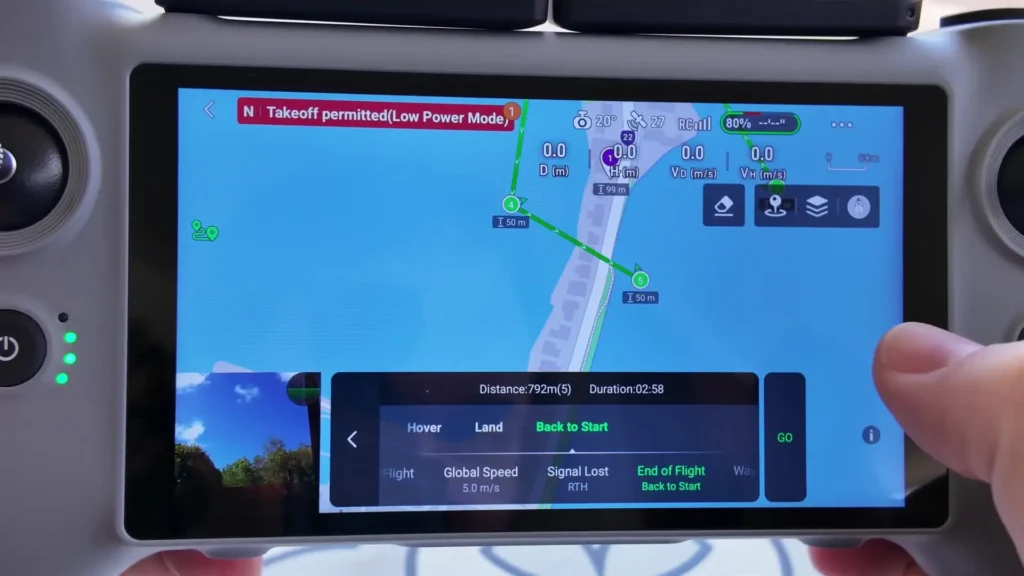
This is something the DJI Mini 4K cannot match at all. The smart controller on the Atom 2 is a genuinely impressive addition and adds a lot of value to the overall package, though it does push the price point up a little higher when you opt for that bundle.
Reliability and the DJI Ecosystem
One area where the DJI Mini 4K still holds its own is brand trust and ecosystem reliability. DJI has been making drones for years and has a proven track record. Even the Mini 2, the drone the Mini 4K is based on, is still being flown by people today who will tell you it is rock solid.
When you buy a DJI drone, you know what you are getting. It is reliable, it is well-supported, and the technology has been tested and trusted over a long period of time. If your main priority is getting something dependable that will just do the job without any surprises, the DJI Mini 4K absolutely delivers on that front.
The camera system on the Mini 4K is still a nice one, and it flies beautifully. As a straightforward, no-fuss drone, it is hard to complain too much about it. But when you stack it up directly against the Potensic Atom 2, it does start to look a little underpowered in certain areas.
Which Drone Should You Buy?
When it comes down to it, the Potensic Atom 2 is the drone that offers more for your money. It has a better camera sensor, more shooting modes, subject tracking, waypoints, AI night mode, dolly zoom, cine roll, vertical video, slow motion, and even a smart controller option.

It is pushing the envelope in ways that the Mini 4K simply is not, and for buyers who want something feature-packed and exciting to fly, the Atom 2 is the clear winner.
That said, the DJI Mini 4K is still a very solid drone and deserves an honorable mention. If you value brand reliability above all else, already own DJI accessories, or simply want a proven, dependable drone that shoots great 4K footage without any fuss, the Mini 4K will not disappoint you. It is just not the most exciting option when compared side by side with the Atom 2.

Ultimately, if you are starting fresh and trying to decide between these two drones, the Potensic Atom 2 is the recommended choice. It gives you more to work with, more to grow into, and more reasons to take it out and fly. The Mini 4K is still a great drone, but the Atom 2 is simply the better buy for most people in this category.
| Spec / Feature | Potensic Atom 2 | DJI Mini 4K |
|---|---|---|
| Camera & Sensor | ||
| Sensor size | 1/2 inch CMOS larger | 1/2.3 inch CMOS |
| Aperture | f/1.8 wider | f/2.8 |
| Max video | 4K @ 30fps | 4K @ 30fps |
| Photo resolution | 48 MP (8K photos) higher | 12 MP |
| Slow motion | 1080p @ 5x yes | None |
| Vertical video | 2.7K @ 30fps yes | None |
| 2.7K video | Up to 30fps | Up to 30fps slight edge |
| Design & Build | ||
| Weight | Under 250g | Under 250g |
| Folding design | Yes | Yes |
| Gimbal | 3-axis | 3-axis |
| Obstacle avoidance | None | None |
| Flight Performance | ||
| Flight time | 32 minutes +1 min | 31 minutes |
| Wind resistance | Level 5 (up to 38 km/h) | Level 5 (up to 38 km/h) |
| Range | Great | Great |
| Intelligent Features | ||
| Subject tracking | Yes (full follow mode) yes | None |
| Waypoints | Yes | None |
| AI night mode | Yes | None |
| Cine roll | Yes | None |
| Dolly zoom | Yes | None |
| Basic intelligent modes | Yes (rocket, circle, etc.) | Yes (rocket, circle, etc.) |
| Digital zoom (4K) | Up to 2x | Up to 2x |
| Digital zoom (1080p) | Up to 4x | Up to 4x |
| Controller & Ecosystem | ||
| Standard controller | Yes, solid build | Yes, solid build |
| Smart controller option | Yes (available as bundle) yes | None |
| Brand ecosystem | Potensic (newer brand) | DJI (proven, trusted) edge |
| Track record | Growing | Long-standing reliability edge |
Table of Contents
Final Thoughts
Both the Potensic Atom 2 and the DJI Mini 4K are capable, compact, sub-250-gram drones that will serve most beginner and intermediate pilots well. The DJI Mini 4K wins on brand trust and ecosystem reliability. The Potensic Atom 2 wins on camera quality, features, modes, and overall value for money. If you are in the market for either of these drones, make sure to check out the individual reviews for the Mini 2, the Atom 1, the Mini 4K, and the Atom 2 to get a deeper understanding of each one before making your final decision.
Read More: DJI Neo 2 FPV Manual Mode Complete Guide