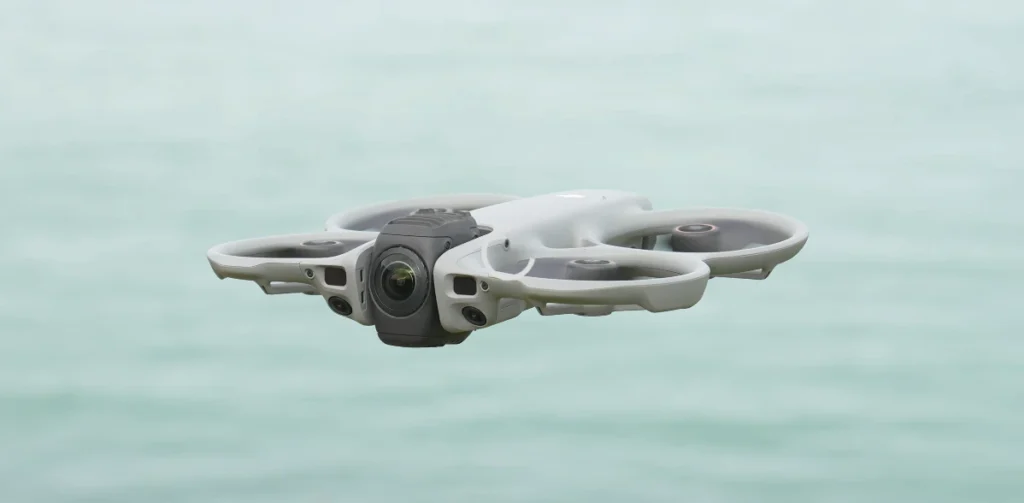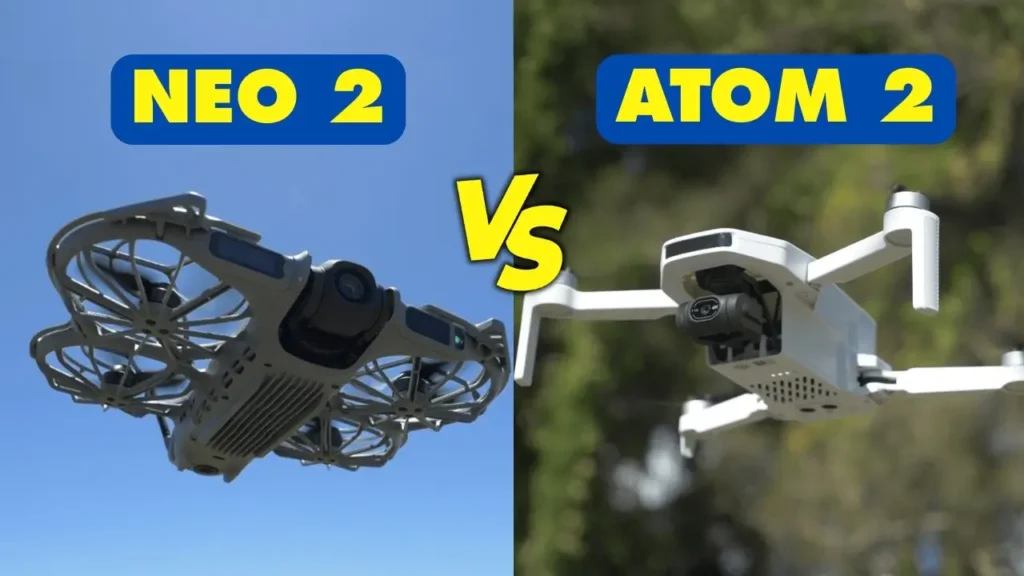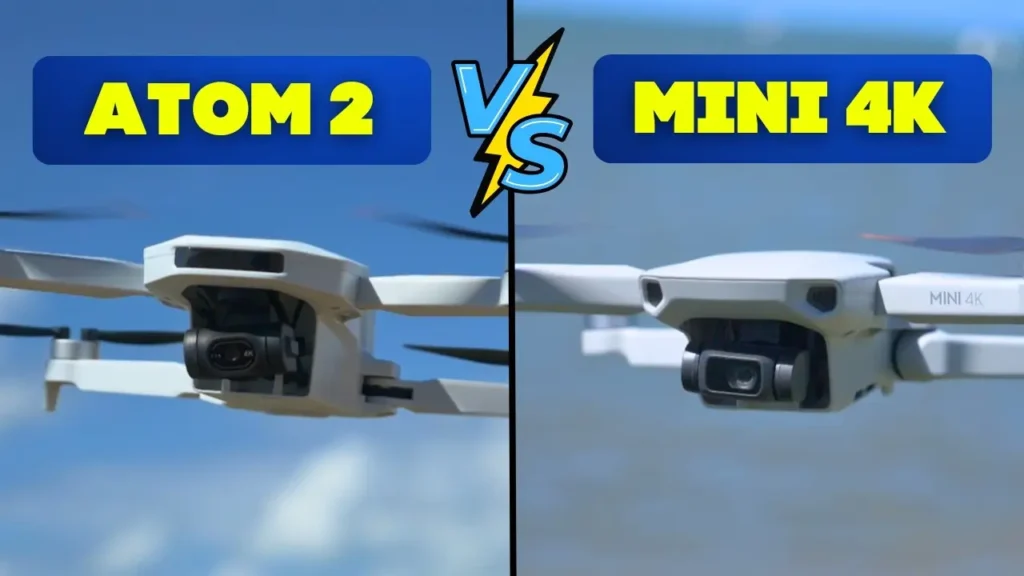
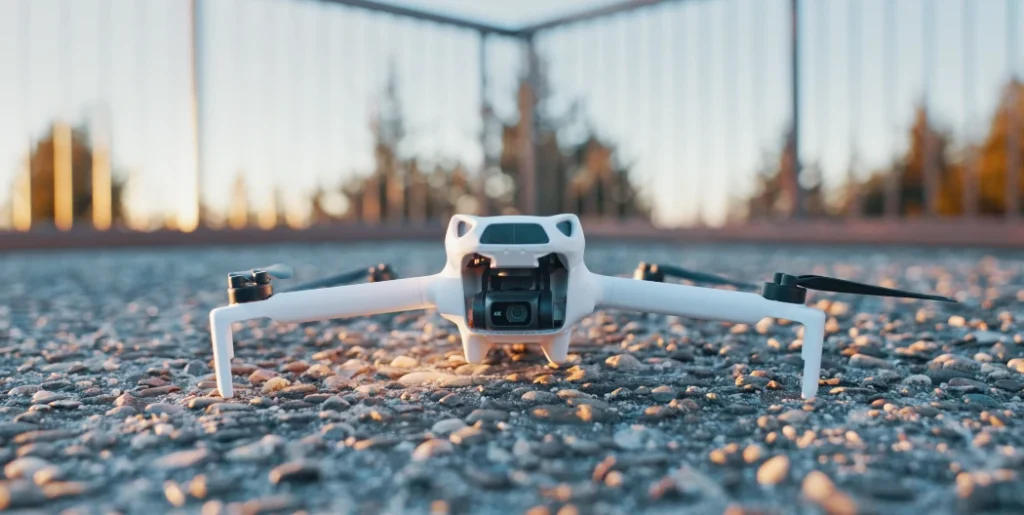
The sub-$300 mini drone market has grown remarkably competitive, and two of the most discussed contenders in this price range are the Sky Rover S1 and the Potentic Atom 2. Both are compact, lightweight, and designed for travellers, beginners, and content creators who want capable aerial footage without the weight, bulk, or cost of a professional platform.
But beneath their similar price tags and comparable form factors, these two drones differ substantially in ways that matter considerably to the flying and shooting experience.
This comparison evaluates both drones across every meaningful category: price, portability, battery life, video transmission, obstacle avoidance, tracking, camera quality, software experience, and overall usability to give you a clear, evidence-based answer on which drone delivers the best value for your investment.
Price
The Sky Rover S1 is priced at $289, while the Potentic Atom 2 retails at $299 a $10 difference that is functionally negligible in most purchasing decisions. However, given that the S1 proves superior across the majority of the categories evaluated in this comparison, that marginal price advantage compounds into genuine overall value.
Size, Weight, and Portability
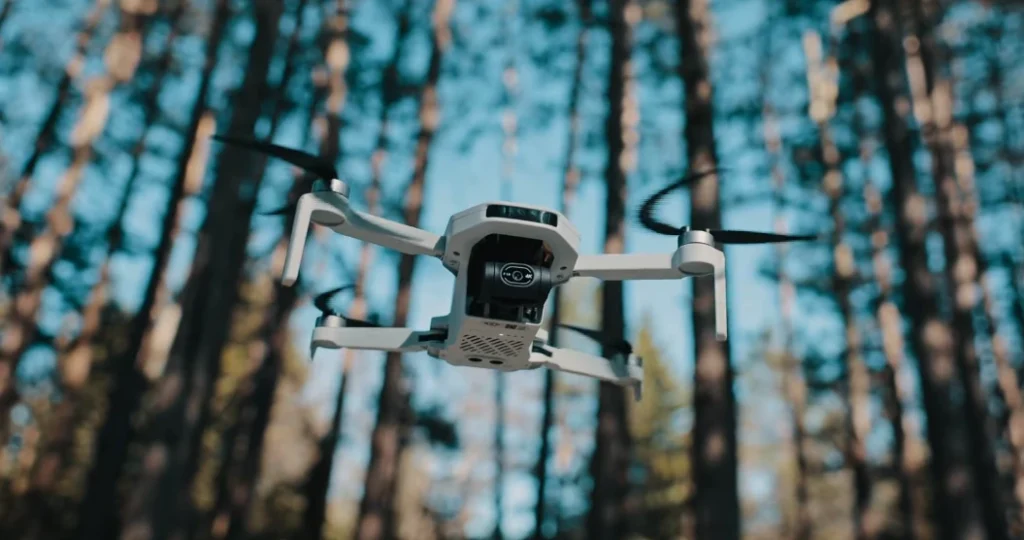
Both drones are compact and light enough to carry without inconvenience on a hike, in a camera bag, or during travel. Crucially, both weigh in just under the 250-gram regulatory threshold meaning that in most countries, including the United States for recreational use, neither drone requires FAA registration. This is a meaningful, practical benefit shared equally by both aircraft.
The Sky Rover S1 is marginally larger than the Atom 2 as a standalone aircraft, but this is effectively offset by the fact that its remote controller is significantly more compact than the Atom 2’s controller, which is noticeably wider, bulkier, and heavier. The total carrying footprint between the two setups is comparable.

Battery Life
Battery life is one of the more decisive differentiators between these two drones. The Sky Rover S1 is rated at 40 minutes of maximum flight time, while the Potentic Atom 2 is rated at 32 minutes. Rated flight times are always measured under controlled conditions that do not reflect real-world operation, so independent hover testing in identical conditions produced more reliable comparative data: the S1 delivered 29 minutes of practical flight time versus 22 minutes for the Atom 2 a difference of seven minutes that represents approximately 32% more usable flight time per battery.
A secondary test measuring battery consumption over an equivalent flight at maximum speed returned the S1 at 68% battery remaining versus the Atom 2 at 56% further confirming the S1’s superior endurance. For operators who want to maximize time in the air between charges, this is a significant real-world advantage
Video Transmission System
Transmission performance is evaluated across two dimensions: control range and video feed quality. On raw control range, the Potentic Atom 2 holds a slight edge signal degradation began at approximately one mile on both drones during open-environment testing, but the Atom 2 triggered return-to-home at roughly 6,900 feet versus 5,700 feet for the S1.
However, video feed quality tells a markedly different story. The Sky Rover S1’s video transmission is substantially smoother, sharper, and most critically near-instantaneous in its response to control inputs. The latency between pilot input and on-screen response is negligible on the S1, providing a fluid and confident flying experience.
The Potentic Atom 2 exhibits a noticeable and consistent lag between input and feed response, which degrades the flying experience and introduces a genuine safety consideration in environments where fast reaction to obstacles is required. The Atom 2 also occasionally produces random video feed dropouts at close range a reliability issue not observed on the S1.
In practical flying conditions, most operators will never approach the outer limits of either drone’s control range. The quality, reliability, and responsiveness of the live feed, on the other hand, affects every single flight. On that basis, the transmission advantage clearly belongs to the S1.

Subject Tracking
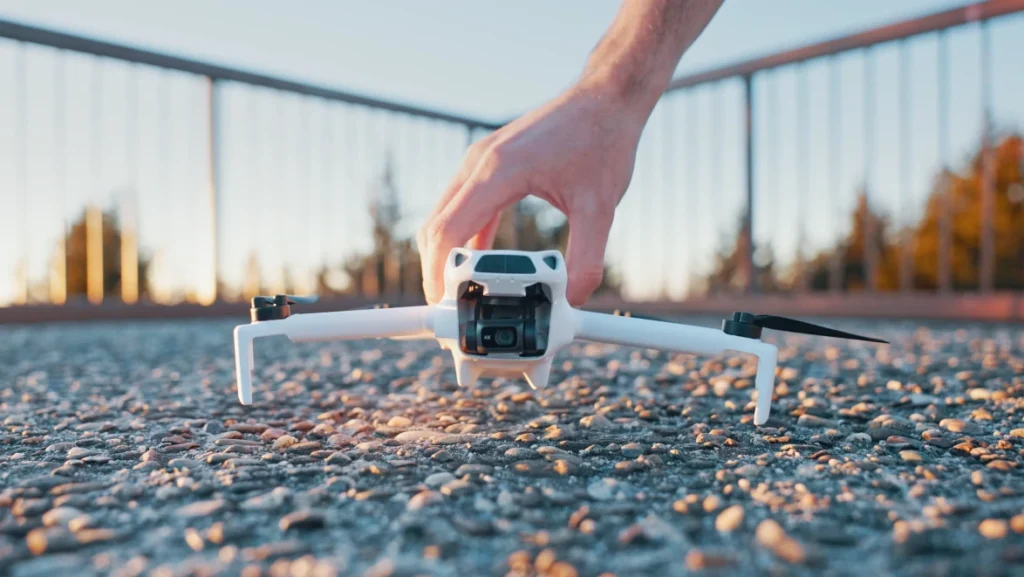
Both drones offer subject tracking functionality, but the implementation quality differs meaningfully between them. The Potentic Atom 2 supports tracking from behind and from the side, but imposes a constraint that significantly limits creative application: rear tracking requires the drone to be angled at least 25 degrees above the subject before it will activate.
This elevation requirement forces the pilot to fly at considerable height, increases the risk of collision with overhead obstacles, and eliminates low-angle tracking shots entirely, a restriction that has no obvious technical justification and one that experienced operators will find consistently frustrating.
Additionally, the Atom 2’s side-tracking mode deactivates if the drone’s altitude differs from its takeoff elevation, rendering it largely unusable on any terrain that involves even modest elevation changes.
The Sky Rover S1 requires a minimum altitude of only 9 feet above ground to enable tracking a reasonable safety threshold and imposes no angular restrictions on rear tracking.
It is limited to human subjects and does not support sideways tracking, but given that sideways tracking on a drone without lateral obstacle avoidance creates a significant crash risk regardless of platform, this is a reasonable design decision rather than a limitation. Tracking performance on the S1 is stable, consistent, and free of the arbitrary restrictions that undermine the Atom 2’s implementation.
Obstacle Avoidance
This category represents one of the most substantial and consequential differences between the two drones. The Sky Rover S1 is equipped with forward-facing infrared sensors that provide active obstacle avoidance in the direction of flight, in addition to downward sensors that prevent ground contact. In practical testing, the S1 will bring itself to a complete stop when approaching an object including the operator without requiring manual pilot intervention.
The Potentic Atom 2 has no forward-facing obstacle avoidance capability whatsoever. Its visual sensors provide downward collision prevention only. For beginners learning to navigate complex environments, and for any operator flying near people, structures, or vegetation, the absence of obstacle avoidance is a meaningful safety gap that the Atom 2 does not address.
At this price point, forward-facing obstacle avoidance is rare. Its inclusion on the S1 is a feature that distinguishes it from the majority of its competitive set, and its real-world effectiveness has been directly verified.
Propeller Noise
Noise testing at arm’s length produced a measured 58 dB for the Sky Rover S1 versus 66 dB for the Potentic Atom 2. An 8 dB difference is perceptually significant the S1 operates noticeably more quietly, which is relevant for urban environments, wildlife shooting, and any context where drone noise draws unwanted attention or disrupts the surrounding environment.
The Sky Rover S1 includes a hyperlapse feature that captures motion time-lapses in flight, shooting through the air while assembling a stabilized, HD time-lapse video automatically.
The drone delivers both a finished 1080p output and the option to work with the original raw image files in post-production for higher quality results. This feature is typically found on considerably more expensive platforms, and its implementation on the S1 functions reliably and produces genuinely compelling results.
Read More: Skyrover X1 VS Skyrover S1 Which Drone Should You Choose?
Image Sensor and Focal Length
Both drones are equipped with a 1/2-inch image sensor identical hardware that places them on equal footing in terms of theoretical image quality ceiling. On focal length, the S1 shoots at 24mm versus the Atom 2’s 26mm. The wider field of view on the S1 provides more compositional flexibility in the field, particularly when distance from the subject is constrained by airspace limits or physical environment.
Video Resolution, Frame Rate, and Quality
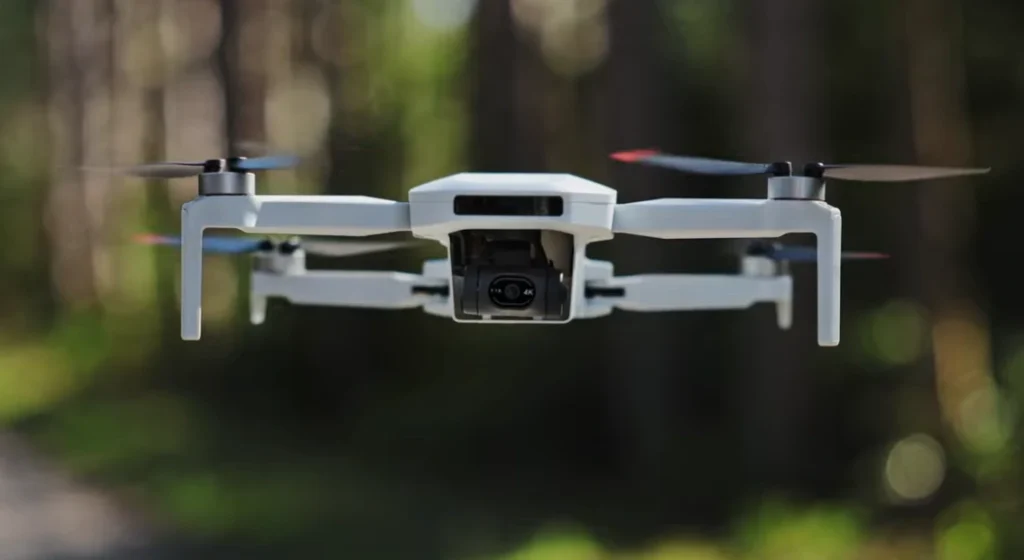
The Sky Rover S1 captures 4K video at up to 60 frames per second with a maximum bit rate of 125 Mbps at 4K/60fps and 85 Mbps at 4K/30fps, encoded in H.265. The Potentic Atom 2 is limited to 4K at 30 frames per second with a maximum bit rate of 55 Mbps and no H.265 support.
The practical implications of this difference are immediately visible in the footage. The S1 produces clean, detailed, grain-free video with accurate colour reproduction and adjustable sharpening and noise reduction parameters. The Atom 2’s footage exhibits noticeable grain, over-sharpening artifacts,
and compression smearing in high-detail or high-motion frames, the predictable result of an insufficient bit rate and the absence of modern codec efficiency. The Atom 2’s log colour profile, added as a post-launch update, was found to offer no meaningful dynamic range advantage over its standard profile and produced inferior results in practical testing.
For a $289 drone, the Sky Rover S1’s camera output is genuinely impressive and surpasses expectations for this price class.
Both drones shoot 12 and 48 megapixel stills and support RAW DNG capture providing full post-processing flexibility. Photo quality is comparable between the two platforms.
Controller Design and Ergonomics
The Sky Rover S1’s controller uses a pull-out phone mount and a simple cable connection that allows the operator to seat and remove their phone quickly and without fumbling. The form factor is compact and ergonomic, remaining comfortable to hold for extended periods.
The Atom 2’s controller requires the operator to navigate a more complex phone-mounting process inserting the phone into a center slot while managing a cable connection before securing the device in place. The controller is also considerably wider, which affects both portability and in-hand comfort. The S1’s controller is the more refined and practical design by a meaningful margin.
Read More: SkyRover S1 Review – New Mini Drone
Overall User Experience
The Sky Rover S1 delivers a clean, consistent, and reliable software and hardware experience. The application functions as expected, camera settings are preserved between sessions, recording can begin before takeoff, and no significant bugs or irrational operational limitations were encountered across testing.
The Potensic Atom 2’s user experience is materially less polished. Camera settings reset to default every time the drone is powered off, a fundamental usability failure for operators who have configured settings for a specific shooting environment. The drone locks the camera in a low-power mode until airborne and prevents recording before takeoff.
Combined with the tracking limitations and occasional feed dropouts documented elsewhere in this comparison, the cumulative effect is an experience that requires the operator to work around the drone rather than simply work with it.
Table of Contents
Final Verdict
The Sky Rover S1 wins this comparison comprehensively and convincingly across the majority of evaluated categories and at a lower price point than its competitor. It delivers obstacle avoidance, hyperlapse, 4K/60fps video, superior transmission quality, longer battery life, better colour science, a more refined controller, and a more reliable user experience than the Potentic Atom 2 can match.
For beginners and experienced operators alike, the Sky Rover S1 represents the strongest overall value available in the sub-$300 mini drone market and earns the designation of the best beginner drone under $300. The Potentic Atom 2, while a functional entry-level option, trails in too many meaningful categories to compete with an aircraft that costs less and delivers more.
Read More: The Hidden DJI Fly Restricted Update: UK C0 Mini Drones Locked Out