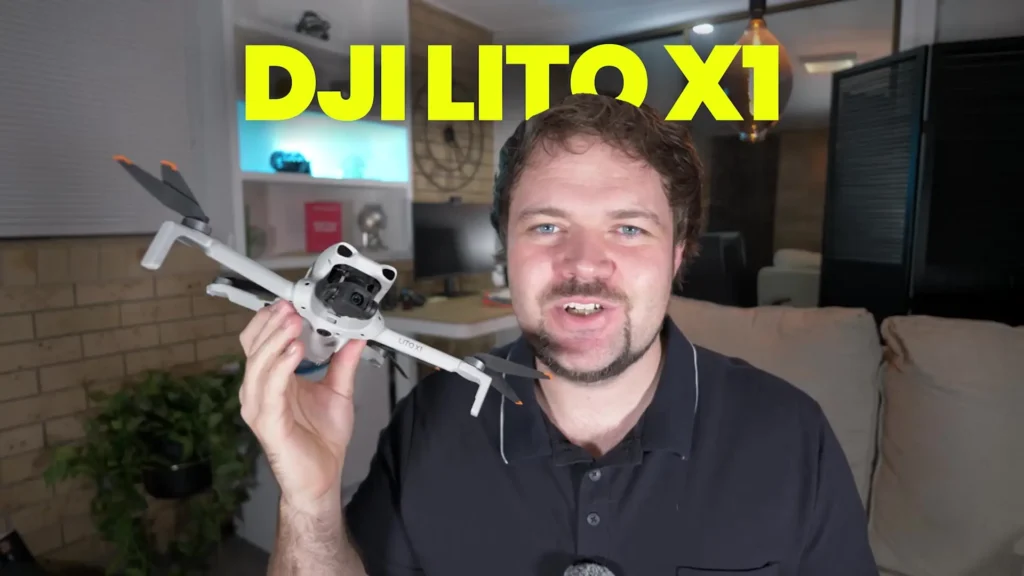

DJI has been dominating the consumer drone space for years, but the release of the Lito series feels like a proper statement. With the Lito X1, DJI is not just refreshing its entry-level lineup but completely redefining what a beginner drone can actually do.
This is the drone that replaces the non-Pro Mini tier, sits comfortably under 250 grams, and punches well above its weight class in almost every way that matters. If you’ve been eyeing a compact aerial shooter but couldn’t justify the Mini 5 Pro’s price tag, the Lito X1 deserves your full attention.
Table of Contents
Design and Build Quality
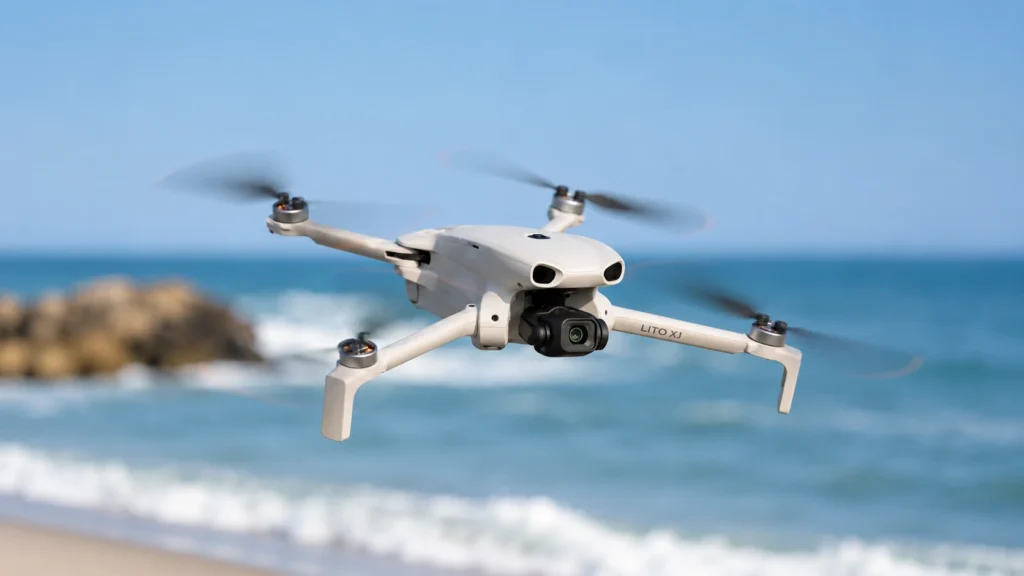
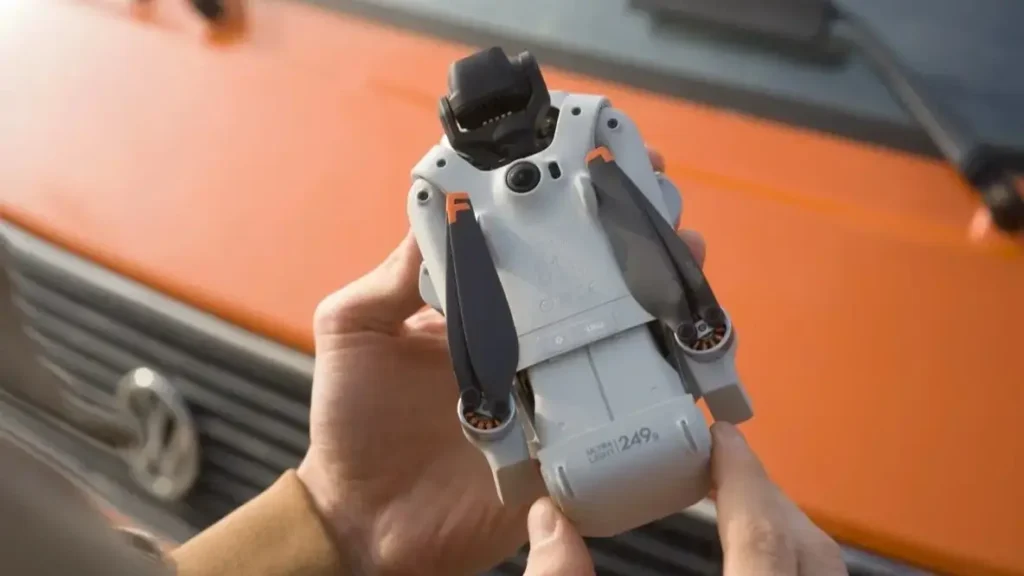
The DJI Lito X1 follows the same folding design language DJI has been refining across its Mini series. It weighs just under 249 grams, measuring 144x94x62mm when folded and opening up to 183x251x79mm when flight-ready. The entire package fits in the palm of your hand.
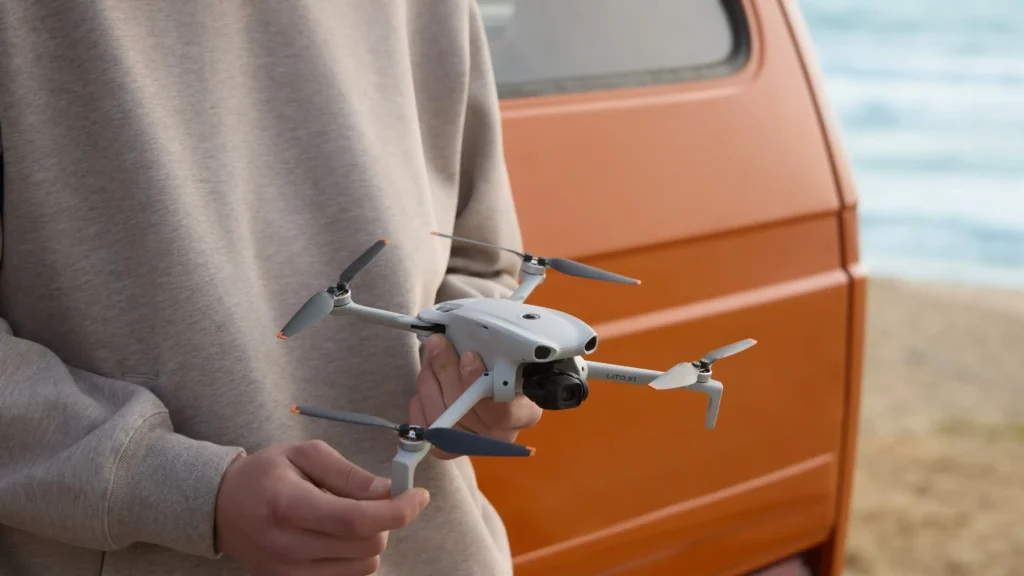
In terms of feel, it’s light without feeling cheap. The build is clearly consumer-grade rather than pro-tier, but the materials hold up well. The folding arms have a satisfying, confident click to them, and they double as the power switch since the drone automatically turns on when you unfold them.
It’s a small thing, but experienced pilots who are used to manually powering drones on will find it surprisingly intuitive once they adapt.
The front of the Lito X1 houses a flat glass panel covering the front-facing LiDAR sensors, which sit just above the camera. There are also two fisheye-style vision sensors, one on top and one on the bottom, which are the backbone of the omnidirectional obstacle detection system.
The front arm legs elevate the underside slightly so that takeoffs from flat surfaces don’t put the optical sensors at risk.
The gimbal is a 3-axis mechanical unit (tilt, roll, pan) with a mechanical range of -126° to 67°, capable of tilting the camera from directly downward to slightly upward. DJI claims angular vibration of just ±0.01°, which is outstanding for this class.
The only real physical gripe some reviewers flagged is the overhang above the camera inherited from the older Mini 1 and Mini 2 design. This top cover protects the gimbal but blocks the lens from capturing the sky directly overhead, which creates a gap when shooting 360-degree panoramas that has to be patched by software. The results rarely look natural.
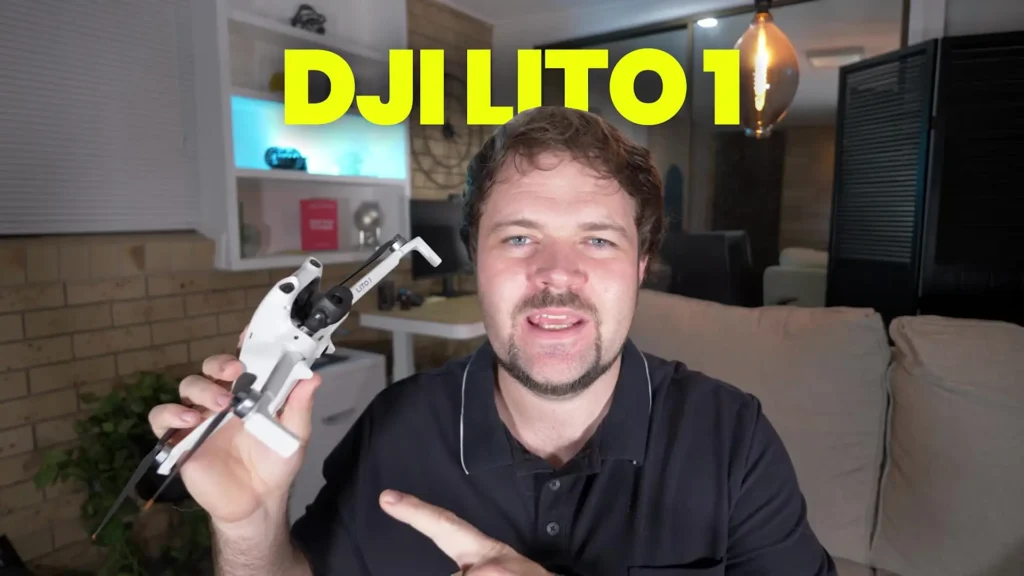
One practical note worth mentioning: the Lito X1 does not come with propeller guards, though a gimbal cover is included. It’s also worth knowing that the Lito 1 (the more affordable sibling) lacks internal storage and requires a MicroSD card, while the Lito X1 ships with 42GB of onboard storage and also supports MicroSD.
Read More: Best DJI Lito Accessories
Camera Capabilities
This is where the Lito X1 separates itself clearly, both from its sibling the Lito 1 and from older entry-level drones.
The Lito X1 is built around a 1/1.3-inch CMOS sensor with a 12-megapixel native resolution and a quad-Bayer array that allows 48-megapixel output in high-resolution mode.
The lens is a fixed-aperture F1.7, equivalent to roughly 24mm on a full-frame camera. For video, it shoots 4K at 60fps in HDR, 4K at 100fps for slow motion, and supports 10-bit D-Log M for those who want proper color grading latitude. FHD at 200fps is also available for deeper slow-motion work.
That 10-bit D-Log M support is genuinely meaningful here. At this price point, having a log profile is not something you should take for granted, and it gives colorists and serious content creators real flexibility in post, recovering highlights and shadows in a way that standard 8-bit footage simply cannot match.
This sensor class is where footage starts to look genuinely cinematic in golden hour conditions without heavy correction, and where low-light cityscapes hold detail in both the dark corners and the blown highlights of streetlights.
In good light, the camera produces sharp, punchy results with DJI’s characteristic color science. In more demanding situations, high contrast scenes, low light, or golden hour, the 1/1.3-inch sensor handles the challenge noticeably better than the 1/2-inch sensor in the Lito 1.
That said, the JVN Photography review, which tested both drones extensively in Iceland, pointed out an unexpected greenish color cast in the Lito X1’s RAW files, particularly noticeable in panoramas. The reviewer attributed this to pre-release firmware and expected it to be addressed in a software update, but it’s worth knowing about when buying currently.
On the photography side, the 48-megapixel high-resolution mode uses quad-Bayer technology, which means the extra pixels come from combining sensor data rather than from a truly higher-resolution optical system.
In real-world testing, the jump from the native 12-megapixel output to the 48-megapixel mode showed no meaningful detail improvement, and switching to high-resolution mode also reduces dynamic range. For most shooting scenarios, the 12-megapixel RAW files are the better choice.
What impressed us was how well the RAW files held up in post. The files are well optimized in size, import quickly into Lightroom, and allow meaningful exposure pushes without falling apart. That’s a real practical advantage when working in the field.
The Lito X1 does not have a rotating gimbal, which means there is no native vertical shooting mode. For social media creators who shoot in portrait orientation for Instagram Reels or TikTok, the only option is cropping horizontal footage, which reduces resolution and flexibility.
A vertical video crop mode exists, delivering around 2.7K resolution, but it is not the same as true vertical shooting. Anyone for whom portrait orientation is a primary requirement should factor this in seriously.
The digital zoom goes up to 3x, but reviewers consistently noted that anything beyond 2x results in obvious quality loss. Stick to 1x or 2x at most.
One other thing to keep in mind: the Lito X1 has no support for ND filters out of the box. Without neutral density filters, achieving the smooth, cinematic motion blur that comes from a 180-degree shutter rule in bright conditions is harder, and footage can occasionally look overly sharp and a little artificial.
Performance
Flight performance across multiple real-world tests came in well above expectations for a sub-250-gram drone.
The Lito X1 is rated to withstand winds up to 12 m/s (Level 5 resistance), and we tested it in challenging conditions and found it more capable than expected. The drone held position confidently in stronger coastal winds with minimal lateral drift, and there were no signal dropouts reported during testing within the legal flying range.
Battery drain remained more consistent than expected even in stronger winds, without the rapid drain that often affects small drones when they’re working harder against the air.
The gimbal stabilization is reliable and nearly invisible in operation, which is a hallmark of DJI. Footage from the Lito X1 in good conditions looked smooth and composed even during more dynamic flight. However, the flight responsiveness in Normal mode feels a little sluggish at times, as if the drone hesitates before reaching the intended position. Switching to Sports mode dramatically improves this, making it far easier to catch moving subjects or reach a composition before the light changes.
The maximum horizontal speed is 18 m/s in Sport mode and 10 m/s in Normal mode. The drone can reach a maximum altitude of 6000 meters above sea level. Video transmission range tops out at 15km via OcuSync 4, which is more than enough for legal flying in any country.
In terms of wind performance for video specifically, the Lito X1 is not ideal for shooting in very gusty or rough conditions. While it can hold position better than you’d expect, the footage still shows some instability in strong wind. For stills this is manageable, but for smooth video work in genuinely windy places, a larger drone is going to serve you better.
Flight time is rated at 30 minutes on the standard Intelligent Flight Battery. In real-world tests with moderate conditions, reviewers reported getting roughly 25 to 28 minutes, which is in line with what most DJI drones deliver versus their official ratings.
Extended Plus batteries push this to 52 minutes, but they push the drone over the 249-gram limit, which has regulatory implications in the EU, UK, and parts of Asia where that weight threshold determines your classification as a C0/UK0 drone.
Features
The Lito X1 ships with a solid package of intelligent flight features via the DJI Fly app.
The omnidirectional obstacle sensing system combines a 360-degree fisheye camera pair with front-facing LiDAR, giving the Lito X1 a more capable safety net than most drones in this price range. The LiDAR sensor specifically gives the drone the ability to detect obstacles in low-light environments where camera-based sensing struggles, which means you can fly more confidently at dusk or in shaded areas.
In urban environments or near trees and structures, the collision avoidance worked reliably in testing, occasionally triggering false warnings or failing to recognize the surface correctly.
ActiveTrack 360 handles subject tracking and it works well. The tracking was smooth and predictable across different scenarios, from boats on water to cyclists on a path. The system keeps the subject locked without requiring you to learn complex flight maneuvers, which is exactly what beginners need from a feature like this.
Beyond tracking, the Lito X1 includes MasterShots, which automates complete cinematic flight sequences around a subject; QuickShots, which handles pre-programmed patterns like Dronie, Helix, Rocket, Boomerang, Asteroid, and Circle; and Hyperlapse with multiple modes including Free, Circle, Course Lock, and Waypoint.
These are all well-implemented features that make the drone genuinely fun for content creators who want good results with minimal manual effort.
What the Lito X1 does not have compared to the Mini 5 Pro is worth being clear about. There is no Free Panorama mode, no gimbal roll movement, no 2x near-lossless zoom, and the AEB bracketing is limited to 3 or 5 shots rather than 7. For casual photographers this will not matter, but for someone doing serious landscape or architecture work, these absences add up.
The Wi-Fi 6 QuickTransfer feature makes moving files from the drone to a phone fast and reasonably painless. The 42GB of internal storage is genuinely convenient for day trips or situations where you’ve forgotten your MicroSD card.
One regulatory note that is highly relevant to pilots in Europe and the UK: as a C0/UK0 drone, the Lito X1 is subject to a maximum altitude of 120 meters above takeoff point when flown in those regions, regardless of where the drone was originally purchased.
This is a serious limitation for anyone flying in mountainous areas with significant elevation changes. The Plus batteries that extend flight time to 52 minutes are also not available for sale in the EU and UK, since they would push the drone above the 249-gram C0 weight limit.
Controller
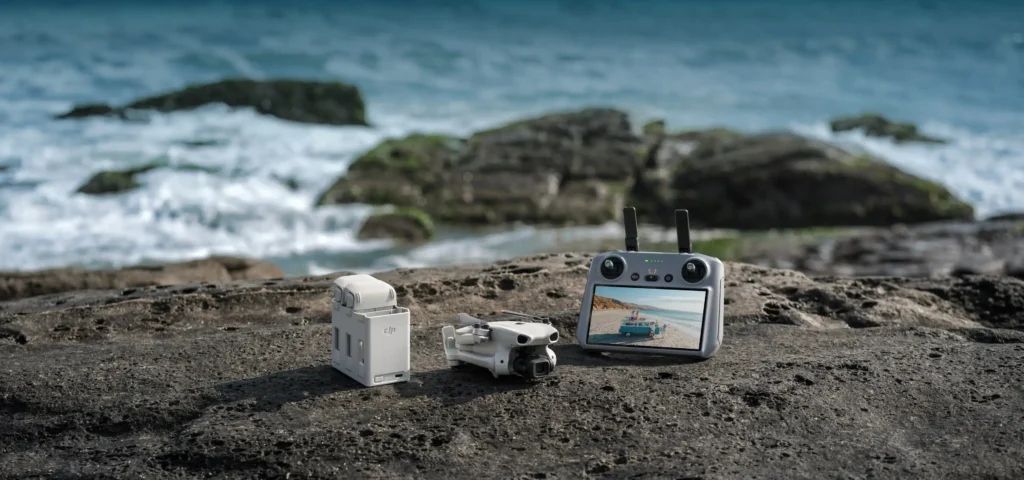
The Lito X1 is available in several configurations. The base version comes with the DJI RC-N3 controller, a lightweight bar-style remote that requires a smartphone clipped on to function as the screen. This is perfectly functional and keeps costs low, but it adds the variable of phone battery life and screen brightness to the equation.
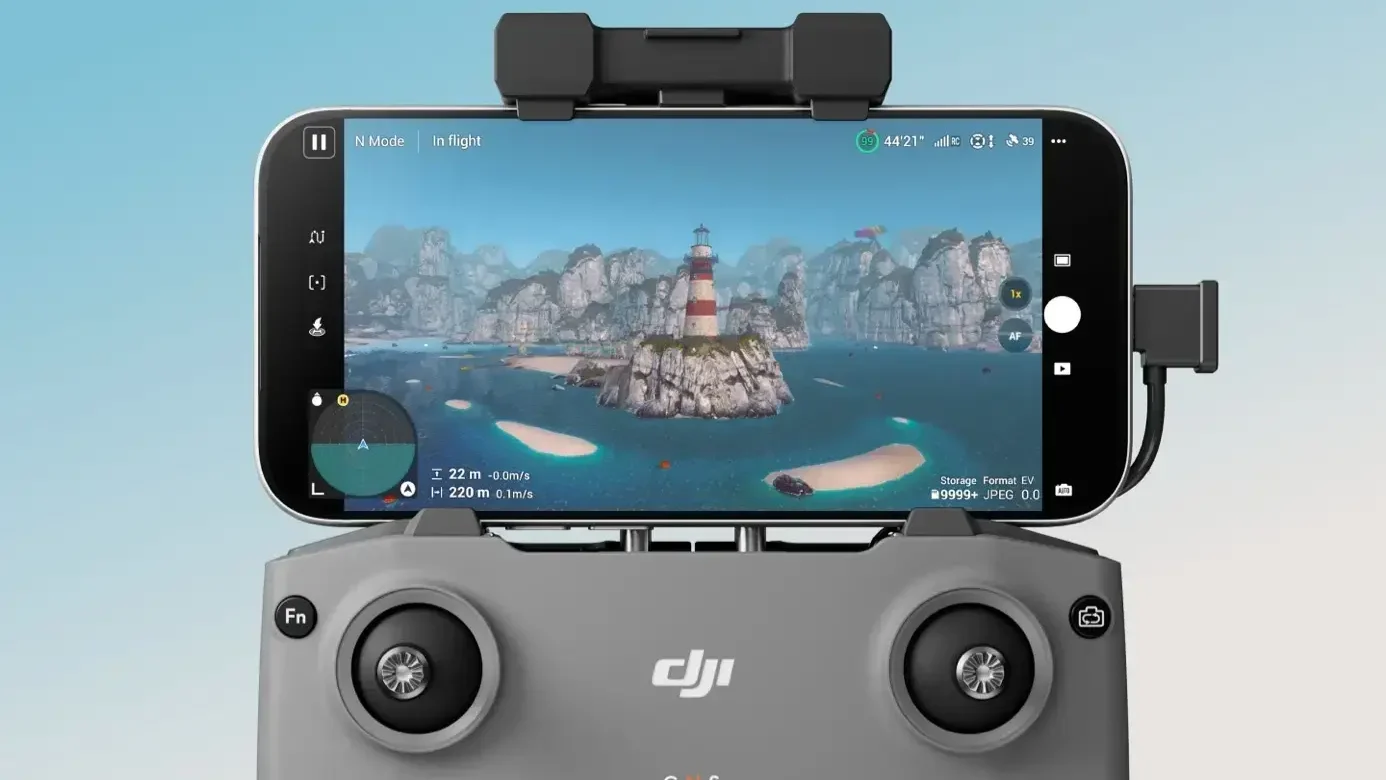
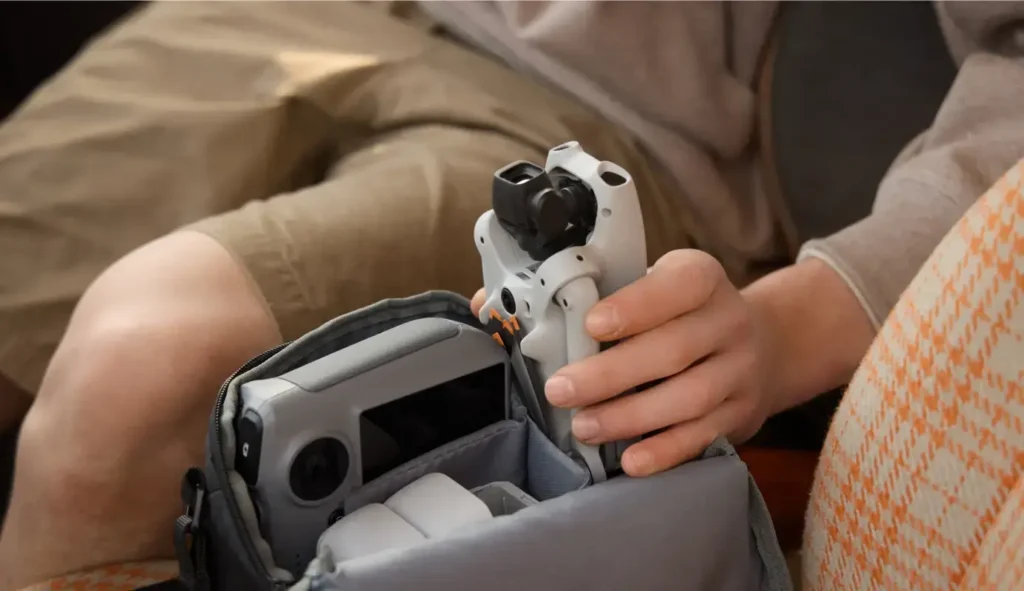
The Fly More Combo pairs the drone with the DJI RC 2, which is a standalone remote with a built-in screen. This is the more convenient option for serious use, particularly outdoors in bright conditions where phone screens struggle to stay visible. The Fly More Combo also includes extra Intelligent Flight Batteries, a charging hub, and a shoulder bag.
Final Verdict
The DJI Lito X1 gets a lot more right than wrong. The 1/1.3-inch sensor with 10-bit D-Log M, omnidirectional obstacle sensing with front-facing LiDAR, and smooth ActiveTrack 360 tracking are all features that used to cost significantly more. It’s compact enough to bring anywhere without thinking twice, and capable enough to produce footage that holds up in serious edits.
The limitations are real but manageable. No rotating gimbal means no true vertical shooting, the 48-megapixel mode delivers little actual detail gain over 12MP, and digital zoom past 2x is best avoided.
EU and UK pilots also face a 120-meter altitude cap. But for a beginner looking for their first serious drone, or a light commercial creator who wants clean, gradable footage in a pocket-sized package, the Lito X1 is a genuinely easy recommendation.
Read More: Holy Stone HS790 Review: Is It Worth Buying for Beginners?