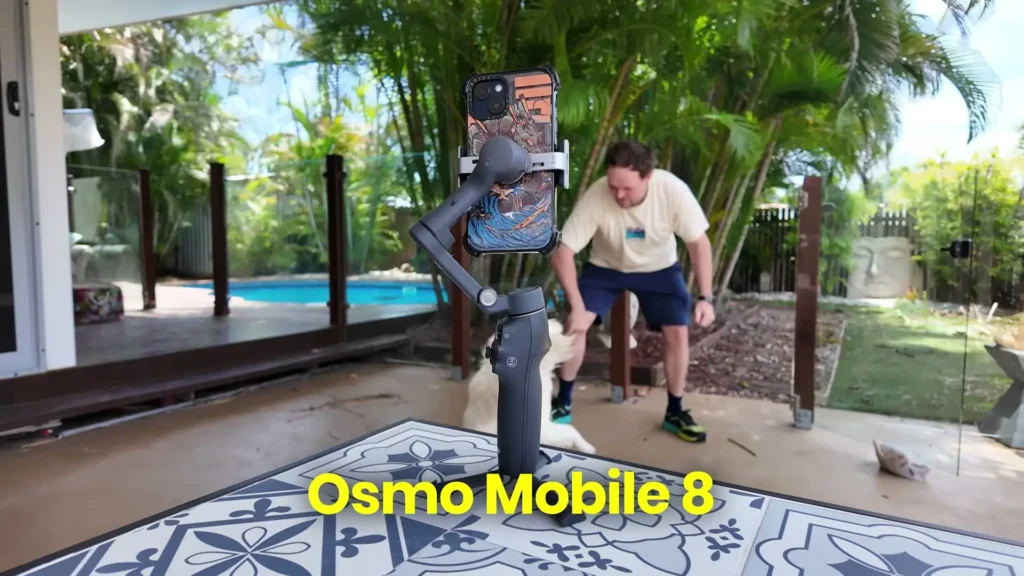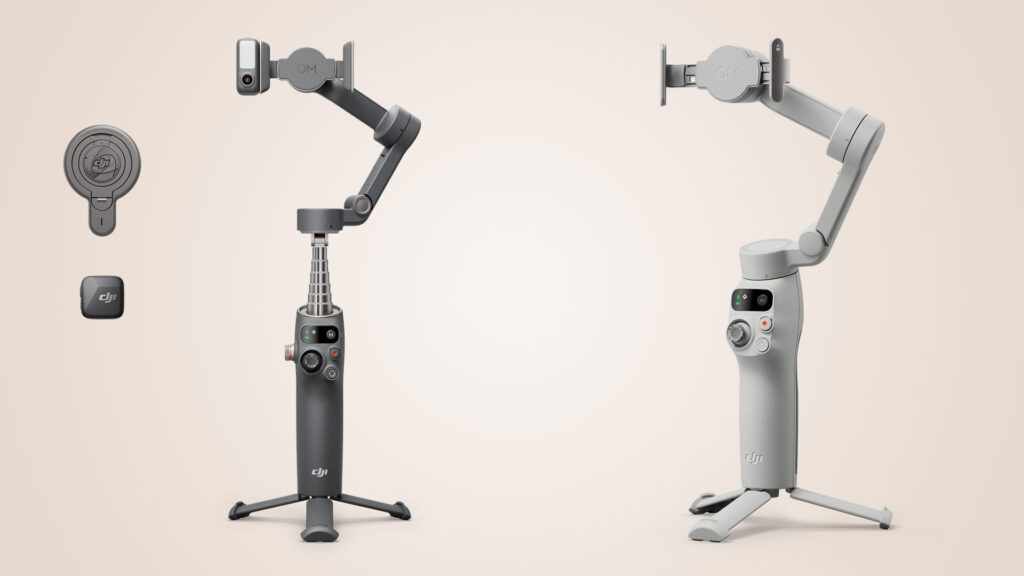

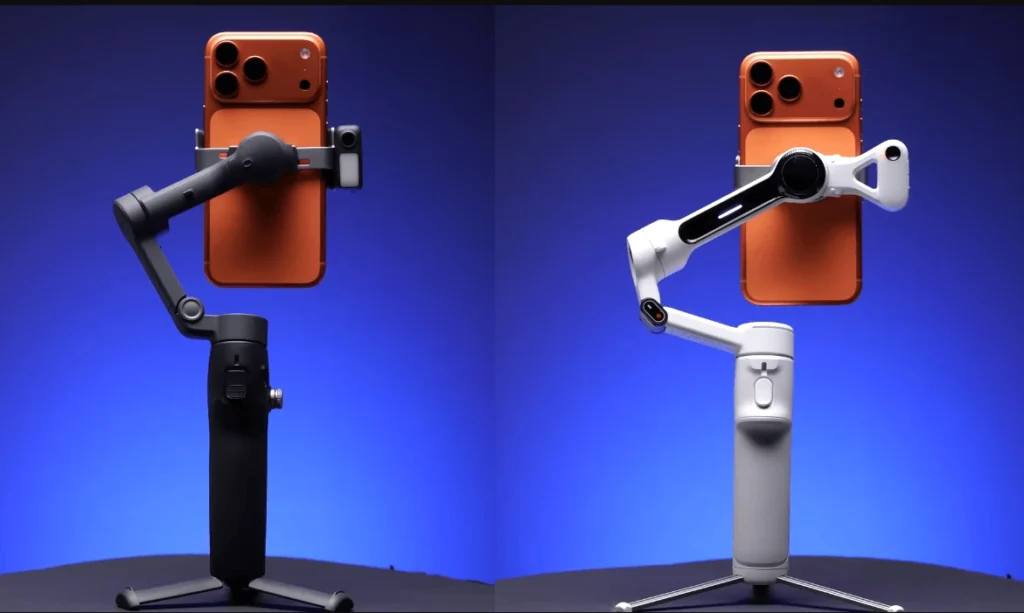
The DJI Osmo Mobile 8 and the Insta360 Flow 2 Pro are two of the most capable compact smartphone gimbals available. Both pair a built-in tripod and extendable rod with a detachable AI tracker that follows you in any app, including your phone’s native camera.
On paper, they are very similar, so the differences come down to small details: tracking smoothness, tripod stability, multi-person tracking, accessories and price. This comparison covers design, tracking, stabilization, controls, apps, battery life and pricing to help you decide which one fits your setup.
Table of Contents

Side-by-Side Comparison
| Feature | DJI Osmo Mobile 8 | Insta360 Flow 2 Pro |
| Folded size | Compact | Slightly smaller |
| Weight (with tracker) | 372 g | 400 g |
| Payload | 300 g | 300 g |
| Built-in tripod | Yes, all three legs fold together | Yes, longer legs for better stability |
| Extendable rod | Yes | Yes |
| Magnetic clamp | Yes | Yes |
| 1/4-inch mount | Yes | Yes |
| Selfie mirror | No | Yes |
| AI tracker with fill light | Included in the box | Extra cost |
| Tracker LED indicator | Standard | Brighter, plus a light strip on the handle |
| Mic receiver in tracker | Yes (DJI Mic Mini, Mini 2, Mini 3) | Not mentioned |
| Display | Small screen showing the shooting mode | No display, cleaner minimalist look |
| Tracking smoothness | Smoother | Slight delay when starting or changing direction |
| Zoom while tracking | Up to 24x digital zoom; smooth zoom wheel | 1x to 24x active zoom tracking; zoom wheel is full speed or nothing |
| Dual-lens tracking | Dual Lens Boost (1x to 8x) | Active Zoom Tracking (1x to 24x) |
| Multi-person tracking | Detects several faces, tracks one at a time | Tracks a group with automatic priority |
| Object tracking | Yes | Yes |
| 360° tracking | Yes, a first for DJI gimbals | Yes |
| Auto 360° pan | Yes, double-tap the joystick | No |
| Apple DockKit | Supported | Supported |
| Counterweight slot | Yes, for an OEM counterweight | Not mentioned |
| Claimed battery life | Up to 10 hours | Up to 10 hours |
| Charge gimbal and phone together | Yes | No |
| Price | $149 (tracker included) | $159 (AI tracker bundle) |
Design and Build Quality
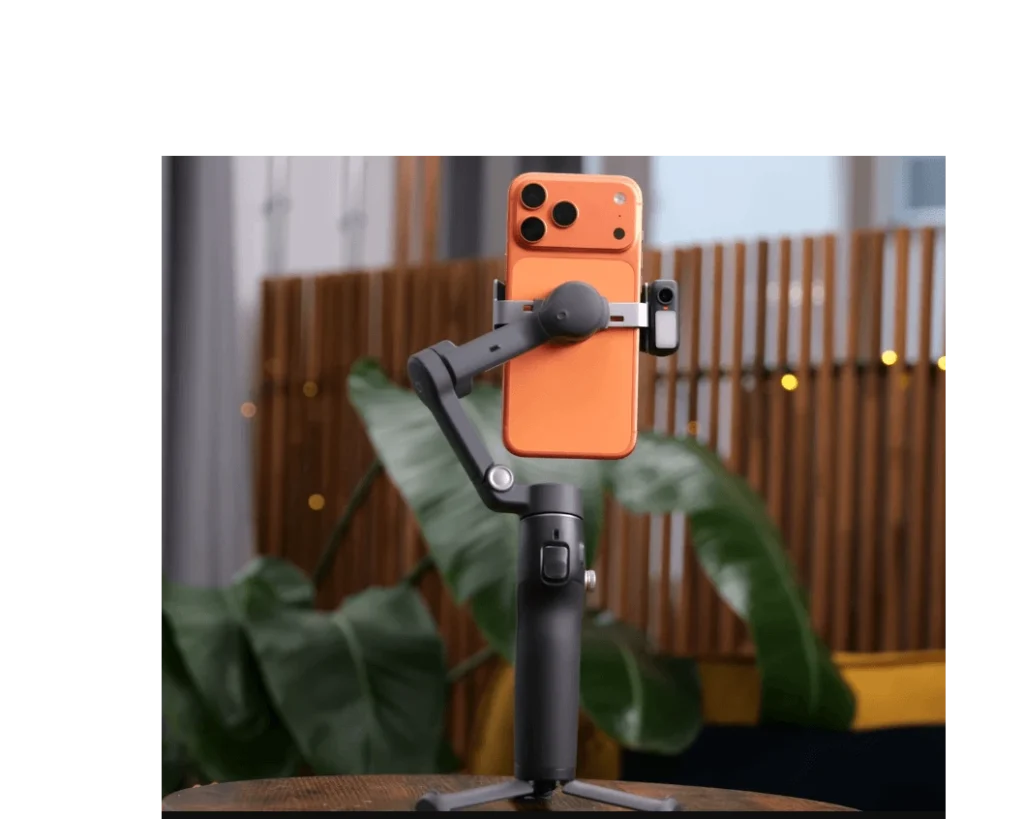
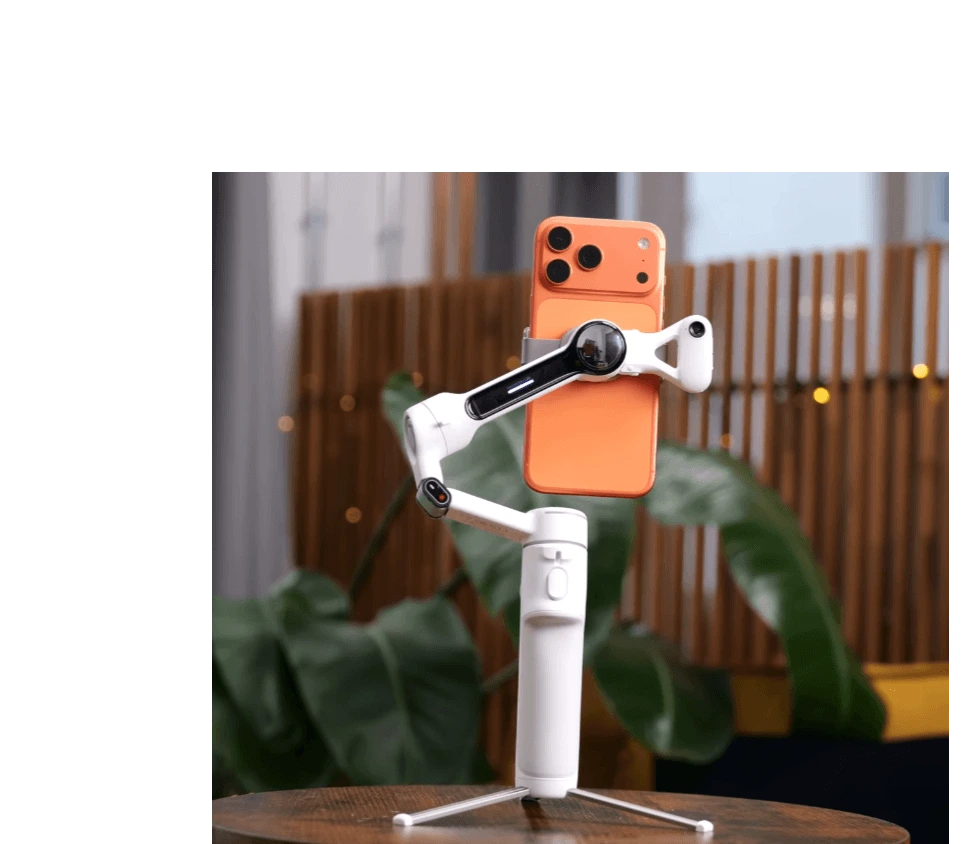
Both gimbals are very compact, and the Flow 2 Pro takes up slightly less space when folded. Both include an extendable rod, a magnetic clamp and a built-in tripod, and both feel sturdy. The Osmo Mobile 8 has a curved body with more grip, which makes it more comfortable in the hand. It is also lighter, at 372 g against 400 g with trackers attached, which matters over long handheld sessions.
The tripods differ in a useful way. On the Osmo Mobile 8, all three legs fold in and out together, which is more convenient. The Flow 2 Pro has longer legs and is more stable on a table. The Flow also has a small selfie mirror that lets you use your phone’s main camera while keeping an idea of your framing. Both have a 1/4-inch screw mount at the base for extra gear.

Both are rated for a 300 g payload. That is close to the limit, since a phone like the iPhone 17 Pro Max weighs about 230 g before you add a case. The Osmo Mobile 8 has a dedicated slot for an OEM counterweight, which helps with flagship phones that have large camera modules.
Both detachable trackers include a fill light with several brightness and color temperature levels. DJI includes it in the box, while Insta360 charges extra for it.
Tracking
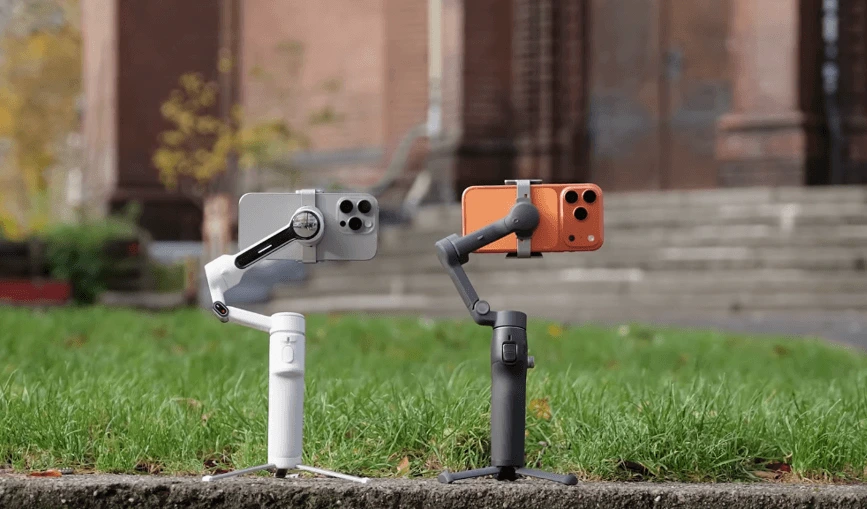
AI trackers (any app). The trackers work with any app and phone. Both start and stop tracking with a palm gesture and have an LED that shows when tracking is active. The Insta360 LED is a bit brighter, and its light strip makes the status easier to see from a distance. Both follow you well, but the Osmo Mobile 8 is smoother. The Flow 2 Pro takes a split second to react when you start walking or change direction. Both support Apple DockKit for pairing with the iPhone’s native camera app. Tracker-based tracking is basic: people only, one person at a time.
People tracking (official apps). In the DJI Mimo and Insta360 apps, you can start tracking with a gesture, a trigger press or a tap on the screen. The Osmo Mobile 8 locks onto your face, keeps following when you turn away, and recovers quickly after you pass behind an obstacle. The Flow 2 Pro performs similarly, but its relock after you reappear is slightly less smooth.
Zoom while tracking. The Osmo Mobile 8 tracks at up to 24x digital zoom and keeps the subject in frame, and its zoom wheel is smooth. Dual Lens Boost combines two phone lenses for tougher tracking from 1x to 8x. The Flow 2 Pro tracks about as well, and its Active Zoom Tracking also uses two cameras across 1x to 24x. Its manual zoom wheel is the weak point: it moves at full speed or not at all, which looks less professional.
Multiple people. Both detect several people. On the Osmo Mobile 8 you turn on Smart Capture, which lets you pick any detected face, but it still tracks only one person at a time. The Flow 2 Pro can track a group and automatically gives priority to one person if others leave the frame. This is its clearest tracking advantage.
Object tracking. Both lock precisely onto a phone being moved around, recover after it is hidden in a pocket, and keep the lock when it passes in front of the face.
360° tracking. The Osmo Mobile 8 is the first DJI gimbal with this feature, which removes the hard stop when panning. The Flow 2 Pro offers it too, and both keep tracking locked while showing the surroundings. The Osmo Mobile 8 can also do an automatic full 360° pan by double-tapping the joystick, without tracking or holding the gimbal.
Low-angle shooting. Turning either gimbal upside down for low-angle shots works well. The Osmo Mobile 8 handles slightly better and gives slightly smoother video.
Stabilization
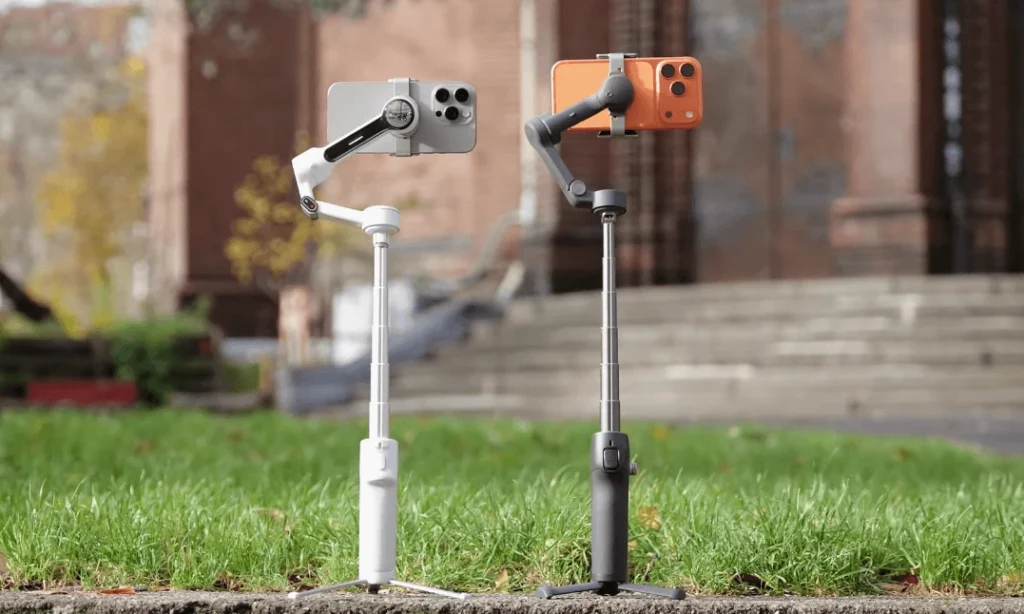
Walking footage is practically identical, which is expected because modern phones already have strong built-in stabilization. When running, both perform well, but the Osmo Mobile 8 shows a very slight bit more shakiness. It is not a dealbreaker.
Controls and Features
Both gimbals have the same core controls: a joystick, buttons for record, orientation and mode, a rear trigger and a zoom wheel. The Insta360 looks cleaner and more minimal, but the Osmo Mobile 8 is more convenient in practice and has a small display showing the current shooting mode.
The DJI tracker has a built-in USB-C port, so it doubles as a receiver for the DJI Mic Mini, Mini 2 or Mini 3 (microphone sold separately). This gives clean audio even when you are far from the camera. Other gimbals can use the same microphones, but the receiver then has to plug into the phone directly, which can upset the gimbal’s balance.
Companion Apps
DJI Mimo and the Insta360 app offer very similar features: time-lapse, hyperlapse, panoramas, the dolly zoom effect, custom time-lapse paths and detailed video settings. Both include tutorials and ready-made templates for quick edits, and both have full editors for trimming, cutting and fine-tuning clips on your phone.
Battery Life
Both brands claim up to 10 hours on a full charge, but real-world runtime varies. Heavier phones, intense movement and constant AI tracking all shorten it, and app-based tracking also drains the phone’s battery faster.
Both gimbals can work as power banks for your phone. The Osmo Mobile 8 can also charge the gimbal and the phone at the same time, so you can connect both to an external power bank for charging on the go.
Price
The Osmo Mobile 8 costs $149 with the AI tracker included. The Flow 2 Pro costs $159 in its AI tracker bundle, which is $10 more. That difference could cover a basic ND filter or another accessory.
Pros and Cons
| Osmo Mobile 8 | Flow 2 Pro | |
| Pros | Lower price with tracker included; lighter; smoother tracking; first DJI gimbal with 360° tracking; one-motion tripod; mode display; counterweight slot; mic receiver in the tracker | More stable tripod; group tracking; selfie mirror; clearer tracking status LEDs; slightly smaller when folded |
| Cons | Tracks only one person at a time; tripod less stable; slightly more shake while running | $30 more; AI tracker costs extra without the bundle; slight tracking delay; zoom wheel lacks speed control; heavier |
Final Verdict
The two gimbals are very close, and the differences come from details rather than headline features. The DJI Osmo Mobile 8 is the better choice for most people: it costs less, includes the AI tracker, tracks more smoothly, feels better in the hand and offers more convenient controls. The Insta360 Flow 2 Pro suits users who value group tracking, a more stable tripod and clearer tracking indicators, and who are willing to pay more for the tracker.