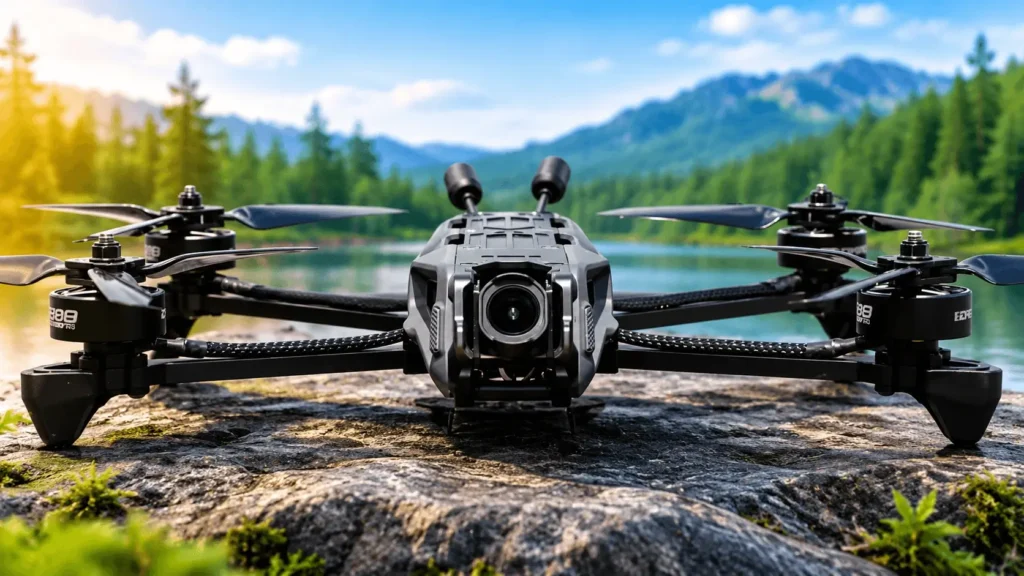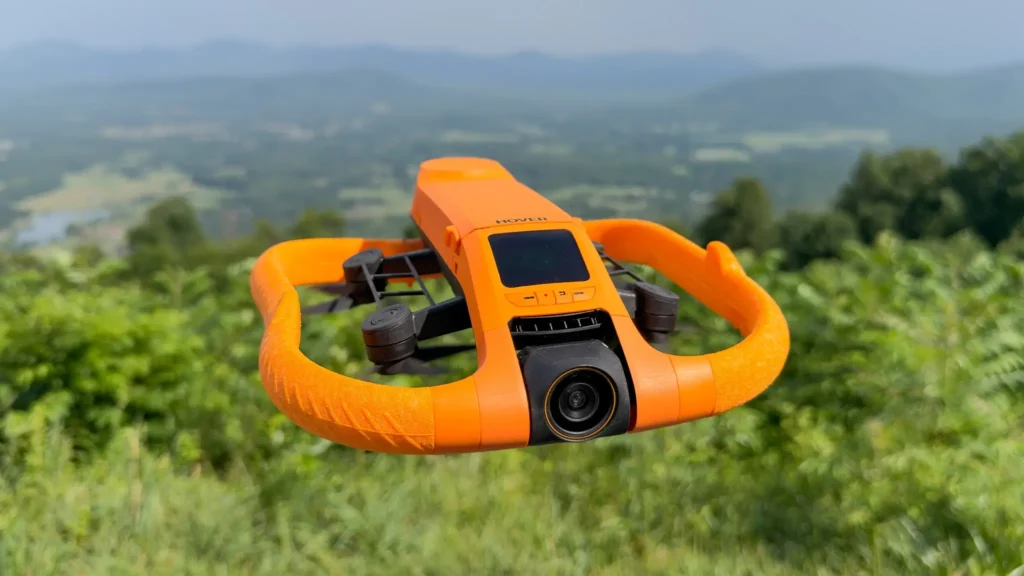

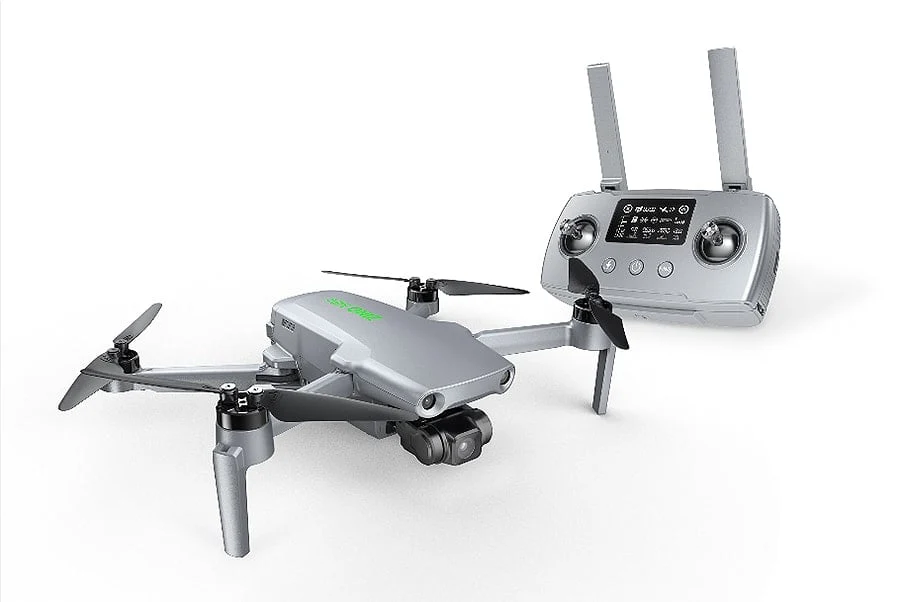
The Hubsan Zino Mini Pro is an important release. It is the first sub-250-gram drone to include obstacle avoidance, and many pilots, the author included, were eagerly waiting for it. Its feature set sits closer to a DJI Mavic Air 2 than to a typical mini drone, with intelligent flight modes such as tracking and waypoint missions on the spec sheet.
This review follows an unboxing published about a week earlier. A first-impressions video was planned for the maiden flight, but problems on that flight changed the plan. The author chose to fly the drone extensively and wait for firmware updates before forming an opinion.
Setup Problems on the First Flight
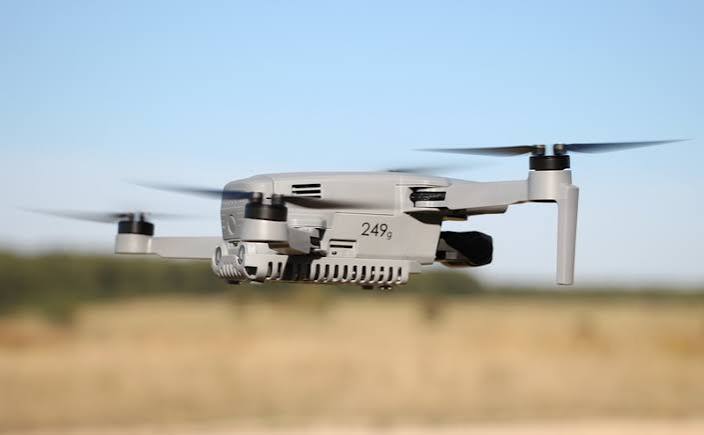
Two issues appeared immediately, and both were serious enough to end the flight early.
Compass calibration. On power-up the drone prompts for a compass calibration, but it would not complete. After roughly five minutes it finally succeeded. The problem has not gone away: across about 20 flights, the compass has needed recalibrating after every landing and battery change, which becomes tedious quickly.
Crab walking. Once airborne, the drone drifted sideways to the left even though the IMU had been calibrated beforehand. On the first flight the drift was severe, so the author landed and decided to wait for firmware updates.
After recalibrating everything and installing two firmware updates, the crab walking improved markedly. A slight sideways deviation remains, but it is mild and easy to tolerate.
Video Quality
Video quality is the weakest part of the package. Hubsan advertises a 200 Mbps bitrate, which should produce detailed footage, but the recordings fell short of that promise:
- More noise than the author normally sees
- Noticeable jitter, with the gimbal appearing to vibrate
- A little jello effect
The firmware updates did not change this, and micro jitters are still present. Because the issue appears to be in the software or gimbal tuning, the author hopes a firmware update can fix it. That matters, because this drone could otherwise be a credible rival to the DJI Mini series.
Flight Performance and Handling
The review is not all negative. This was the author’s first Hubsan drone, and several areas stood out.
Controller. The remote does not feel like a toy. The sticks respond well, and the drone is easy to fly precisely, including during manual rotations, which were smooth.
Stability. Apart from the crab walking, the drone flies very well. It also hovers impressively, holding its position near the takeoff point even in a light breeze.
Obstacle avoidance. Despite the author not yet calibrating the vision sensors, the system worked very well. Flying at full speed toward a tree, the drone stopped with plenty of room every time. In this author’s experience it performs as well as any obstacle avoidance system he has used.
Other Issues
Zoom. The drone offers 6x zoom. The live FPV feed zooms in and out correctly, but in the recorded video the frame drifts to one side. That is a significant problem, since the subject a pilot is zooming in on may fall out of the shot. It appears to be a software glitch that a firmware update could resolve.
FPV feed. The live feed stutters slightly even at close range. It does not ruin the experience, but it needs fine tuning.
Tilted horizon. The horizon is sometimes crooked and sometimes level, and it can change mid-flight.
Missing features. Many of the intelligent flight modes, including tracking and waypoints, are not yet available. There is no guarantee when they will arrive; it could be next week or months from now.
Range and Battery Life
Range is a highlight. In a range test the author flew out to seven kilometers with the FPV feed remaining solid, then turned around and used return-to-home, which brought the drone back without any trouble.
Battery life falls short of the rated 40 minutes. Landing at 30 percent battery, flights lasted 20 to 21 minutes. Pushing down to zero would likely yield 26 to 27 minutes or slightly more, depending on how aggressively the drone is flown. Formal hover tests are planned.
Price and Competition
The Zino Mini Pro costs $499 with one battery and 64 GB of storage. The DJI Mini 2 with one battery costs $449, so it is also the cheaper option. The Mini 2 shoots 4K video of far better quality and avoids the odd flight behavior, jello and calibration headaches described above, even though it lacks obstacle avoidance.
Verdict
The author would like to recommend the Zino Mini Pro, but in its current state the DJI Mini 2 is the better choice. Video quality is poor, half the headline features are not yet available, and there is no schedule for when they will be.
That does not mean the drone has no future. Firmware updates could fix many of these problems, and the author will keep testing and revisit the drone as new releases arrive. The Zino Mini Pro also matters beyond its own merits: a sub-250 gram drone with obstacle avoidance puts pressure on DJI to innovate, and a Mini 3 with obstacle avoidance looks likely.
Pros: the first sub-250 gram drone with obstacle avoidance, effective collision avoidance, a solid controller, strong hover stability, impressive 7 km range.
Cons: poor video quality with noise and jitter, repeated compass recalibration, slight crab walking, zoom drift in recordings, a stuttering FPV feed, intermittent tilted horizon, real-world battery life well below the rating, and key flight modes still missing.