
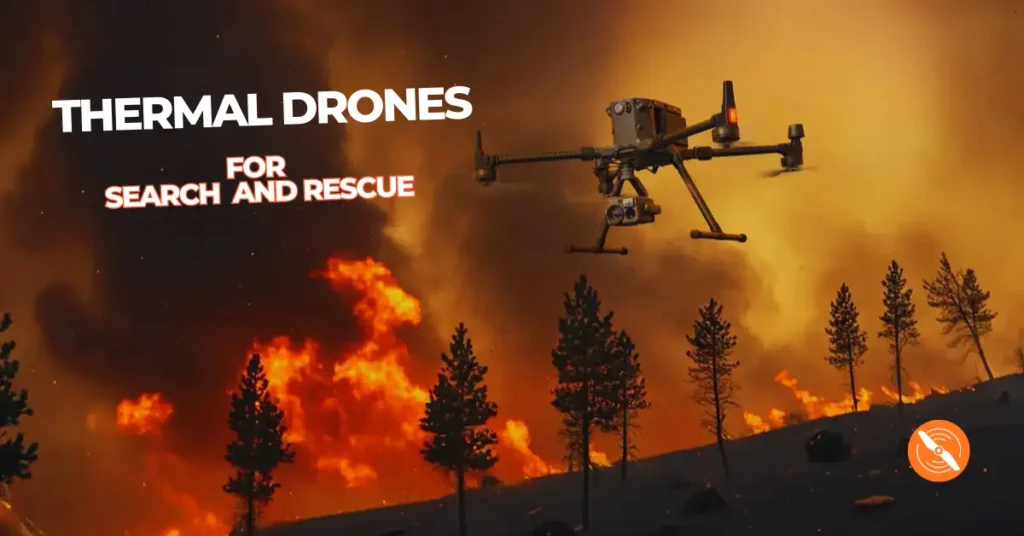
Thermal drones have become mission-critical tools for search and rescue (SAR) teams worldwide. Capable of detecting human heat signatures through smoke, fog, dense forest, and total darkness, these UAVs dramatically reduce response times and improve rescue outcomes. With the SAR drone market projected to exceed $611 billion by 2034, agencies investing in thermal drone technology today are not just upgrading their equipment, they are fundamentally transforming how lives are saved.
1. When Every Minute Counts
In search and rescue operations, time is the most precious resource. A hiker lost in dense forest at nightfall, a child who has wandered from home in the dark, a survivor buried under earthquake rubble, each scenario demands that rescue teams locate individuals as quickly as possible. Traditional ground searches are slow, resource-intensive, and often hazardous for the rescuers themselves.
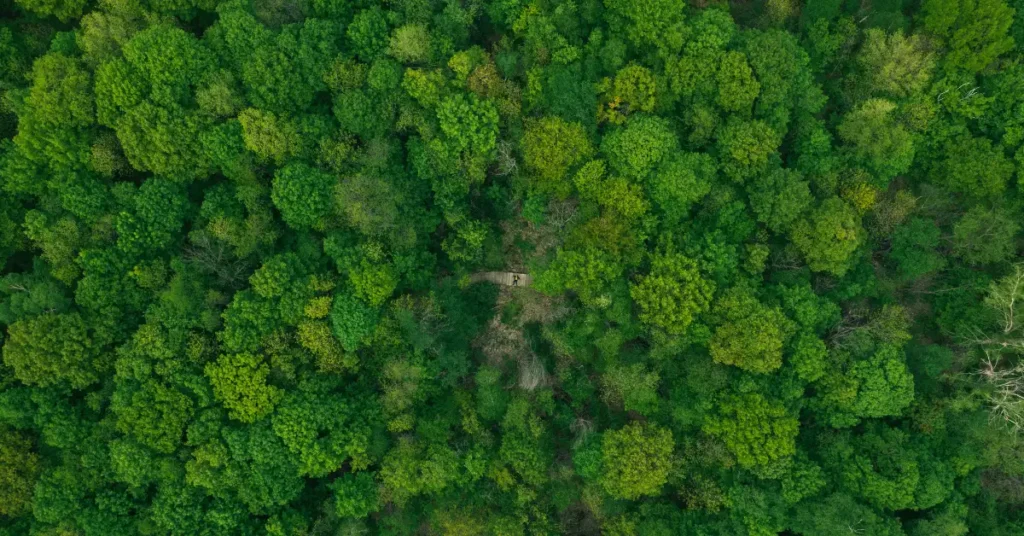
Thermal drones for search and rescue have changed this calculus entirely. By fusing unmanned aerial vehicle (UAV) platforms with infrared thermal imaging cameras, modern SAR teams can now sweep large areas from above, detecting the heat signatures of human bodies even in conditions of zero visibility. The technology has moved from experimental to essential in just a few years, and its commercial adoption is accelerating rapidly.
This guide explores how thermal drones work, the key features that matter for SAR operations, leading platforms on the market, regulatory considerations, and what agencies should evaluate when building or upgrading a drone program.
2. How Thermal Imaging Works in SAR Drones
Thermal imaging cameras do not capture visible light, they detect infrared radiation, which all objects emit as heat. The human body, at approximately 98.6°F (37°C), produces a distinctive heat signature that stands out clearly against the cooler temperatures of a forest floor, open water, rubble, or rocky terrain.
Thermal cameras capture infrared wavelengths between 8,000 and 14,000 nanometers far beyond the 400–700 nm range of the human eye translating differences in heat into high-contrast images.
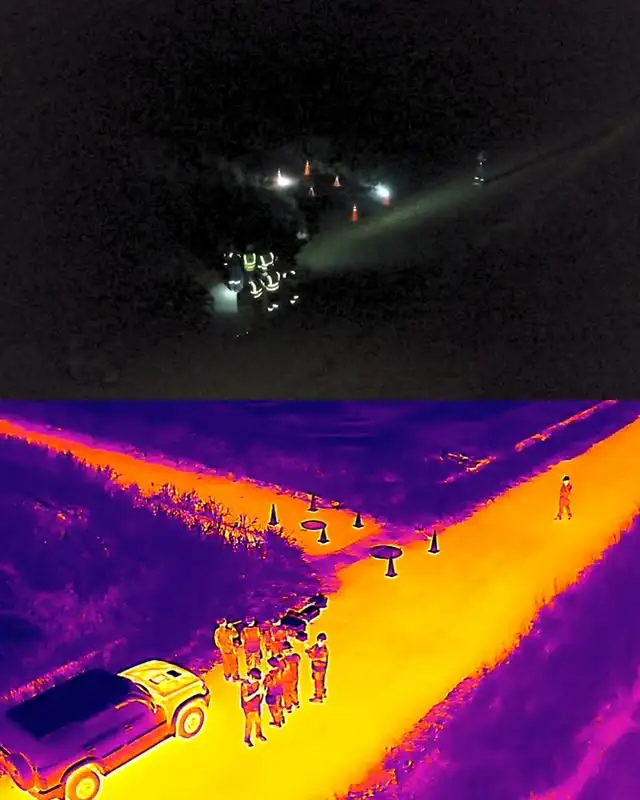
This fundamental difference explains why thermal drones outperform conventional cameras in challenging conditions. Night vision cameras amplify ambient visible light but in total darkness or thick fog, there is no light to amplify. Thermal imaging, by contrast, relies purely on heat emission and is completely unaffected by ambient light levels, smoke, or dense vegetation.
Thermal vs. Visual Cameras in SAR Operations
| Condition | Visual Camera | Thermal Camera |
|---|---|---|
| Complete Darkness | ❌ Unusable | ✅ Full capability |
| Heavy Smoke | ❌ Blocked | ✅ Penetrates effectively |
| Dense Forest Canopy | ⚠️ Limited | ✅ Detects heat through gaps |
| Fog and Low Cloud | ❌ Blocked | ✅ Full capability |
| Daytime / Good Visibility | ✅ Excellent | ✅ Excellent |
| Through Glass / Walls | ❌ Blocked | ⚠️ Limited penetration |
3. Core Advantages of Thermal Drones in Search and Rescue
Perhaps the single greatest advantage thermal drones bring to SAR operations is speed. A ground team searching dense woodland may cover just a few acres per hour; a thermal drone can survey hundreds of acres in the same time.
The Los Angeles County Sheriff’s Department now deploys thermal drones to scan mountainous regions at night, using aerial sweeps to prioritize areas before sending ground teams in dramatically compressing the time from initial search to target location.
Night and All-Weather Operation
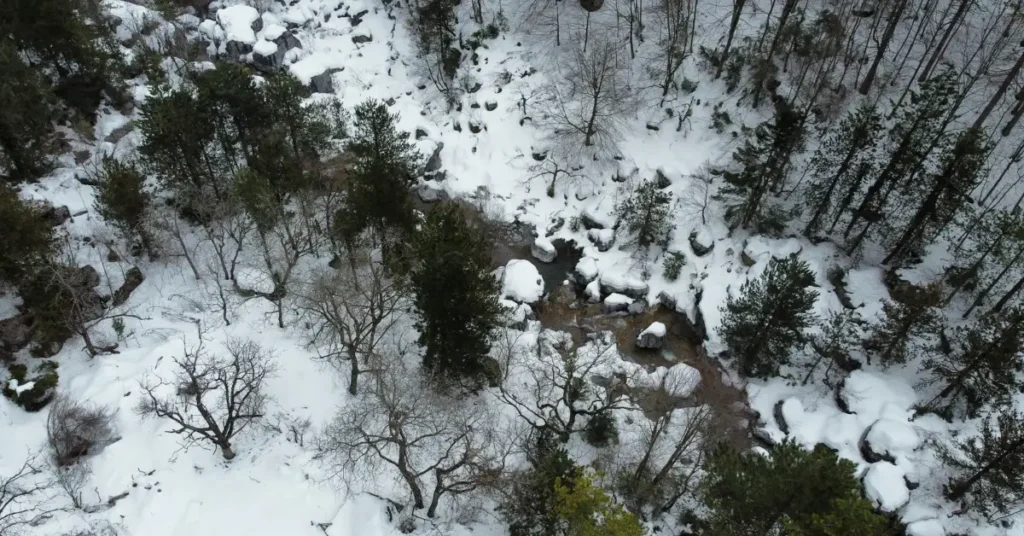
Missing persons and disaster events do not follow daylight hours. Thermal drone technology enables continuous search operations through the night and across a wide range of adverse weather conditions. This capability is particularly critical in the first 24 hours after someone goes missing, statistically the window in which rescue is most likely to be successful.
Reduced Risk to Rescuers
Sending human teams into environments with downed power lines, unstable structures, toxic smoke, or active wildfire zones puts rescuers at serious risk. Thermal drones can conduct initial reconnaissance, confirm survivor locations, and map hazards before any personnel enter a danger zone significantly reducing rescuer casualties while improving operational intelligence.
Real-Time Situational Awareness
Modern thermal SAR drones stream live infrared video to command centers, enabling incident commanders to make informed, real-time decisions about resource deployment. This aerial intelligence transforms the management of complex, multi-agency rescue operations, ensuring that ground crews are directed precisely where the data indicates they are needed most.
AI-Assisted Human Detection
Cutting-edge SAR platforms now incorporate artificial intelligence directly into the thermal imaging workflow. Using computer vision algorithms, including YOLO (You Only Look Once) detection models, these systems can automatically identify human heat signatures within the drone’s video feed, flagging potential targets for operators and reducing cognitive fatigue during prolonged search operations. This AI layer reduces false alarms and accelerates the transition from search to rescue.
Real-World Rescue: Ponchatoula, Louisiana — September 2024
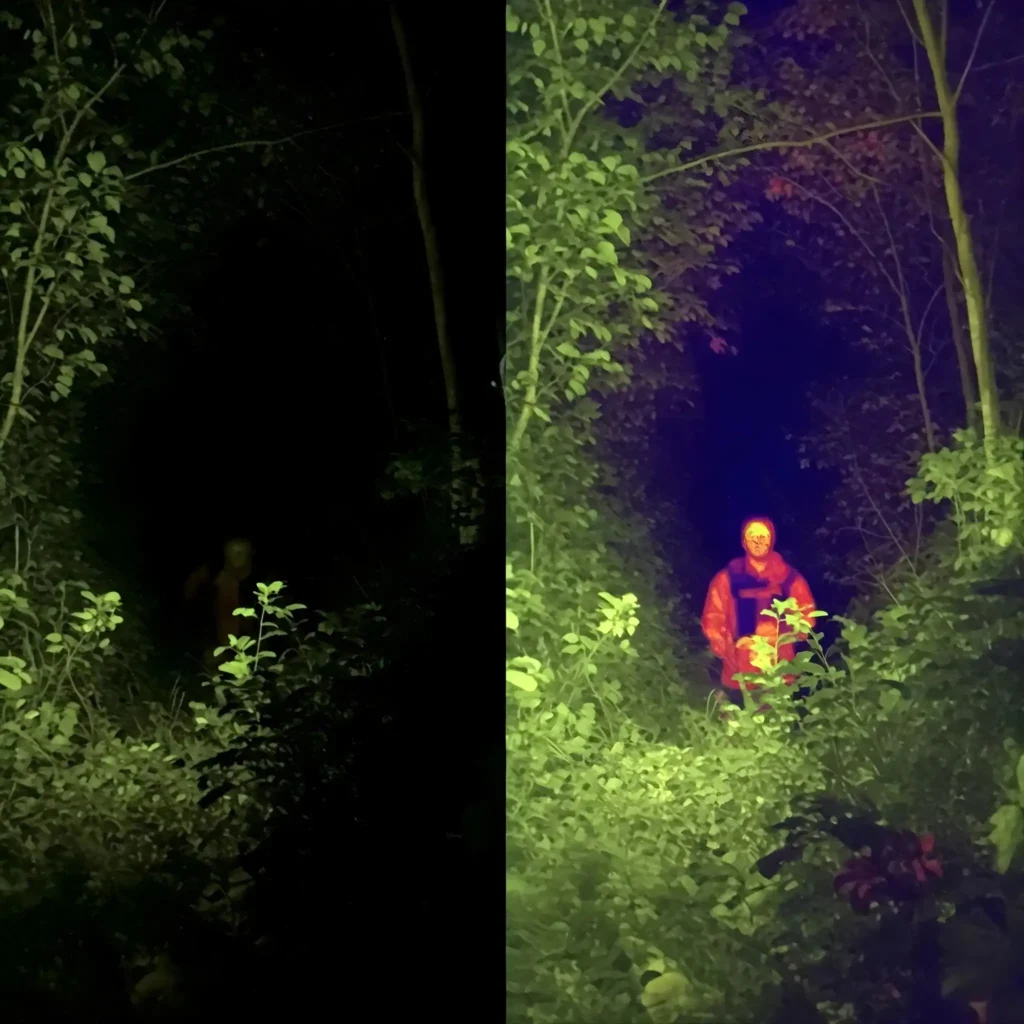
In the early hours of September 14, 2024, ten-year-old Peyton Saintignan vanished from her home into dense Louisiana woodland. After hours of unsuccessful ground searching, the team deployed a thermal drone. Flying just above the treetops, the drone’s infrared camera swept the dark landscape and identified a faint heat signature Peyton, who had sleepwalked into the forest. What could have become a tragedy ended with a swift, safe recovery.
4. Key Scenarios Where Thermal Drones Excel
Lost hikers, trail runners, and outdoor enthusiasts often become incapacitated in terrain that is difficult or impossible to search by foot at night. Thermal drones can canvas forested ridgelines, river valleys, and open alpine terrain with a speed and completeness that ground teams cannot match. The aerial perspective eliminates visual obstruction from trees, rocks, and underbrush that would conceal a person from a ground searcher.
Disaster Response — Earthquakes, Floods, and Collapses
When survivors are trapped beneath rubble, their body heat continues to register on a thermal camera even through layers of debris. During the 2023 Turkey-Syria earthquake, rescue teams deployed thermal drones to scan collapsed buildings, helping locate survivors beneath the wreckage and allowing rescue teams to focus excavation efforts with precision. In flood and hurricane scenarios, thermal drones identify stranded individuals in inundated areas where watercraft movement is limited.

Wildfire and Smoke Environments
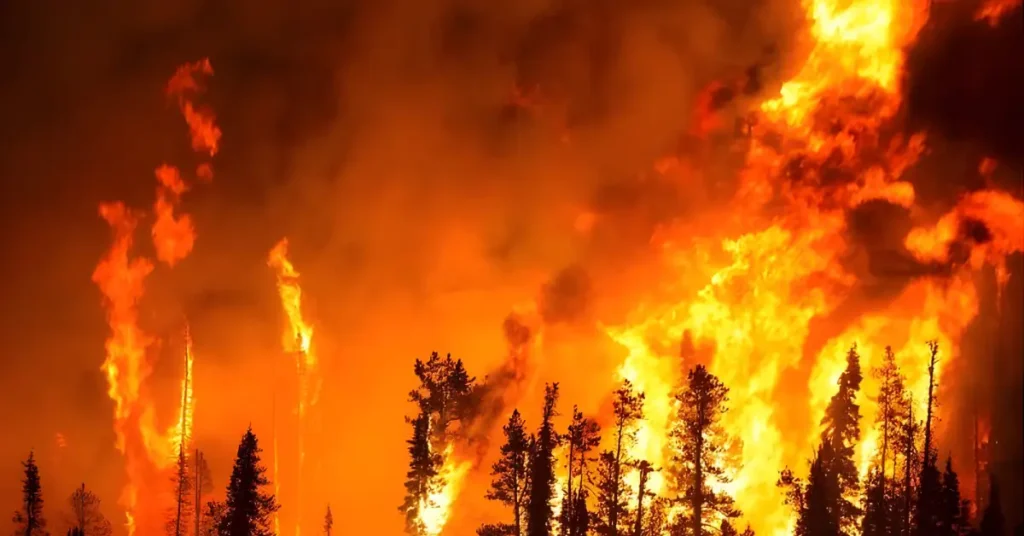
Wildfires present some of the most dangerous and visually impenetrable conditions for traditional search operations. Thermal drones cut through heavy smoke to identify both missing persons and fire hotspots simultaneously, providing firefighting crews with actionable intelligence on fire perimeter location, hidden smoldering zones, and safe evacuation corridors.
Urban and Suburban Missing Persons
Children, elderly individuals with dementia, and others who wander from urban or suburban areas are increasingly being located through rapid thermal drone deployment by law enforcement and fire departments. These operations benefit from the drone’s ability to survey backyards, parks, drainage channels, and industrial areas faster than a canine or foot search team.
Read More : Best Thermal Drones For Search & Rescue, Inspections & More!
Water and Coastal Rescue
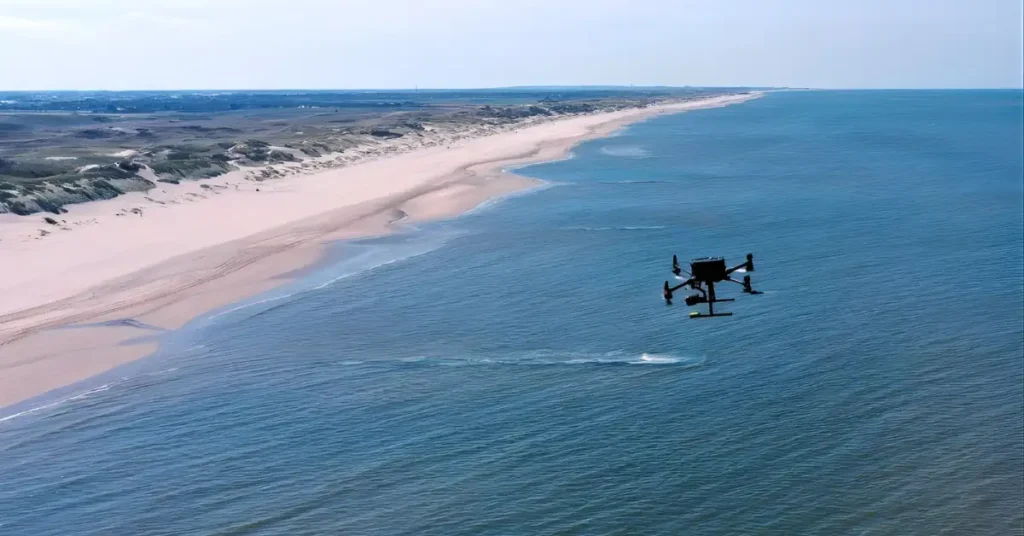
Thermal drones are effective tools in marine SAR contexts. They detect the heat signature of a person in cold water where hypothermia makes rapid location critical and can coordinate with watercraft rescue teams to guide them precisely to the target location even in darkness or fog.

5. Leading Thermal Drone Platforms for SAR in 2026
The commercial thermal drone market has matured significantly. Several platforms have emerged as dominant choices for professional SAR operations, combining sensor performance, flight endurance, durability, and regulatory compliance.
DJI Matrice 30T
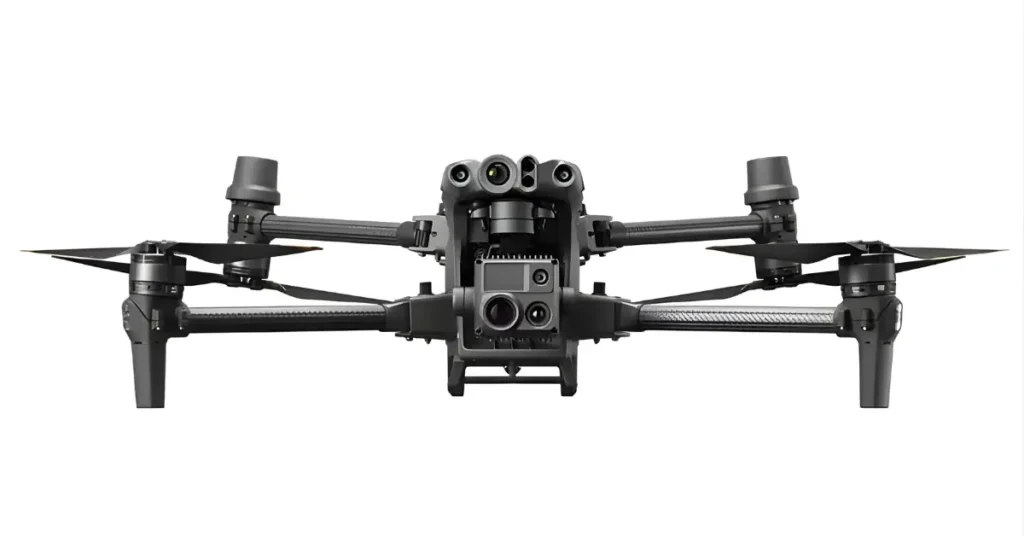
The DJI Matrice 30T is an enterprise workhorse widely adopted by public safety agencies globally. It features an integrated thermal camera, a high-resolution visual camera, a zoom camera, and a laser rangefinder in a compact, weather-resistant IP55-rated body. Its 41-minute flight time and resistance to wind, rain, and extreme temperatures make it a reliable platform for demanding SAR deployments.
Autel Robotics EVO Max 4T XE
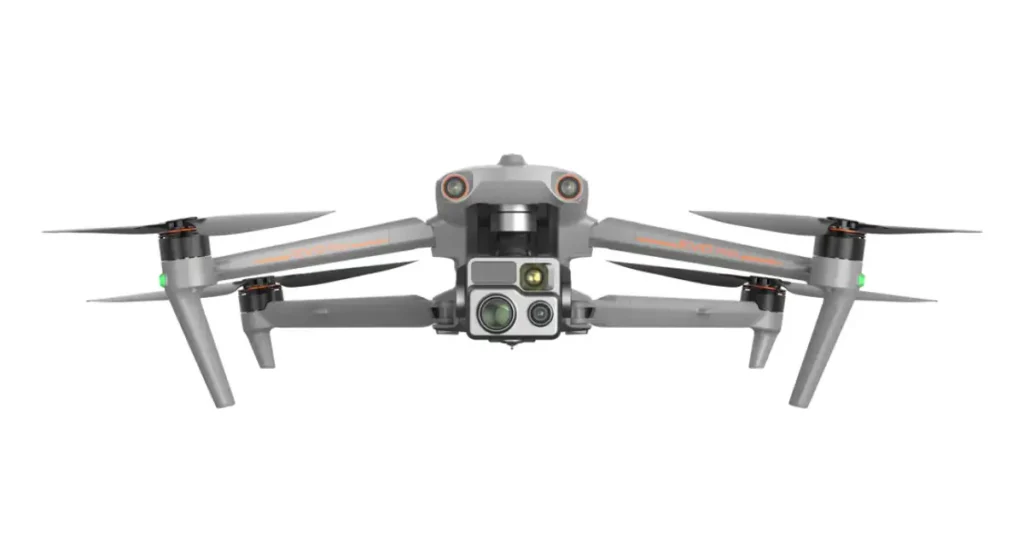
TheAutel EVO Max 4T XE, released in early 2025, represents one of the most capable enterprise thermal drones available. It combines a 640×512 thermal camera with a 10x optical zoom camera (capable of 160x hybrid zoom), a wide-angle visual sensor, and a laser rangefinder.
The platform supports SLAM mapping for GPS-denied navigation and uses an A-Mesh networking system for multi-drone coordination. Its 720-degree obstacle avoidance system integrates both visual and radar technologies, making it particularly capable in complex environments.
Skydio X10 / X2E
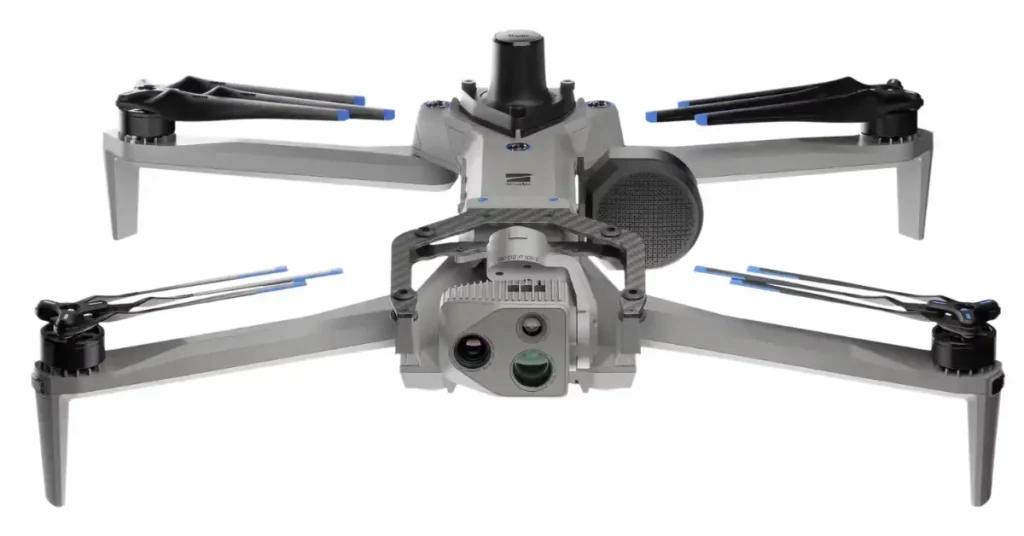
The Skydio X10 is notable for its AI-driven autonomy, its flight engine delivers 360-degree obstacle avoidance that enables navigation through dense, complex environments with minimal operator input.
Manufactured in the USA and NDAA-compliant, the Skydio line offers 45-minute flight times and up to 7.5-mile transmission range, making it a strong choice for agencies with national security procurement requirements. The X2E variant provides a thermal+color dual-sensor payload optimized for SAR.
DJI Matrice 350 RTK + Zenmuse H30T
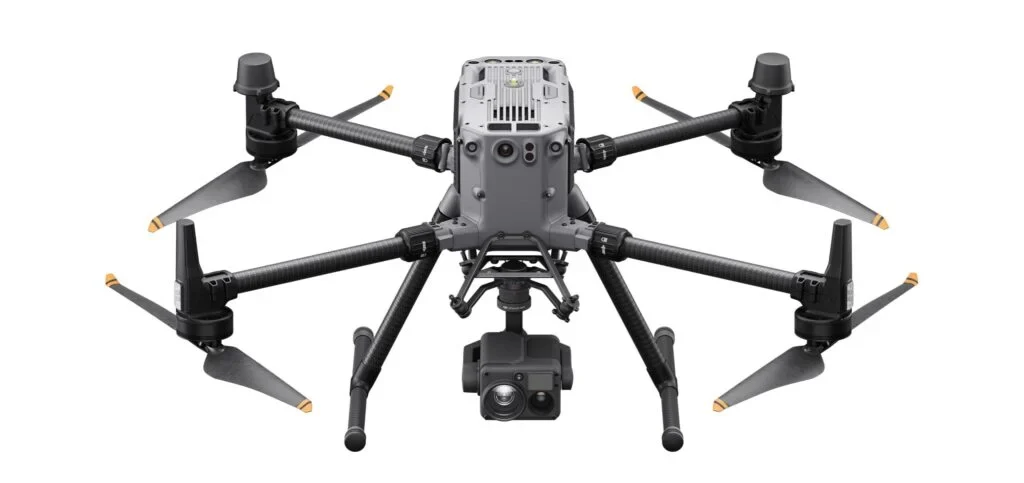
The DJI Matrice 350 RTK paired with the Zenmuse H30T is the top thermal drone for SAR operations in 2026, representing the current pinnacle of commercial rescue technology.
Built for extreme conditions, it carries an IP55 rating and operates in temperatures from 20°C to 50°C performing where lesser platforms fail. It delivers a 55-minute flight time, 20 km transmission range, six-directional obstacle sensing, and hot-swappable dual batteries that allow continuous operations without ever powering down.
The Zenmuse H30T payload adds a four-sensor system zoom camera, wide camera, 640×512 thermal camera, and laser rangefinder all driven by advanced AI algorithms for precise target identification.
Its hot-swap battery system is a game changer for active rescue scenes, eliminating downtime between battery cycles and keeping eyes in the sky when every second counts. For agencies that need the most capable, endurance-focused thermal SAR platform available today, the M350 RTK is the clear choice.
Drones Comparison Table
| Drones | Thermal Res. | Flight Time | Range | NDAA Compliant |
|---|---|---|---|---|
| DJI Matrice 30T | 640×512 | 41 min | 15 km | No |
| Autel EVO Max 4T XE | 640×512 | 42 min | 20 km | Yes* |
| Skydio X10 | 640×512 | 45 min | 12 km | Yes |
| DJI Matrice 350 RTK | 640×512 (H30T) | 55 min | 20 km | No |
6. Essential Features to Evaluate When Buying a SAR Thermal Drone
Not all thermal drones are equal. When evaluating platforms for commercial SAR deployment, agencies should assess the following criteria:
Thermal Sensor Resolution — A 640×512 thermal sensor provides significantly more detail and target discrimination than entry-level 160×120 or 320×240 sensors. For SAR operations, higher resolution translates directly into more reliable heat signature identification at altitude.
Radiometric Capability — Radiometric thermal cameras measure actual temperatures in every pixel, enabling precise analysis rather than just relative heat visualization. This matters for distinguishing a person from warm ground or animal heat signatures.
Dual-Sensor Systems — Platforms combining thermal and high-resolution visual cameras allow operators to confirm a thermal target with optical imagery, reducing false positives and improving rescue coordination.
Flight Time and Endurance — Battery life determines how large an area a single sortie can cover. Look for platforms offering 35+ minutes of practical flight time under real-world SAR conditions.
Weather Resistance — IP ratings of IP54 or higher ensure operational reliability in rain, dust, and adverse conditions. SAR operations rarely occur in perfect weather.
Obstacle Avoidance — In SAR contexts, drones often operate near trees, structures, and power lines. Advanced omnidirectional obstacle avoidance systems reduce the risk of drone loss in complex environments.
AI / Autonomous Detection — Integrated AI for human detection reduces operator workload and speeds up target identification during large-scale searches.
NDAA Compliance — U.S. government agencies and many state and local bodies are required to procure drones that comply with the National Defense Authorization Act. Verify compliance status before procurement.
GPS-Denied Navigation — SLAM-based navigation systems allow drones to operate effectively inside buildings, canyon environments, or other areas where GPS is unavailable.
Transmission Range and Video Link Quality — Longer transmission ranges enable BVLOS (Beyond Visual Line of Sight) operations in expansive search zones. Look for encrypted, low-latency video links.
Read More: DJI Matrice 400 launched
7. Regulatory Framework for SAR Thermal Drone Operations
All commercial and public safety drone operators in the United States must comply with FAA regulations. The primary framework is Part 107 of the Federal Aviation Regulations, which governs the certification and operational requirements for commercial UAS pilots. Key requirements include:
- FAA Part 107 Certification — All commercial drone operators must pass the FAA Part 107 knowledge exam and maintain certification, with renewal required every 24 months.
- Remote ID — As of 2025, virtually all drones must broadcast Remote ID data, enabling authorities to identify airborne drones in real time.
- Altitude Limits — Standard operations are capped at 400 feet AGL (above ground level), with exceptions available through FAA authorization for specific missions.
- Night Operations — Under updated FAA rules, Part 107 operators can fly at night with appropriate anti-collision lighting without requiring a waiver, a development that has been transformative for nighttime SAR missions.
- BVLOS Operations — Beyond Visual Line of Sight operations require either an FAA waiver or specific authorization. Public safety agencies may apply for Certificates of Authorization (COAs) that provide greater operational flexibility than standard Part 107.
Privacy and Data Management
Thermal cameras can detect people in private spaces, creating important legal and ethical obligations. Agencies operating thermal SAR drones must establish clear data governance policies covering collection, storage, and disclosure of thermal imagery. Several U.S. states have enacted drone-specific privacy laws, and operators should consult legal counsel to ensure compliance with applicable state and local regulations.
Airspace Coordination
SAR operations frequently occur in or near controlled airspace near airports, over urban areas, or in temporarily restricted zones. Agencies should establish protocols for rapid airspace coordination with local FAA facilities, using tools like LAANC (Low Altitude Authorization and Notification Capability) for near-real-time airspace access authorization.
8. Building a Thermal Drone SAR Program
Establishing a thermal drone SAR program requires investment across hardware, training, software, and ongoing maintenance. Entry-level thermal SAR platforms can be acquired for under $5,000, while enterprise-grade systems with full thermal payloads range from $15,000 to over $30,000. Agencies should budget for:
- Spare batteries and charging infrastructure
- Ground control station hardware and software licenses
- Pilot training and FAA Part 107 certification costs
- Ongoing maintenance contracts and component replacement
- Mission management and data analysis software
Pilot Training and Certification
Effective SAR drone deployment requires operators who are not only certified pilots but who understand the tactical application of thermal imagery in rescue contexts. This includes training in thermal image interpretation, target identification, search pattern optimization, and coordination with ground teams.
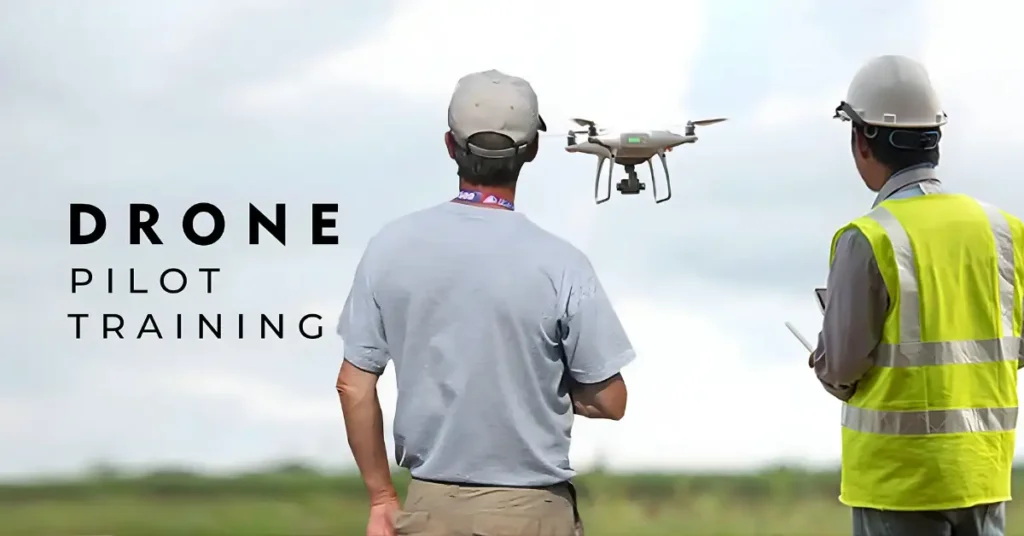
Specialized programs such as the Unmanned Tactical Group’s UAS Night Operations Course provide SAR-specific training that goes well beyond the FAA’s baseline Part 107 curriculum.
Standard Operating Procedures
Agencies should develop comprehensive Standard Operating Procedures (SOPs) covering pre-flight checklists, incident command integration, night operations protocols, airspace coordination, data handling, and post-mission review. Regular scenario-based drills ensure that operators can perform effectively under the time pressure and cognitive stress of real SAR activations.
Integration with Existing SAR Resources
Thermal drones are most effective as force multipliers integrated with not replacements for ground teams, canine units, and manned aircraft. The optimal SAR model uses drones for rapid aerial reconnaissance and target location, then directs specialized ground resources to confirmed locations. Establishing clear protocols for how drone intelligence flows into the broader incident command structure is essential for maximizing operational effectiveness.
Fleet Maintenance
Mission-ready status requires proactive maintenance discipline. Agencies should implement regular inspection schedules, firmware update protocols, battery cycle tracking, and component replacement schedules. A drone that fails on deployment is worse than no drone at all the investment in preventive maintenance protects both the capital investment and the mission outcomes it enables.
9. Market Outlook and Emerging Technologies
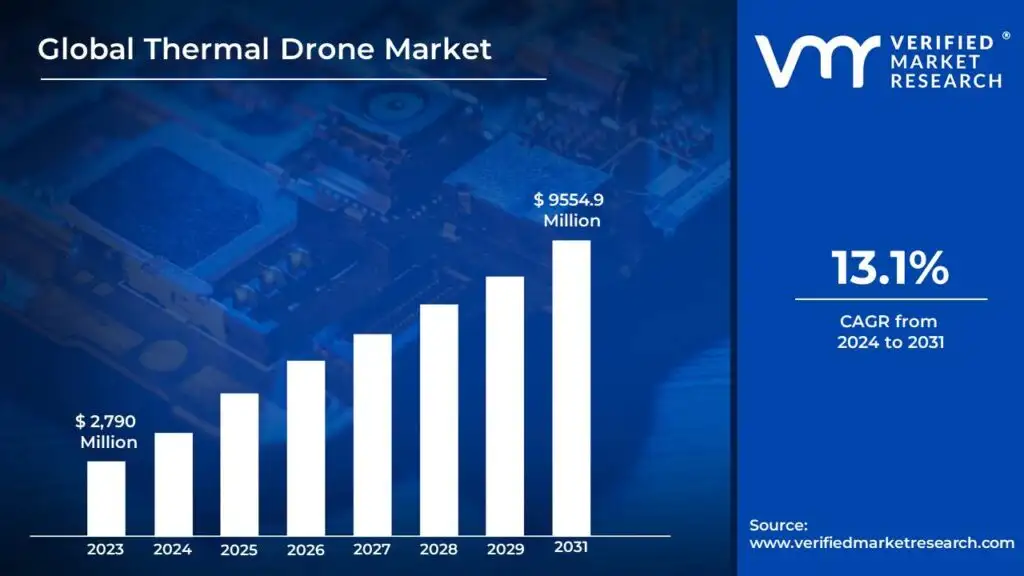
The thermal drone market is experiencing rapid and sustained growth. Industry analysis projects the global thermal drone market to grow at a compound annual growth rate (CAGR) of 11.48% from 2025 to 2035, while the broader SAR drone market is forecast to reach approximately $611.75 billion by 2034.
Several emerging technologies are set to further expand the capabilities of thermal drones for SAR operations:
Tethered Drone Systems — Connected to ground power sources, tethered drones can maintain continuous aerial surveillance for hours or days, providing persistent thermal monitoring over disaster scenes or extended search areas.
Drone-in-a-Box (DFR) Systems — Drone First Responder programs utilizing automated deployment docks allow drones to launch autonomously within minutes of an emergency call, without requiring an on-site operator for launch. This is already operational in several major U.S. cities.
Multi-Drone Swarm Coordination — A-Mesh and similar networking systems allow multiple thermal drones to coordinate search patterns autonomously, covering larger areas faster than a single platform.
Advanced AI Detection — Next-generation computer vision systems will improve the ability to distinguish human heat signatures from animals, warm debris, and other thermal artifacts, further reducing false positives.
Improved Sensor Resolution — Thermal cameras are moving toward higher-resolution arrays that provide identification-quality imagery at greater altitudes, enabling more efficient high-altitude search patterns.
Integration with LiDAR and Gas Sensors — Multi-sensor payloads combining thermal imaging with LiDAR mapping and gas detection expand the situational intelligence available during complex SAR operations in collapsed structures or hazardous environments.
10. Return on Investment: The Case for Thermal Drone Adoption
For agencies evaluating the business case for thermal drone investment, the calculus is compelling. A single successful rescue justifies the entire acquisition cost of a program in both human and financial terms. Beyond the direct value of lives saved, thermal drone programs deliver measurable operational benefits:
- Reduced search time — Thermal drones can locate subjects in a fraction of the time required for traditional ground searches, freeing personnel for other deployments.
- Lower helicopter dependency — SAR helicopter operations cost thousands of dollars per hour. Thermal drone coverage of initial search areas can significantly reduce helicopter sortie requirements.
- Improved rescuer safety — By providing reconnaissance before human entry into dangerous environments, thermal drones reduce rescuer injury and liability exposure.
- Evidence of due diligence — Agencies with documented thermal drone programs demonstrate operational best practice, with positive implications for liability management and public accountability.
- Community confidence — Public safety agencies equipped with advanced technology build community trust and support for operational budgets.
Over 500 search and rescue teams across the United States are now using drones, a figure that has grown significantly year-over-year as the technology’s value has been demonstrated in the field. Agencies without thermal drone programs are increasingly the exception, not the norm.
Table of Contents
Article Summary
Thermal drones for search and rescue represent one of the most significant technological advances in emergency response in recent decades. By providing real-time thermal intelligence from above in darkness, smoke, fog, disaster zones, and remote wilderness these platforms have already saved countless lives and will save countless more as adoption continues to expand. For public safety agencies, emergency management organizations, and commercial SAR operators, the question is no longer whether to invest in thermal drone technology, but how to do so most effectively. The platforms are proven, the regulatory pathway is established, the training infrastructure is mature, and the return on investment.
Read More: Best Thermal Drones of 2025 – Search & Rescue, Inspections & More!