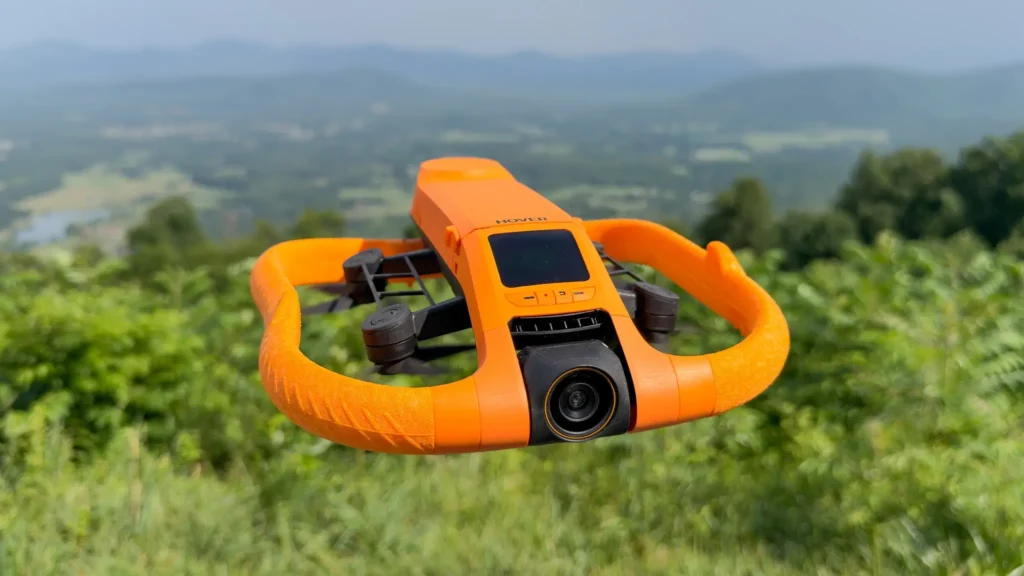

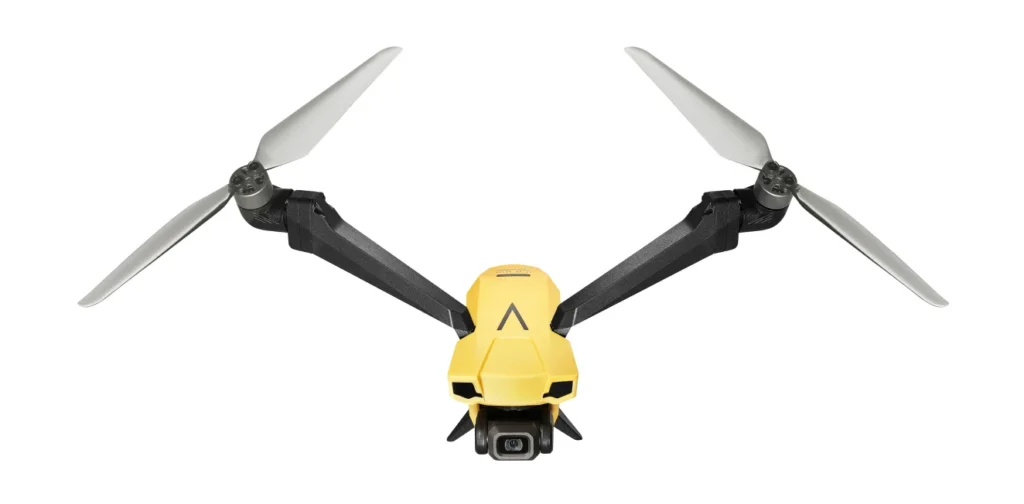
Most sub-250g camera drones on the market today are variations on the same formula: four motors, four rotors, a gimbal camera, and some flavor of obstacle avoidance. The VCOPTER Falcon Mini throws that formula out entirely. It’s a bi-copter, just two motors and two rotors arranged in a distinctive V shape, and it’s the first drone of its kind to squeeze under the 250g regulatory threshold that exempts it from registration in many countries.
This VCOPTER Falcon Mini review breaks down what that unusual design actually means in practice: how it flies, what the camera can and can’t do, how long the battery really lasts versus what’s advertised, and who this drone is actually built for. It’s built on the manufacturer’s own specifications, an in-depth independent hands-on test, and real owner feedback, not just marketing copy.
Quick Verdict
The VCOPTER Falcon Mini, made by ZeroZero Robotics (the same company behind the HoverAir X1 Pro selfie drones), is a shrunk-down, regulation-friendly version of the original V-Copter Falcon, a bi-copter design that first appeared in 2020 at 760g. The Falcon Mini brings that same V-shaped, dual-rotor concept down to 249g, adding a genuinely novel Reverse Flight mode that lets it fly upside down. It’s quiet, agile, and genuinely fun to fly, agility and noise reduction are where the bi-copter design pays off most.
Where it falls short is the camera: a basic, fully automatic 12MP/4K sensor with no manual controls, and real-world battery life that falls noticeably short of the advertised 34 minutes. If you want a drone to fly for the sheer novelty and fun of it, the VCOPTER Falcon Mini delivers something genuinely different. If you’re buying primarily for photography or video quality, competitors at a similar price point offer considerably more.
VCOPTER Falcon Mini: Key Specifications
| Specification | Detail |
| Design | V-shaped bi-copter (2 motors, 2 rotors) |
| Weight | 8.78oz / 249g |
| Folded dimensions | 7.24 x 3.74 x 2.36 in / 183.9 x 95 x 59.9mm |
| Unfolded dimensions | 5.91 x 8.98 x 5.12 in / 150.1 x 228.1 x 130mm |
| Camera sensor | 12MP, 1/2.3-inch CMOS |
| Max video resolution | 4K at 30fps; 2.7K up to 50fps; 1080p at 50fps |
| Vertical video | 2.7K at 30fps (cropped, not native) |
| Photo format | JPEG only |
| Gimbal | 3-axis mechanical |
| Battery | 2330mAh; advertised up to 34 min flight time |
| Charging | USB-C, or two-battery charging hub (Fly More Combo) |
| Video transmission range | Up to 1.5 miles |
| Flight modes | Normal (up to 8.9mph), Sport (up to 26.8mph), Turbo (up to 35.8mph) |
| Special feature | Reverse Flight mode (upside-down flying via Reverse Flight Kit) |
| Noise level | Approx. 62 decibels at 2 meters |
| Obstacle avoidance | None |
| Colors | Matte Black, Canary Yellow |
| Price | Standard kit: $379; Fly More Combo: $399 (US, at launch) |
| Availability | Launched in the US via Amazon in late February 2026; Europe followed by late March 2026 |
What Makes It a Bi-Copter?
Nearly every consumer camera drone on the market is a quadcopter, four motors, four rotors, arranged symmetrically for stability. The VCOPTER Falcon Mini breaks from that entirely, using just two motors and two rotors mounted on tilting arms that form a distinctive V shape in flight. To compensate for having half the usual rotor count, the Falcon Mini relies on proprietary tilt-rotor technology: dual servo motors adjust each propeller’s angle independently and in real time, keeping the aircraft balanced during hover and enabling the rapid, sharp directional changes that reviewers have highlighted as one of its most distinctive traits.
This isn’t a brand-new idea for the company. The Falcon Mini is a shrunk-down, sub-250g follow-up to the original V-Copter Falcon, a bi-copter that launched back in 2020 weighing 760g. That original model built a dedicated following for its unusual design but never gained mainstream traction, largely because its weight kept it firmly in registration territory in most countries. The Falcon Mini’s entire pitch is bringing that same novel flight experience into the much more accessible sub-250g category.
Design and Build
The Falcon Mini’s V-shaped silhouette is genuinely unlike anything else in the sub-250g drone category, and at certain angles its slim, two-armed profile can be surprisingly difficult to spot against the sky. It folds down to a compact 183.9 x 95 x 59.9mm and unfolds to 150.1 x 228.1 x 130mm, staying right at the 249g weight limit that keeps it exempt from drone registration in many regions.
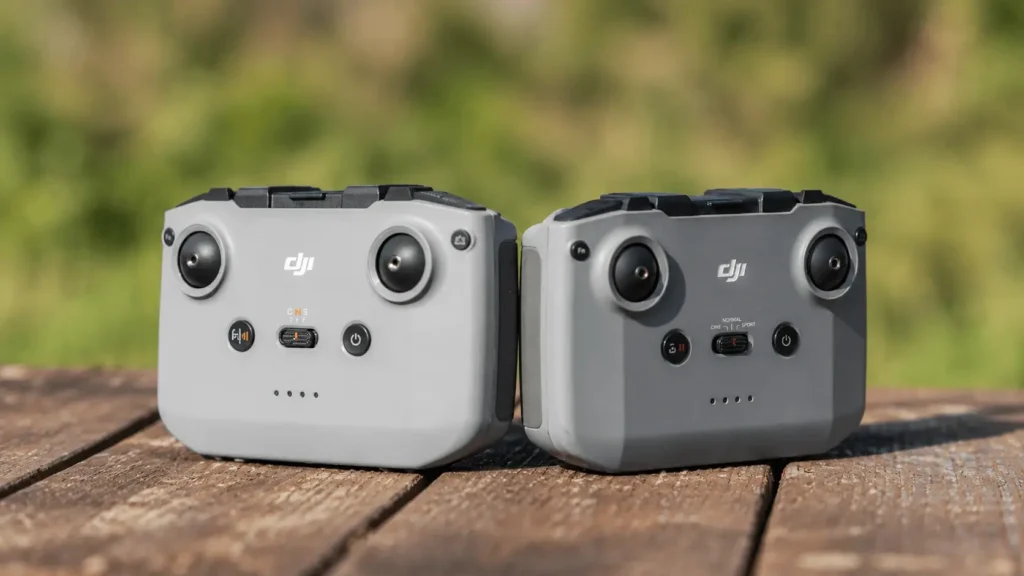
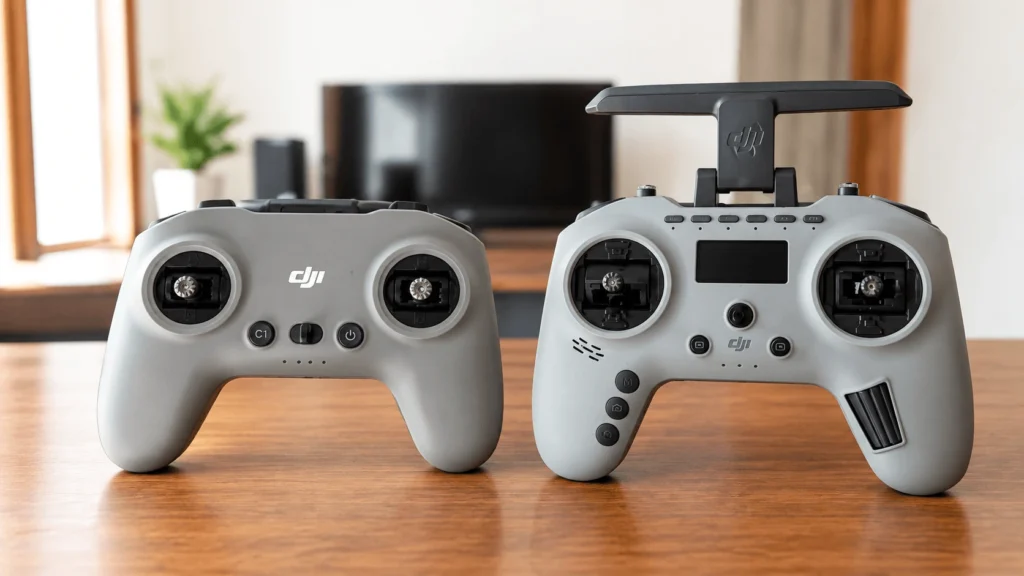
The included controller is deliberately minimalist: standard control sticks, a Return to Home/Stop button, a flight mode toggle, and dedicated photo and video buttons. A fold-out phone holder rotates to sit above the sticks, and switching it to portrait orientation lets the Falcon Mini capture vertically-oriented content for social media. The drone ships in two colorways, Matte Black and Canary Yellow.
Flight Performance and the Reverse Flight Gimmick
This is where the VCOPTER Falcon Mini earns most of its praise. Despite running on half the usual rotor count, it flies with genuine agility across three speed-tiered modes: Normal (up to 8.9mph) for easy, stable cruising, Sport (up to 26.8mph) for more dynamic handling, and Turbo (up to 35.8mph, accessed through the companion app) for maximum speed and responsiveness. Independent hands-on testing found the fast acceleration and sharp turning particularly notable, a direct benefit of each rotor tilting and adjusting independently.
The standout feature, though, is Reverse Flight mode. By reinstalling the propellers upside down and locking the arms in place with the included Reverse Flight Kit (a plastic bracket), the Falcon Mini can fly completely inverted, appearing almost to skate through the air rather than fly conventionally. It requires hand-launching and hand-landing in this configuration, and it’s genuinely more of a novelty trick than a practical shooting mode, but it’s also something no quadcopter in this category can replicate, and reviewers have called it out as a genuine highlight of the ownership experience.
On the noise front, the bi-copter design delivers a real, measurable benefit: independent testing measured around 62 decibels at two meters, noticeably quieter than typical quadcopters, which tracks with the manufacturer’s claim that eliminating half the propellers removes a major source of flight noise.
One notable limitation: the Falcon Mini has no obstacle avoidance at all, which is common for sub-250g drones but still worth factoring in, especially given how maneuverable (and therefore tempting to fly close to objects) this drone is. It also has no GPS-assisted indoor flight mode beyond a slower, less responsive fallback mode, so it’s best suited to open, outdoor spaces.
Camera and Image Quality
This is the VCOPTER Falcon Mini’s clearest weak point. It shoots up to 4K at 30fps, 2.7K at up to 50fps, and 1080p at 50fps, using a 12-megapixel, 1/2.3-inch CMOS sensor, respectable numbers on paper, but the camera itself is fully automatic with no manual exposure control whatsoever. You point and shoot, and the camera’s built-in light metering decides everything else, which means shooting conditions matter a lot: independent testing found that positioning the sun behind the drone was essentially necessary to avoid over- or under-exposed footage.
Photos are captured in JPEG only, with no raw format option, limiting post-processing flexibility. Vertical video is supported, but it’s a cropped version of the standard frame rather than a natively captured vertical image, unlike some premium competitors. A 3-axis mechanical gimbal keeps footage reasonably smooth despite the reduced rotor count, and a dedicated Night Mode optimizes the automatic camera for low-light shooting, with results described as satisfactory but visibly processed rather than professional-grade.
Battery Life: Advertised vs. Real-World
ZeroZero Robotics advertises up to 34 minutes of flight time from the Falcon Mini’s 2330mAh battery. Independent real-world testing told a notably different story: flights consistently reached a 20% battery warning (prompting landing) at around the 20-minute mark, even in mild outdoor conditions. That’s a meaningful gap between marketing and reality, and it’s a pattern echoed in verified owner reviews, several Best Buy customers specifically flagged battery performance and charging time as pain points.
The Fly More Combo helps offset this by including extra batteries, though oddly it ships with three batteries alongside a charging hub that only holds two at a time, something to budget extra charging time around if you buy that bundle.
Range and Connectivity
The Falcon Mini’s video transmission range is rated at up to 1.5 miles, noticeably shorter than higher-end drones that routinely advertise six miles or more. Independent testing found this limitation showed up in practice too: even flying a few hundred meters away in open space occasionally triggered low-signal warnings and brief lag in the live camera feed on the companion app. If you’re planning longer-range flights, this is a real constraint to be aware of.
What Real Owners Are Saying
Verified purchaser reviews on Best Buy paint a mixed but generally positive picture, with roughly 80% saying they’d recommend it to a friend. The recurring themes track closely with the independent review findings: owners consistently describe it as fun, innovative, and easy to fly, while also flagging it as more of a flight-focused novelty than a serious photography tool. Some owners reported stability issues in windy conditions and occasional battery or app-pairing problems, echoing the camera and battery limitations found in professional testing.
Price and Availability
The VCOPTER Falcon Mini launched following a successful Indiegogo crowdfunding campaign that raised over $519,000 from more than 1,300 backers, a strong signal of interest in the concept ahead of its retail release. At launch, the Standard kit (single battery) was priced at $379 in the US, with the Fly More Combo (extra batteries, charging hub, and carry bag) at $399. It became available on Amazon US in late February 2026, with a European launch following in late March 2026 at equivalent pricing in pounds. Retail pricing, including through retailers like Best Buy, has fluctuated somewhat since launch, so it’s worth checking current listings before buying.
Who Should Buy the VCOPTER Falcon Mini
- Drone enthusiasts who want something genuinely different from the standard quadcopter formula
- Anyone drawn to the novelty of Reverse Flight and agile, dynamic flying
- Buyers who prioritize fun and flight feel over serious photography
- Pilots who value quieter flight for use around other people
Who Should Look Elsewhere
- Anyone prioritizing camera quality and manual photo controls, look at the DJI Mini 4K, Potensic Atom 2, or DJI Mini 5 Pro instead
- Pilots who need obstacle avoidance for safer flying near objects
- Anyone planning long-range flights beyond roughly a mile and a half
- Buyers who need raw photo capture for serious post-processing work
FAQ
Does the VCOPTER Falcon Mini need to be registered as a drone?
In most regions, no. At 249g, it falls under the common sub-250g threshold that exempts recreational drones from mandatory registration, though local laws vary and should always be checked directly.
How long does the VCOPTER Falcon Mini actually fly on one battery?
ZeroZero Robotics advertises up to 34 minutes, but independent real-world testing found flights typically reaching a 20% battery warning after around 20 minutes under mild outdoor conditions.
Can the VCOPTER Falcon Mini really fly upside down?
Yes. Using the included Reverse Flight Kit, a plastic bracket that locks the propeller arms in place, combined with reinstalling the propellers upside down, the drone can fly in a fully inverted orientation called Reverse Flight mode.
Does the VCOPTER Falcon Mini have obstacle avoidance?
No. Like most drones in the sub-250g category, it has no obstacle avoidance system, so extra care is needed when flying near objects or in tight spaces.
Is the VCOPTER Falcon Mini good for photography?
Not particularly. Its camera is fully automatic with no manual exposure controls and captures photos in JPEG only. It’s better suited to casual, fun flying than serious photography or videography work.
Final Thoughts
The VCOPTER Falcon Mini is a genuinely novel entry in the sub-250g drone category, and it delivers on its core promise: a lighter, more agile, quieter flight experience built around a design nobody else is offering at this size. The Reverse Flight mode alone makes it worth a look for anyone who wants their drone to do something different. But it’s important to go in with the right expectations.
This is a flight-first drone with a secondary camera, not the other way around, and buyers expecting DJI-level image quality or battery life at a similar price point will likely be disappointed. If the novelty and fun-factor are what you’re after, the VCOPTER Falcon Mini delivers something genuinely unique. If photography is your priority, your money will go further elsewhere.
Read More: Hover Air Aqua Review: The Waterproof Drone Built for Water Sports