
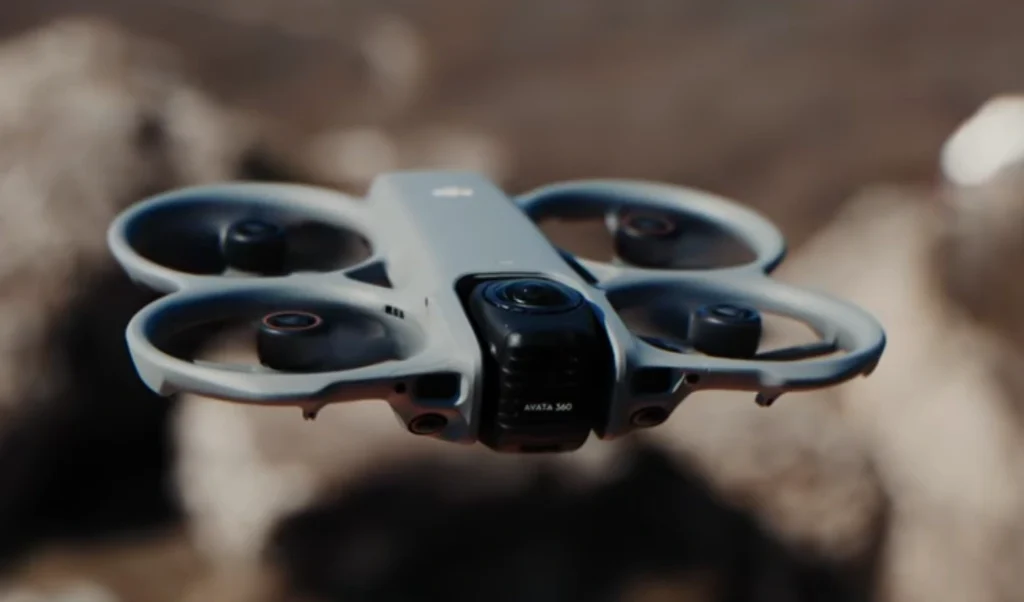
The DJI Avata 360 arrives as one of the most ambitious entries in the consumer drone market a device that promises to democratise FPV-style aerial cinematography without requiring pilots to master full manual flight.
Over a two-week evaluation period conducted across challenging real-world conditions including rain, high winds, snow, and even an unplanned crash, we put this drone through its paces to determine whether it lives up to its considerable promise.
This review compares the Avata 360 directly against two key competitors: the DJI Avata 2 and the Anti-Gravity A1. We examine image quality, shooting modes, portability, battery life, durability, and overall value, and we are candid about both the drone’s strengths and its shortcomings.
Shooting Modes & Image Quality
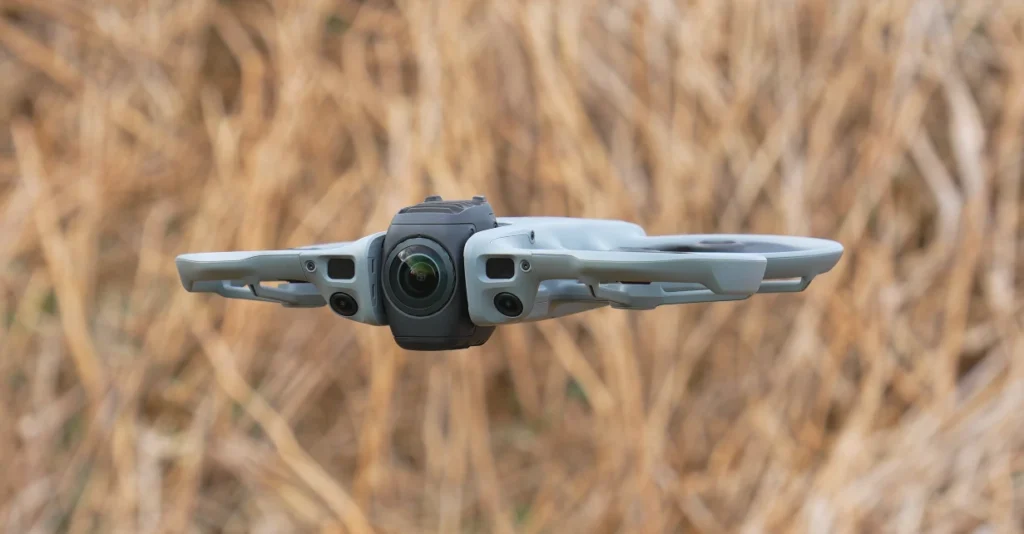
360-Degree Mode: 8K at 60fps
Both the 360-degree and single-lens modes support DLOG-M DJI’s logarithmic colour profile that retains maximum dynamic range for colour grading in post-production. This was conspicuously absent on the A1, and its presence here represents a meaningful step forward for professional workflows.

Single-Lens Mode
The single-lens mode proved to be a frequent choice during field testing, owing to its cinematic aesthetic and streamlined editing process. Capped at 4K 60fps with DLOG-M support, this mode delivers polished results for creators who prefer a more traditional shooting style. Notably, the 360-degree editing workflow is considerably more time-consuming than standard footage a trade-off inherent to any 360-degree camera, not unique to this drone.
Field Testing: Extreme Conditions
Durability: Crash Test
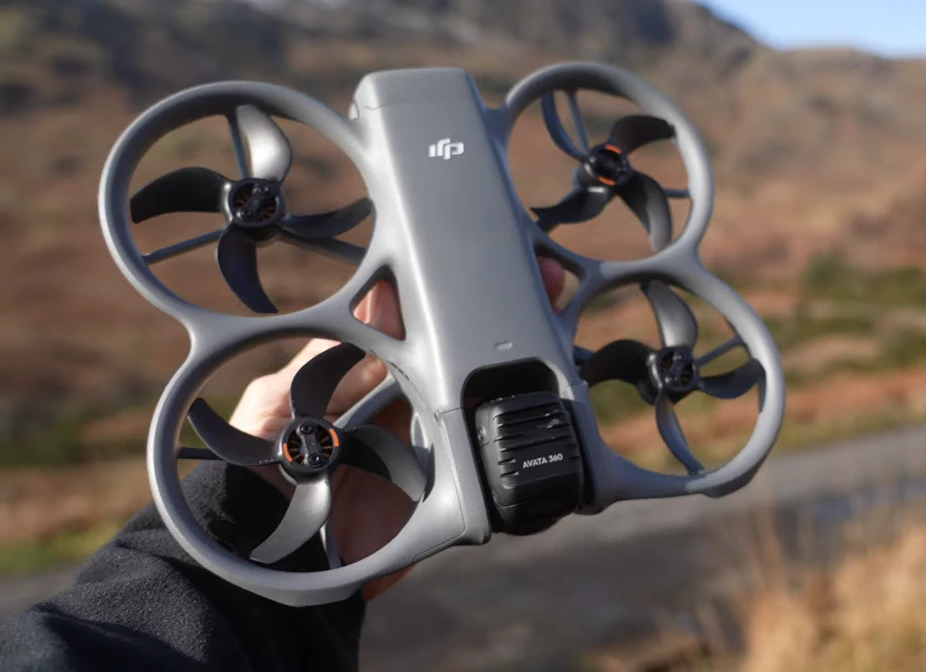
During an action sports shoot with professional cyclist Francesco, the obstacle avoidance sensors were deliberately disabled to allow closer proximity to the subject. This resulted in a collision. The drone survived without requiring lens replacement a testament to the build quality that exceeded expectations. The lens array, which might reasonably be considered the component most vulnerable to impact damage, emerged unscathed.
Wind Performance
A high-wind test conducted during a sunrise shoot revealed the Avata 360’s limitations under adverse atmospheric conditions. While the drone maintained stability and the majority of footage was usable, wind-induced camera movement caused occasional stitching artefacts in 360-degree mode an expected consequence of the physical camera position shifting mid-capture. This is a characteristic of the format rather than a flaw specific to this model.

Low-Light Performance
Low-light performance is a critical benchmark for any camera system deployed for professional work. The Avata 360 acquits itself well in dark environments, with performance broadly comparable to the Avata 2 a camera respected for its low-light capability. The drone handles low-light shooting with confidence, though it does not significantly surpass its predecessor in this regard.
The Avata 360’s headline specification is its ability to capture 360-degree footage at 8K resolution and 60 frames per second. This is not merely a numbers exercise the practical implication is that filmmakers can slow down footage during the reframing process in post-production without visible quality degradation. This capability is absent on the Anti-Gravity A1, and its absence there was notably missed.
Read More: DJI Avata 360 First Firmware Update Is Here
Battery Life
Across three days of active filming, average battery life measured approximately 16 minutes per charge. While this is respectable for a drone of this class, the demands of a full professional shoot will reliably exhaust a single battery. Multiple batteries are an operational necessity, not a luxury. Any filmmaker planning extended sessions should budget accordingly.
Comparative Analysis
Positioned against its two closest competitors, the Avata 360 occupies a distinct middle ground between the compact versatility of the Avata 2 and the regulatory-friendly portability of the Anti-Gravity A1.
Avata 360 vs. Anti-Gravity A1
The A1’s sub-250g weight class is a meaningful advantage in jurisdictions with drone weight registration thresholds, and its compact footprint makes it the more travel-friendly option. It is also the most expensive of the three drones evaluated. However, when image quality, shooting flexibility, and colour science are the deciding factors, the Avata 360 wins comprehensively. The superiority of the Avata 360’s imaging pipeline combined with dual lens options makes it the stronger creative tool.
Read More: DJI Avata 360 First Look & Honest Thoughts
Avata 360 vs. Avata 2
The Avata 2 remains the preferred tool for manual-flight specialists who require acro mode and full pilot control. Its compact form factor also makes it easier to travel with. The Avata 360, however, is not a replacement it is a complement. It enables angles and creative possibilities that the Avata 2 simply cannot replicate, making both drones viable as components of a professional kit.
Professional Tips for Getting the Best Results
Prioritise a Wider Field of View: Image quality degrades noticeably with heavy cropping during reframing. Maintaining a wider field of view during capture preserves maximum detail and affords far greater flexibility in post-production. The bulk of field footage was captured at a wide setting precisely for this reason.
Restrain the Key Framing: The 360-degree format’s reframing capabilities can encourage excessive animated movement. Resist this impulse. Over-choreographed flips and spins fatigue the viewer and undermine the shot’s impact. Subtle reveals and restrained motion consistently outperform elaborate key-framed sequences. Simplicity is a creative advantage, not a compromise.
Plan Your Flight Path Before Takeoff: Stitching artefacts and motion shake are significantly reduced by flying in a single, continuous line without abrupt directional changes or mid-flight stops. Pre-planning the flight path rather than improvising in the air produces demonstrably smoother final footage and is arguably the single most impactful variable within a filmmaker’s control.
Table of Contents
Final Verdict
The DJI Avata 360 is a genuinely impressive piece of engineering. It does not replace the Avata 2 for pilots who require manual flight control, nor does it match the A1’s sub-250g portability advantage. What it does, however, is open up a category of creative possibilities that no previous consumer drone has made this accessible.
For filmmakers who want FPV-quality angles without the steep learning curve of acro flight, the Avata 360 is the most compelling option currently on the market. Its image quality surpasses the A1, its DLOG-M support positions it properly within professional post-production pipelines, and its durability in the field is reassuring.
Missing ND filter support and the absence of a full manual mode are genuine limitations that need to be addressed in future firmware or hardware iterations. The battery life, while adequate, will require careful logistical planning for longer shoots. These are real concerns, but they do not undermine the drone’s core proposition.
Content creators seeking cinematic FPV aesthetics, aerial filmmakers expanding their toolkit, and anyone who wants professional-grade 360-degree footage without a commercial pilot’s learning curve.
An in-depth evaluation of DJI’s latest 360-degree drone tested in rain, wind, and snow, with real-world crashes included.
Read More: DJI Avata 360 Real Flying Test & First Impression