
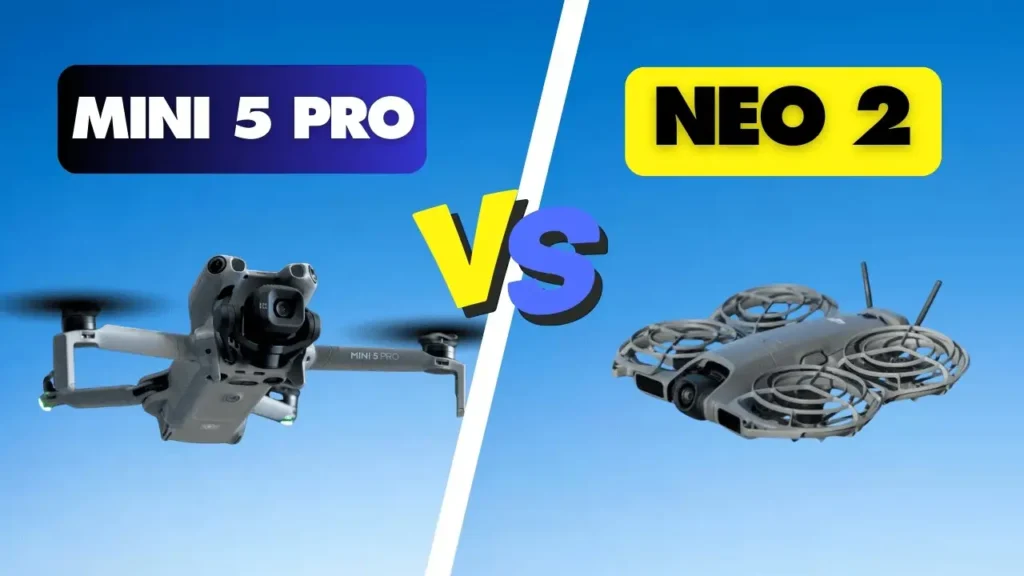
DJI has been busy, and the proof is right here in front of us — two brand-new drones that have taken the mini drone space by storm. The DJI Mini 5 Pro and the DJI Neo 2 are both exceptional machines, but they couldn’t be more different in terms of price, purpose, and performance.
Whether you’re a beginner looking for your first drone, a content creator needing something lightweight and fun to carry around, or a serious filmmaker who wants the best image quality in a compact package, this DJI Mini 5 Pro vs Neo 2 deep-dive comparison will help you figure out exactly which one is right for you.
Weight and Price
When it comes to weight and pricing, these two drones sit at completely opposite ends of the spectrum and that difference alone tells you a lot about who each drone is designed for.
The DJI Neo 2 weighs just 160 grams, making it one of the lightest drones on the market. Its Fly More Combo is priced at only $79 AUD, which includes three batteries, the controller, the drone itself, and a range of accessories. It is an incredibly accessible package.
However, one notable disappointment is that the Neo 2 doesn’t come with a carrying bag. While many other DJI drones in the Fly More range include a quality bag or case, the Neo 2 simply comes in a box. It’s a minor inconvenience, but it’s something to be aware of if you’re planning to travel with it. Third-party bags are readily available online, but it would have been a nice touch to include one in the box.
The DJI Mini 5 Pro, on the other hand, has attracted some controversy around its weight. The Mini drone range from DJI has always been celebrated for staying under the critical 250-gram threshold — a specification that matters greatly from a regulatory and travel standpoint. The Mini 5 Pro is marketed as weighing 249.9 grams, but DJI acknowledges a tolerance of plus or minus 4 grams.
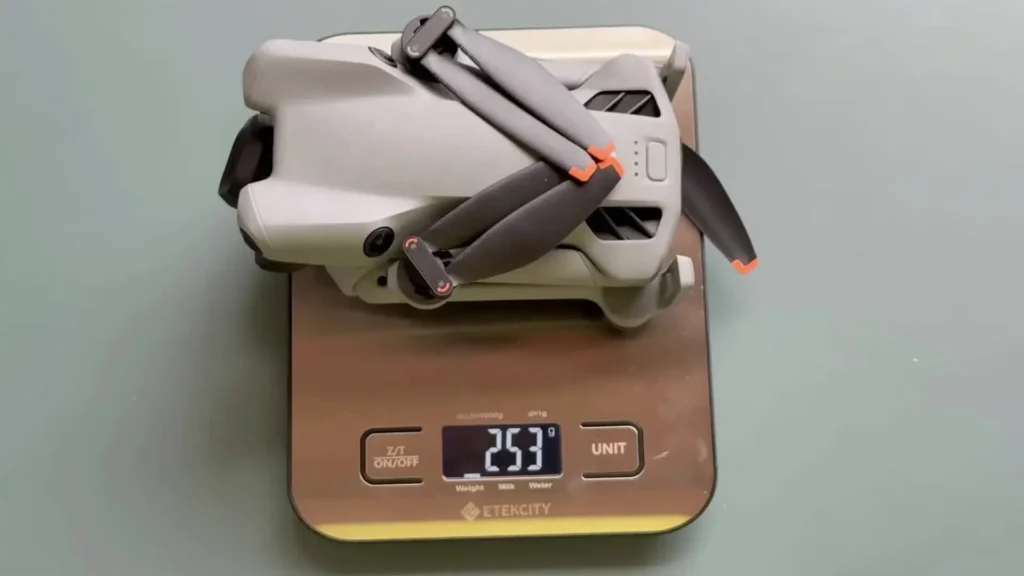
In practice, many users have placed the drone on a scale and found it to weigh 253.9 grams, and photos of these readings have been circulating widely online. In Australia, the rules around that weight threshold are relatively relaxed, and recreational flyers haven’t found it to be a dealbreaker. But if you live in a country with strict drone weight classification regulations, or if you frequently travel internationally, this could be an important consideration that pushes the Mini 5 Pro outside your shortlist.
Price-wise, the Mini 5 Pro Fly More Combo comes in at $1,699 AUD — a significant step up. That said, you do get a lot for your money: three batteries, the controller, the drone, accessories, and a proper carrying bag. It is a feature-packed offering, and the headline feature is that enormous one-inch sensor, which we’ll get into shortly.
Read More: Best 50 Tips & Settings for DJI Mini 5 Pro
Camera Quality
This is arguably the most important section for anyone seriously comparing the DJI Mini 5 Pro vs Neo 2, and it’s where the two drones diverge most dramatically.
The Neo 2 Camera
The camera on the Neo 2 has been significantly improved over its predecessor, the original Neo. The upgrade is immediately noticeable, and it makes a real difference to the quality of footage you can capture. The Neo 2 features a half-inch sensor with an aperture of f/2.2 and a two-axis gimbal.
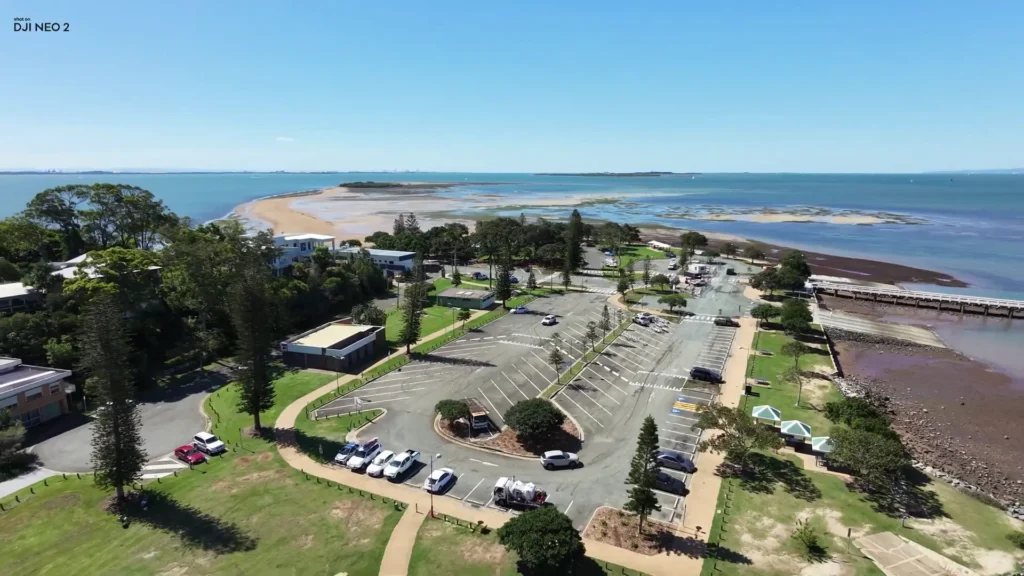
Those specs come with some natural limitations — in low-light environments, the smaller sensor will struggle more than a larger one, and the two-axis gimbal means that in strong wind or when angling the camera downward, you may occasionally notice some camera movement. In rare situations, the body of the drone itself can creep into the frame.
However, this has not been a dealbreaker in real-world use. The vast majority of footage captured with the Neo 2 is perfectly usable, and it’s only in exceptional circumstances that these limitations become visible.
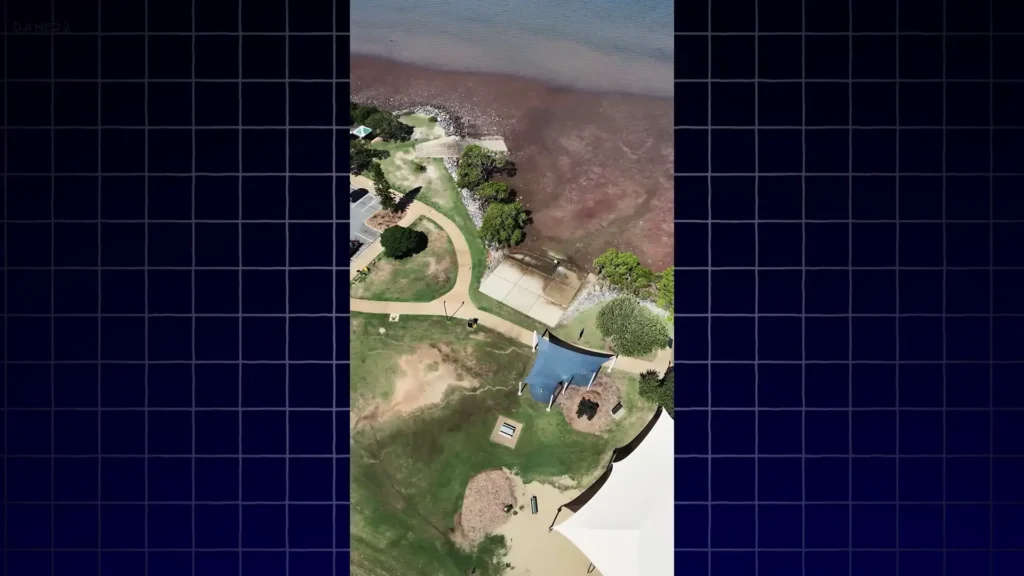
In terms of resolution and frame rate, the Neo 2 can capture 4K at 60 frames per second, as well as 4K at 100 frames per second for slow-motion footage. It also offers vertical video options, supporting 2.7K at 60 frames per second — a welcome feature for content creators producing social media content. The field of view on the Neo 2 is 120 degrees, which is equivalent to a 16.5mm lens.
That’s noticeably wider than the Mini 5 Pro, and while it wasn’t immediately obvious when flying, it does become apparent when reviewing the footage side by side. This wider field of view makes a lot of sense given that the Neo 2 is designed partly as a follow-me drone — flying up close means a wider perspective captures more of the scene. For photos, the Neo 2 tops out at 12-megapixel stills.
The Mini 5 Pro Camera
The Mini 5 Pro takes things to a completely different level with its one-inch CMOS sensor and an aperture of f/1.8. These specs mean dramatically better performance in low-light conditions compared to the Neo 2 — the difference between the two in challenging lighting situations is significant and obvious. The Mini 5 Pro can capture 4K at 60 frames per second, as well as 4K at 120 frames per second for slow motion, giving it a slight edge there as well.

One of the standout features of the Mini 5 Pro’s camera system is what DJI calls “true vertical shooting.” Rather than simply cropping a widescreen frame down to a vertical format — which is what the Neo 2 does — the Mini 5 Pro’s camera physically rotates to shoot in true vertical orientation. This means you’re capturing a full 4K 60fps vertical image with no cropping involved. For anyone producing content specifically for platforms like Instagram Reels or TikTok, this is a meaningful advantage. The quality difference in vertical mode between the two drones is substantial.
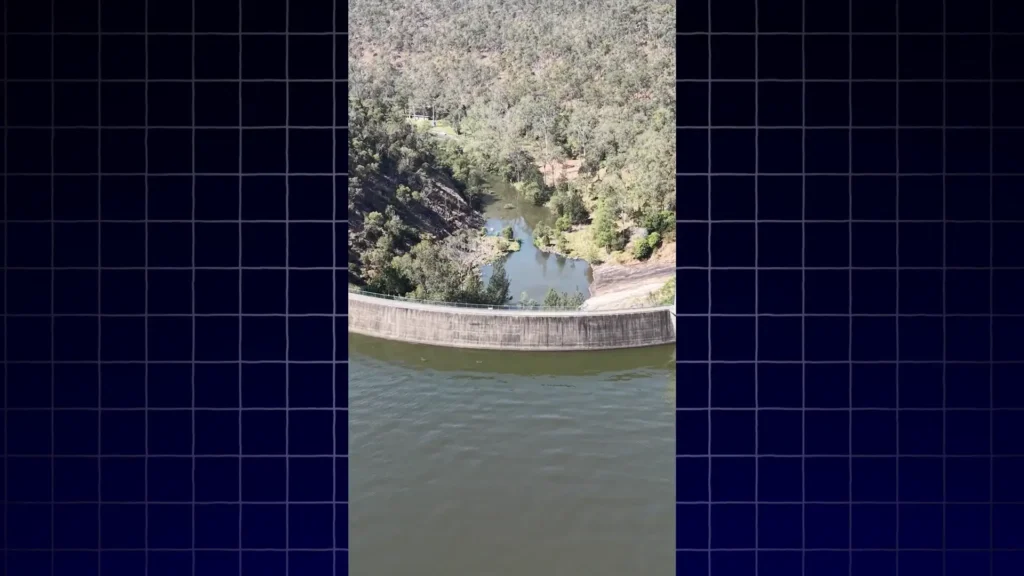
For still photography, the Mini 5 Pro gives you the option to shoot at either 12 megapixels or 50 megapixels, which opens the door to very high-resolution shots that can be cropped, printed large, or used for more demanding professional applications. The field of view is 84 degrees, equivalent to a 24mm lens — tighter than the Neo 2, but more natural-looking and cinematic for most shooting scenarios.
In summary, the Mini 5 Pro wins the camera battle outright. Better sensor, better low light, better slow motion, true vertical shooting, and higher-resolution photos. The Neo 2 is competitive and has genuinely improved, but it simply cannot match the image quality that a one-inch sensor delivers.

Design and Portability
Before getting into the more technical specs, it’s worth talking about how these drones actually feel to handle and transport, because it makes a surprisingly big difference to the experience.
The Neo 2 has a rigid, flat, non-folding body. Without a bag included in the box, transporting it becomes a little awkward. The antenna on the back protrudes noticeably, which breaks the otherwise uniform, aerodynamic silhouette that drone owners are used to.

First-time users often find this protrusion surprising — it looks unusual compared to the clean lines of most modern drones. The transceiver is necessary, though — without it, you lose controller functionality and many of the drone’s best features. It’s something you simply have to accept as part of the design.
The Mini 5 Pro, by contrast, folds up neatly into a compact form, comes with a proper carrying bag, and feels considerably more refined as a transportable package. If portability and travel-readiness matter to you, the Mini 5 Pro’s foldable design is a clear win.
Obstacle Avoidance
Both drones have made serious strides in obstacle avoidance, but the Mini 5 Pro has the edge here as well.
The Neo 2 features omnidirectional obstacle avoidance using a combination of LiDAR and infrared sensing, which is genuinely impressive for a drone at this price point. It can detect and avoid obstacles in multiple directions simultaneously, making it well-suited for follow-me modes and active tracking scenarios.
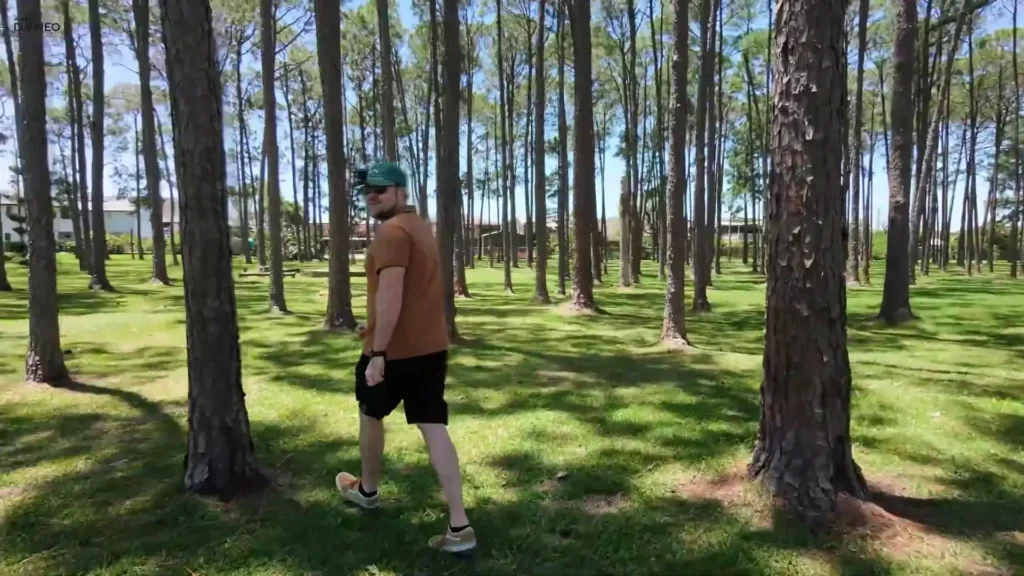
In testing, there was one incident where the drone clipped a tree — possibly related to the protruding transceiver on the back — but it recovered immediately and continued flying without issue. The full propeller guard coverage adds an extra layer of protection, and the drone proved to be remarkably sturdy in practice.
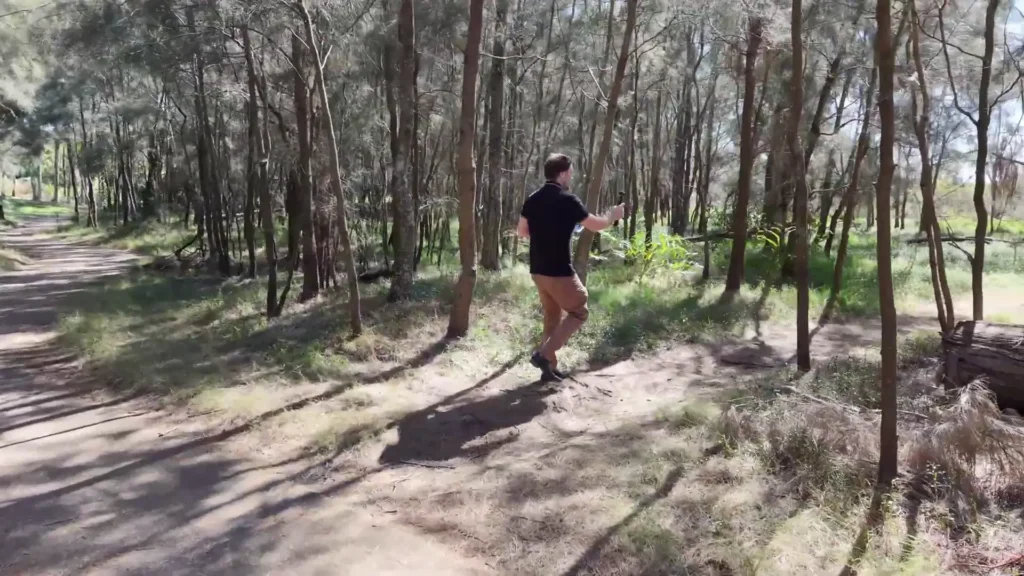
The Mini 5 Pro steps it up further with DJI’s APAS (Advanced Pilot Assistance System) omnidirectional obstacle avoidance, featuring six dedicated sensors — two pointing forward, two pointing backward, and two pointing downward — along with LiDAR and infrared sensing. The result is more reliable obstacle detection across all flight scenarios, including low-light environments where other systems can struggle. If you’re flying in complex environments or near obstacles regularly, the Mini 5 Pro’s system gives you more confidence.
Battery Life and Flight Time
Flight time is one of the most practical considerations when choosing a drone, and this is an area where the two drones are genuinely quite different.
The Neo 2 offers 19 minutes of flight time per battery. That might feel limited if you’re accustomed to longer-range drones, but in the context of how the Neo 2 is intended to be used, it makes more sense. DJI frames it as supporting approximately 20 takeoffs and landings on a single charge — think quick clips, palm launches, QuickShot modes, and capturing spontaneous moments on a trip or family outing.

With the Fly More Combo giving you three batteries, you can swap quickly and keep shooting. It’s not the drone you’d want for a long mapping mission or an extended aerial shoot, but for casual, content-focused flying, it holds its own.
The Mini 5 Pro offers two battery options: a 36-minute battery and a 52-minute battery. The longer battery does add weight to the drone, which feeds back into the weight classification conversation mentioned earlier. But having the flexibility to choose between a lighter, shorter-duration battery and a heavier, longer one is a genuine advantage.
One especially handy detail: the Mini 5 Pro batteries are interchangeable with Mini 4 Pro batteries. If you’re upgrading from the Mini 4 Pro, you can use your existing batteries with no technical issues — the only visual difference is a slight color mismatch.
Internal Storage
Internal storage is one area where the two drones are more evenly matched than you might expect. The Neo 2 comes with 49 GB of internal storage, while the Mini 5 Pro offers 42 GB. Both are perfectly adequate for capturing a solid day of footage, and both provide peace of mind for those moments when you’ve forgotten to pack an SD card.

There is one important distinction, however: the Neo 2 does not support a microSD card expansion slot. You are limited to the 49 GB of internal storage, full stop. The Mini 5 Pro, by contrast, allows you to insert a microSD card for expanded storage, which is a meaningful advantage for longer shoots or higher-bitrate recording sessions.
Control Options
If there’s one area where the Neo 2 truly surprises and delights, it’s in the sheer range of ways you can control it. This is arguably the drone’s single biggest selling point relative to its price.
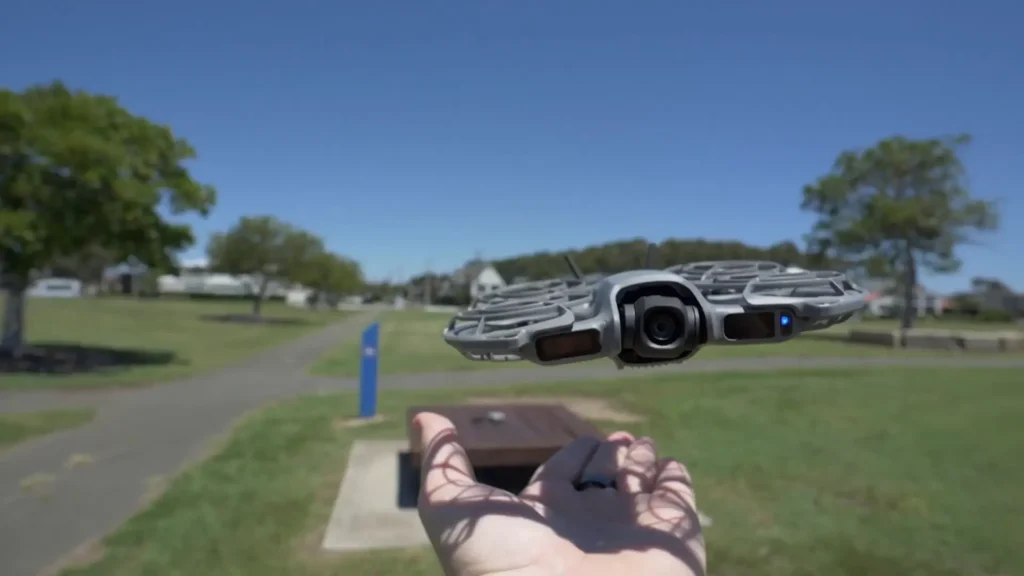
The Neo 2 can be flown via palm launch and palm landing — no controller required. You can control it with gesture recognition, moving it around and switching modes with your hands. It supports voice control, allowing you to issue commands verbally through a connected smartphone app.
You can fly it with a traditional remote controller, which is included in the Fly More Combo. And crucially, it also supports full FPV (first-person view) functionality, meaning you can use DJI goggles, a motion controller, and a full FPV setup to experience an entirely different kind of flight. For a drone at this price point, that level of versatility is remarkable.
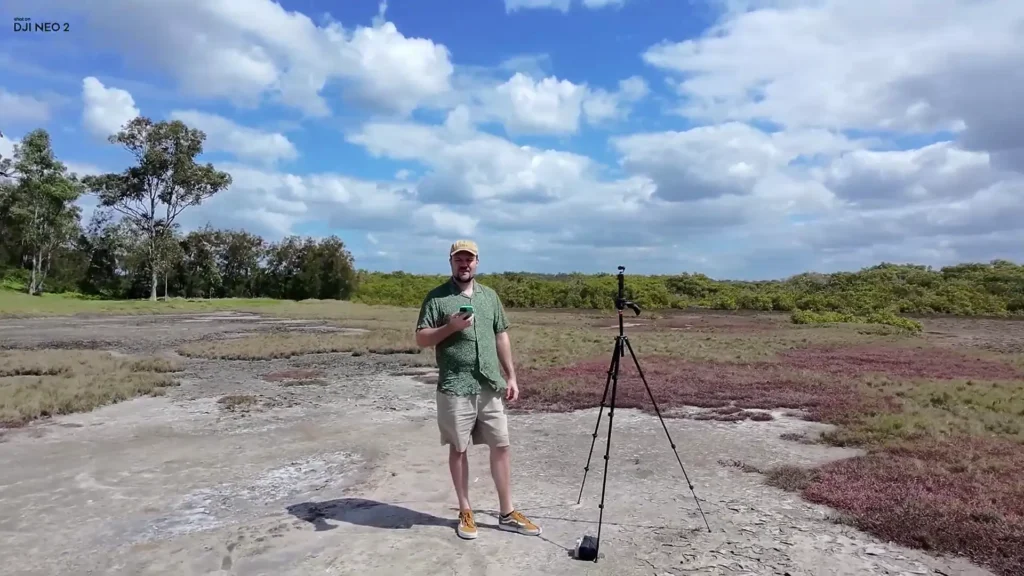
It creates flight experiences that most drone pilots — even experienced ones — have never had before, and it opens up a path toward the world of FPV flying for those who want to explore it.
The Mini 5 Pro, by comparison, is more conventional in its control options. At the time of this article, it supports remote controller use only. There is no hand-launch capability, no motion controller support, no goggle integration, and no FPV mode.
It’s likely that DJI will release goggle and motion controller compatibility for the Mini 5 Pro in the future — they’ve done so with other recent high-end drones — but for now, it’s a straightforward, controller-only experience. That’s perfectly fine for the audience it’s designed for, but when you compare the two side by side, the Neo 2’s versatility stands out dramatically.
Flight Modes and Intelligent Features
Both drones offer a comparable selection of intelligent flight modes, with some interesting differences on each side.
Both the Neo 2 and the Mini 5 Pro include Active Track for subject following, as well as a very similar set of QuickShot modes. The Mini 5 Pro adds a Rotate mode — an exclusive feature shared with the Mavic 4 Pro — which allows the camera to physically rotate during a shot for uniquely creative perspectives.
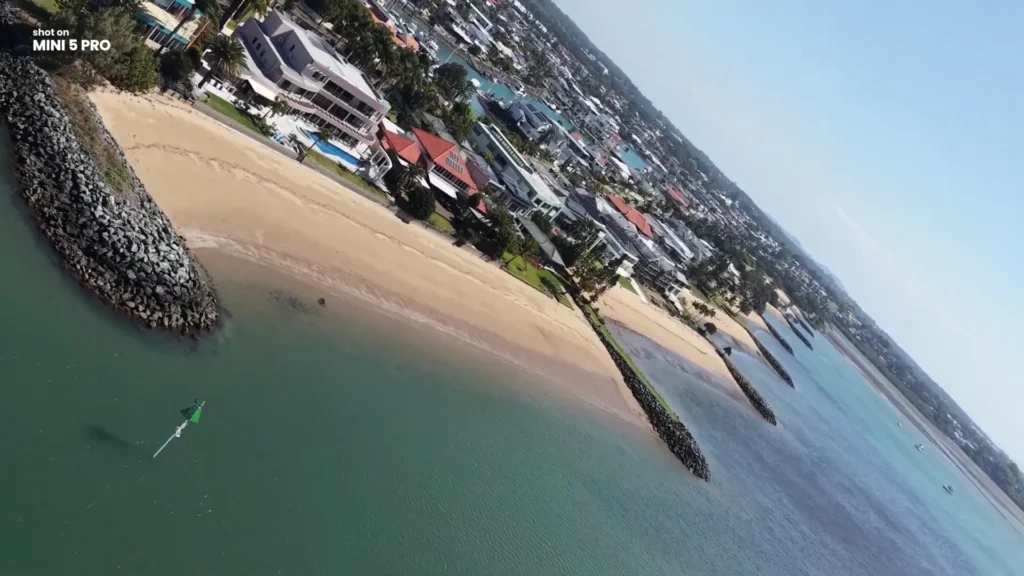
It also includes Waypoint mode, which is a more professional-grade feature that enables pre-programmed flight paths. The Neo 2 doesn’t offer Waypoints, but it does include Selfie Shot and Dolly Zoom modes, which aren’t available on the Mini 5 Pro. Both drones support Master Shots and Cruise Control.
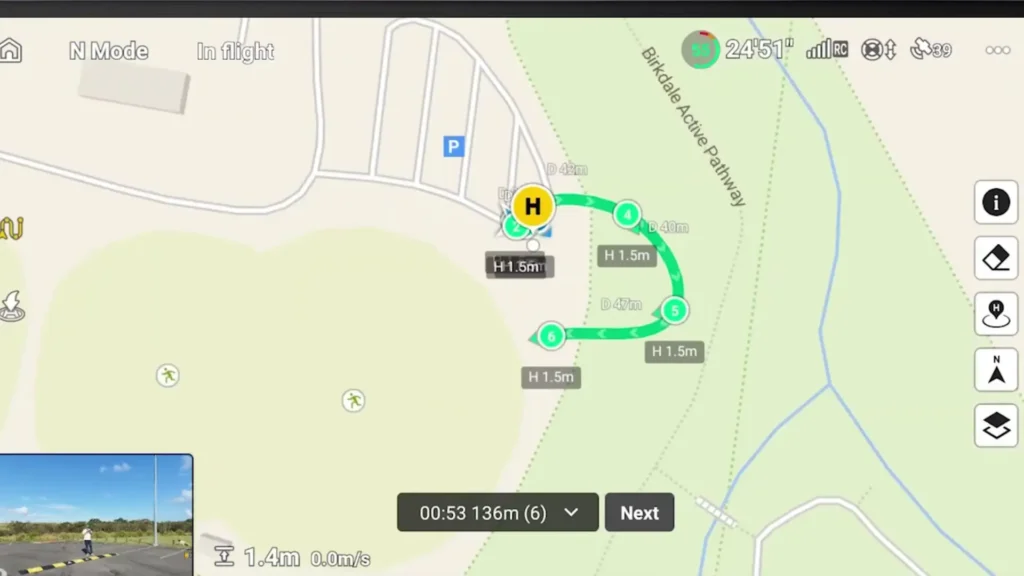
It’s clear from looking at these feature sets that both drones have been designed with a specific user in mind. The Neo 2 leans heavily into selfie, follow-me, and social-media-friendly shooting. The Mini 5 Pro is more about precision, creative control, and professional-quality output.
Wind Performance
Wind handling has always been a weak point for smaller drones, but both the Neo 2 and the Mini 5 Pro have made meaningful progress in this area.
Both drones carry a Level 5 wind resistance rating. The Neo 2 can handle winds up to 10.7 m/s, while the Mini 5 Pro can handle up to 12 m/s. The Mini 5 Pro has the edge, as expected given its larger and heavier build. But the improvement on the Neo 2 compared to its predecessor is noteworthy.
The original Neo struggled significantly in windy conditions, which was one of the most common complaints about it. The Neo 2 has addressed this, and while it still isn’t quite as stable as the Mini 5 Pro in gusty conditions, it’s a far more capable flyer than the drone that came before it.
| Feature | DJI Neo 2 | DJI Mini 5 Pro |
|---|---|---|
| Price (Fly More Combo) | $79 AUD | $1,699 AUD |
| Weight | 160g | 249.9g (±4g, often 253.9g) |
| Sensor Size | 1/2 inch | 1 inch CMOS |
| Aperture | f/2.2 | f/1.8 |
| Gimbal | 2-axis | 3-axis |
| Max Video Resolution | 4K 60fps | 4K 60fps |
| Slow Motion | 4K 100fps | 4K 120fps |
| Vertical Video | Cropped (2.7K 60fps) | True Vertical 4K 60fps |
| Photo Resolution | 12MP | 12MP or 50MP |
| Field of View | 120° (16.5mm equiv.) | 84° (24mm equiv.) |
| Low Light Performance | Average | Excellent |
| Obstacle Avoidance | Omnidirectional (LiDAR + Infrared) | Omnidirectional (6 sensors + LiDAR + Infrared) |
| Flight Time | 19 minutes | 36 or 52 minutes |
| Internal Storage | 49GB | 42GB |
| MicroSD Support | ❌ No | ✅ Yes |
| Foldable Body | ❌ No | ✅ Yes |
| Carrying Bag Included | ❌ No | ✅ Yes |
| Wind Resistance | Level 5 (10.7 m/s) | Level 5 (12 m/s) |
| Palm Launch / Landing | ✅ Yes | ❌ No |
| Gesture Control | ✅ Yes | ❌ No |
| Voice Control | ✅ Yes | ❌ No |
| FPV / Goggle Support | ✅ Yes | ❌ No (at time of review) |
| Remote Controller Support | ✅ Yes | ✅ Yes |
| Active Track | ✅ Yes | ✅ Yes |
| Waypoint Mode | ❌ No | ✅ Yes |
| Selfie Shot & Dolly Zoom | ✅ Yes | ❌ No |
| Rotate Mode | ❌ No | ✅ Yes |
| Master Shots & Cruise Control | ✅ Yes | ✅ Yes |
| Battery Interchangeable | N/A | ✅ With Mini 4 Pro |
| Best For | Beginners, travelers, content creators | Serious filmmakers, professionals |
Which Drone Should You Buy?
After spending time with both drones across a wide range of shooting scenarios, the recommendation here is clear for most people: the DJI Neo 2 is the standout choice.
It is dramatically cheaper, wildly versatile, genuinely fun to fly, and the camera quality — while not matching the Mini 5 Pro — has been significantly improved to the point where it produces footage that is absolutely usable and often impressive. The range of control options alone — palm launch, gesture control, voice control, FPV goggles — makes it unlike any other drone on the market.
If you already own a DJI Air 3 or a Mini 4 Pro, you’ve never experienced anything quite like the Neo 2, because there simply isn’t anything else like it. It’s a unique product with a lot of personality, and it’s a lot of fun to fly. Even experienced drone pilots will find it refreshing and different.
The Neo 2 is perfect for beginners who want an accessible entry point into the world of drones. It’s great for travelers and families who want to capture moments without the hassle of carrying bulky equipment. And it’s an excellent second drone for enthusiasts who want to experiment with new ways of flying.
That said, the DJI Mini 5 Pro absolutely deserves an honorable mention. The fact that a one-inch sensor has been fitted into a mini-class drone is a genuine engineering achievement, and the rotating camera system, true vertical shooting, and superior low-light performance make it a remarkable piece of technology.
If you need the best image quality possible in a compact form factor — for professional work, for clients, for serious filmmaking — the Mini 5 Pro is the right choice. If you’re currently flying a Mini 4 Pro and wondering whether to upgrade, the honest answer is that it’s a hard sell. The improvements are real, but not transformative enough to justify the cost for most existing Mini 4 Pro owners. In that scenario, the Neo 2 would actually be the more interesting and rewarding purchase.
Table of Contents
Article Summary
Ultimately, both drones have carved out their own distinct space in the market. The DJI Mini 5 Pro vs Neo 2 comparison isn’t really about one being better than the other in absolute terms — it’s about which one is right for you. And for the majority of people reading this, that answer is the Neo 2.
Read More: DJI Avata 360 First Firmware Update Is Here