
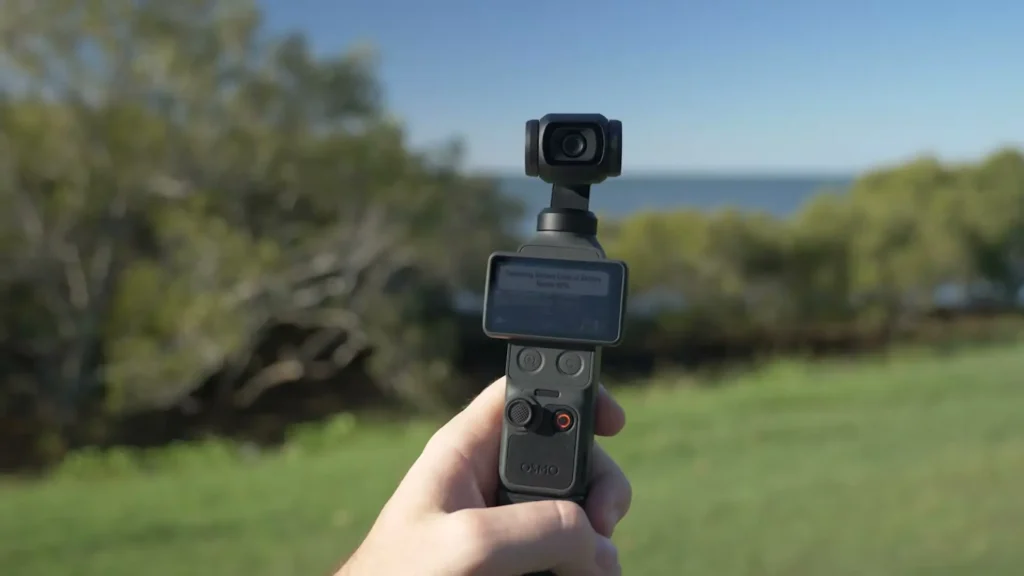
The Osmo Pocket range is one of my favorite camera ranges of all time, and we now have a brand new entry in the form of the DJI Osmo Pocket 4. But how much of an upgrade is this camera system really? Let me walk you through everything you need to know before making your purchase decision.
Table of Contents
First Impressions
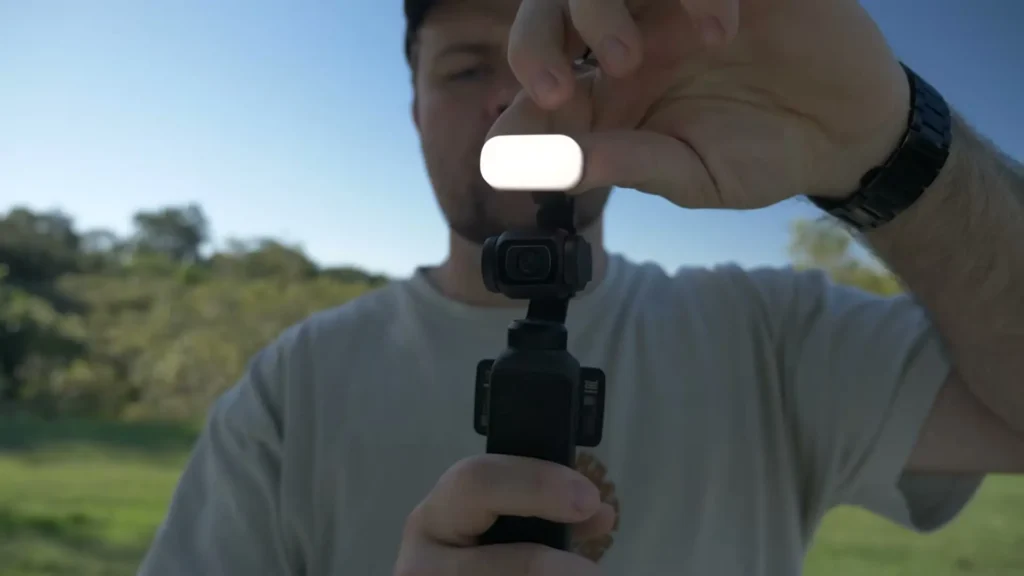
One of the first things you will notice about the DJI Osmo Pocket 4 is the built-in fill light that magnetically connects to the back of the camera and powers on immediately. This is one of the latest features that genuinely impressed me.
You get a lot of control over that fill light, including the ability to extend it out and angle it up or down. It works really well, and if DJI continues to capitalize on this magnetic accessory system, it could become a truly unique offering in the market.
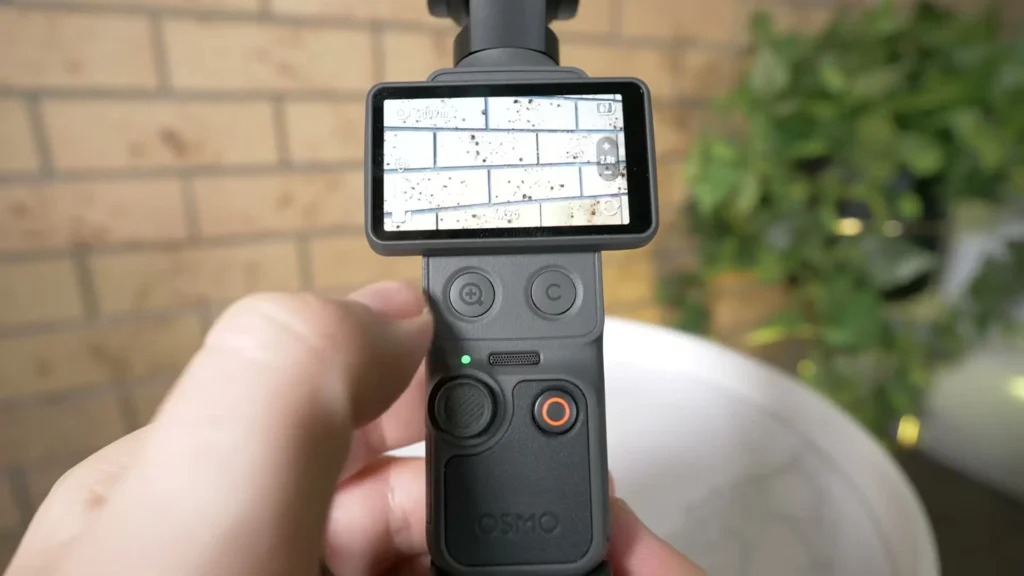
There are also two brand new buttons added to the hardware. The first is a zooming button that lets you tap to utilize the two times lossless zoom, and the best part is that you can now zoom while recording, which is a really cool and practical addition. The second is a custom button that you can tap or double tap to unlock other features or quick functionality depending on your preference.
One of my favorite hardware upgrades, however, is actually the joystick. It protrudes more and feels much more like a proper joystick compared to the Osmo Pocket 3, which felt more like a small knob.
The old one worked fine, but I always found myself a little uninterested in using it. The new joystick feels a lot more natural and I am just a lot more happy to use it now.

What I Was Expecting vs. What We Actually Got
I will be fully transparent here. The DJI Osmo Pocket 4 was provided directly by DJI for this review and this content has been sponsored by The D1 Store, but all of my thoughts expressed throughout are entirely my own.
Now, this is an interesting camera to review because I was honestly expecting something different. I was expecting a bigger wow factor. I was expecting maybe a dual camera system, a significantly improved sensor, or even more video quality options. Something that would have really blown me away.
The camera system has not been significantly upgraded. There are some really nice additions, but when you look at it closely, it is quite similar to the Pocket 3, even down to the sensor size.
With that said, the Osmo Pocket 3 is still one of my favorite camera systems and I use it constantly, for unboxing videos, for talking to camera content, and for general on-the-go shooting.
The Osmo Pocket 4 is an improvement on that already solid foundation, so if you have never owned an Osmo Pocket before, this is a fantastic time to get into the market. However, for those upgrading from the Pocket 3 to the Pocket 4, it sits in a bit of a gray area.
Also Read : DJI Pocket 4 vs Insta360 Luna Ultra
Sensor, Dynamic Range and Video Capabilities
The DJI Osmo Pocket 4 still uses a 1-inch CMOS sensor, but DJI is referring to it as a new 1-inch CMOS sensor. This gives us 14 stops of dynamic range and it also now supports 10-bit D-Log, which is a significant step forward for anyone chasing that professional cinematic look.

The dynamic range is noticeably better and the low-light performance is genuinely impressive. I captured a standalone low-light video at a ceremony where the room was really dark with blinds down and very limited light coming through.
In normal mode, I could barely see anything, but switching to low-light mode made everything visible immediately. That kind of real-world performance speaks for itself.

When it comes to 4K recording, you get that two times lossless zoom and you can use it mid-recording, which is a very welcome addition. There is also ActiveTrack 7, which is a slight improvement over the previous version. During my testing it did a great job of keeping up with subjects, and while the Pocket 3 already performed well with ActiveTrack, the improvements here are noticeable.
Slow Motion
One of the biggest upgrades in the DJI Osmo Pocket 4 is without a doubt the slow motion capabilities. You can now shoot 4K footage at up to 240 frames per second, which is a significant leap forward and genuinely impressive to see in a camera of this size.
What makes this even better is the fact that this is a three-axis gimbal. You do not have to worry about stabilization in post-production and you do not have to rely on software-based stabilization.
The gimbal handles everything mechanically, which means your slow motion footage comes out sharp and crisp without any awkward movements or digital artifacts. That combination of 4K 240fps and a three-axis gimbal is hard to beat.
Photo Quality and New Creative Features
The Osmo Pocket 4 introduces a super photo mode that captures 33-megapixel still photos. Zooming into some of the photos, the Pocket 4 is better and you do notice a bit more detail, but it is not a dramatic difference because both the Pocket 3 and Pocket 4 are 1-inch camera systems at their core.
One genuinely exciting new addition is live photos. Just like on an iPhone, the camera captures lots of different frames so you can go back and select the specific live photo moment you want. It is a feature that feels unique and adds a fun creative dimension to the shooting experience.
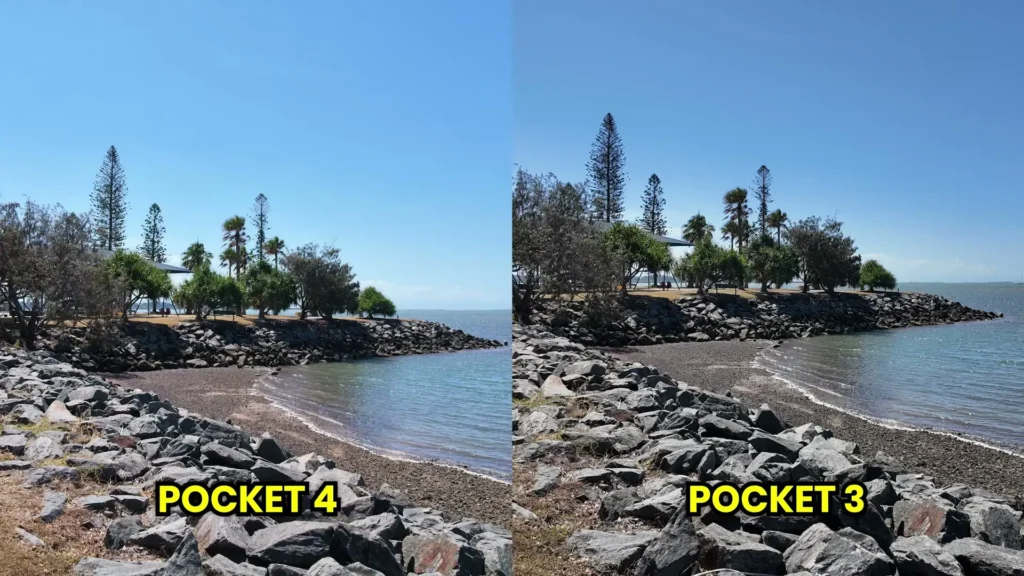
There are also built-in film tones now, so you can apply different cinematic colors, cool tones, transparent looks, and various other moods directly in camera. These add a nice creative flair to your footage without needing to do heavy color grading afterward. DJI has also improved video and photo portrait performance, along with added beauty filters and glamour effects.
Another interesting addition is slow shutter video mode, which gives you some control over the shutter speed and creates a unique motion blur effect that a lot of creators are going for right now. You can achieve this look entirely within the Pocket 4 without any additional tools.
Intelligent Tracking, Audio and Smart Features
ActiveTrack 7 brings with it a newly added subject lock tracking feature, which means the camera locks onto a subject and maintains focus more consistently throughout the shot. There are also gesture controls, which is another exciting new feature for hands-free shooting.
On the audio side, the DJI Osmo Pocket 4 supports four-channel output and spatial audio. This means you can connect multiple microphones for a full production setup.
If you want multiple people recorded with their own microphone audio while the gimbal captures everything visually, the Pocket 4 really does add that additional professional layer to your workflow.
Built-In Storage
One of my absolute favorite features in the DJI Osmo Pocket 4 is the built-in storage. DJI has been doing this across their latest products and I think it is a fantastic decision.
The Pocket 4 comes with 107 GB of internal storage, meaning you do not even need to bother with an SD card or microSD card unless you want to. The option to connect a microSD card is still there, but I found myself using the internal storage exclusively.
After recording extensively on this camera I still had 62 GB free, which gives you a sense of just how much you can capture before you even need to think about managing storage. It is one of those quality-of-life upgrades that you will appreciate every single time you pick up the camera.
Accessories and What Comes in the Kit
The unboxing experience here is worth mentioning because there are a lot of different accessories included in the kit. The charging add-on screws in to give you a full setup with a mini tripod and an additional battery pack that connects directly to the unit and charges it on the go.
This is the setup I typically take out with me along with the fill light and the wireless microphone system, which connects wirelessly for audio at any time. There is also a bag included, which is a great little carry solution for all those accessories.
One design choice worth noting is the magnetic bracket that connects to lock the unit in place, preventing the screen from rotating and the camera from moving during transport. While it is very easy to remove and makes it quicker to get into production, it is a different approach compared to the previous full case design.
I do find myself slightly concerned about the joystick getting pushed or buttons being accidentally pressed when it is stored in a bag, but it is a minor concern overall.
Battery Life Improvement
The battery capacity has also received an upgrade. The Osmo Pocket 4 comes with a 1,545 mAh battery compared to the 1,300 mAh battery in the Pocket 3. It is not a dramatic leap but it is a welcome improvement and contributes to that overall sense of incremental refinement throughout the device.
Specification Table
| Spec | DJI Osmo Pocket 4 |
|---|---|
| Sensor | 1-inch CMOS |
| Dynamic range | 14 stops |
| Max video | 4K up to 240fps |
| Color | 10-bit D-Log, built-in film tones |
| Tracking | ActiveTrack 7 with subject lock |
| Zoom | During recording, including ActiveTrack mode |
| Controls | Redesigned joystick, new zoom button, new custom button, gesture controls |
| Photo | 33MP super photo mode, live photo support |
| Audio | Four-channel output with spatial audio |
| Storage | 107GB internal |
| Battery | 1,545 mAh |
| Accessory | Magnetic fill light |
Should You Buy the DJI Osmo Pocket 4?
Here is my honest take. What the DJI Osmo Pocket 4 feels like is an incremental update. It feels more like an Osmo Pocket 3.5 than a completely new generation. There are some really nice quality-of-life upgrades and some genuinely impressive features, particularly the slow motion capabilities, the fill light system, the built-in storage, and the 10-bit D-Log support.
If you have never owned a Pocket camera before, this is an obvious pickup. It has a great price point, loads of options, and it is a really solid camera system. It pretty much replaces the Pocket 3 for me in my day-to-day shooting. I use a pocket camera for all my unboxing videos, for talking to camera footage, for B-roll when I am out and about, and for travel. Having a three-axis stabilized 1-inch sensor in your pocket that can shoot 4K with HDR, slow motion, and 10-bit color is remarkable.
However, if you already own the Osmo Pocket 3, it is a really hard upgrade to recommend. I would have loved to see a pro version with a dual camera system or a significantly improved sensor. Something that would have made the jump feel worth it for existing Pocket 3 owners. But as a standalone camera system evaluated on its own merits, the DJI Osmo Pocket 4 is a must-have for anyone who has been considering a pocket camera and has not yet taken the plunge.
Read More: DJI Osmo Pocket 4P Review