
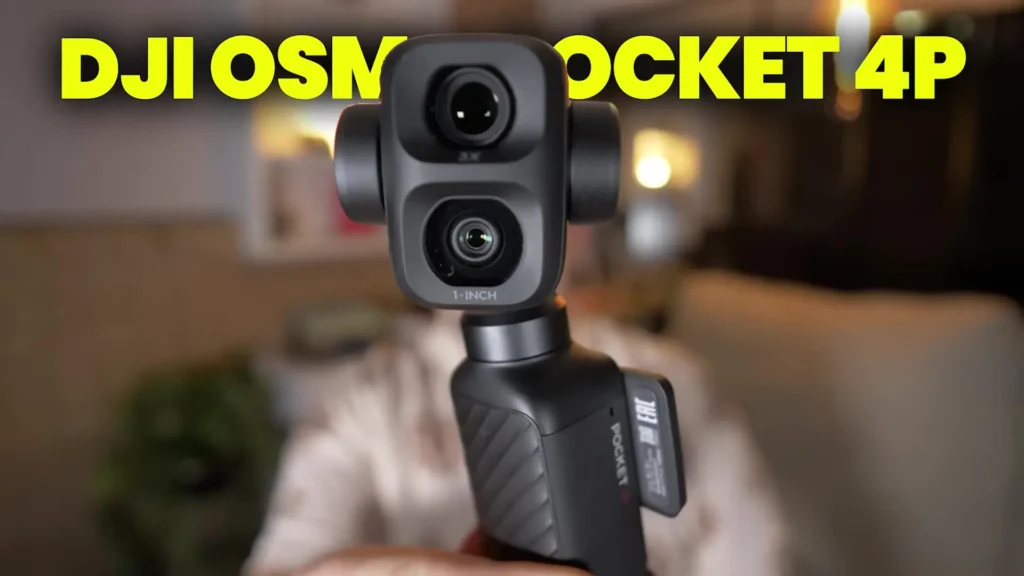
Here it is, the hugely anticipated DJI Osmo Pocket 4P with a very exciting dual camera system. With full transparency, the Osmo Pocket 4P was sent directly by DJI for review purposes, and this video has been sponsored by The D1 Store.
Table of Contents
Design and Familiar Form Factor
It definitely feels like a familiar form factor. It looks very similar to what we saw on the Pocket 3 and the Pocket 4, with a very similar flipping screen. The user interface feels very similar to what we have seen in the past. This time on the Pocket 4P, we get two new dedicated buttons, which we saw on the Pocket 4 but did not have on the Pocket 3.
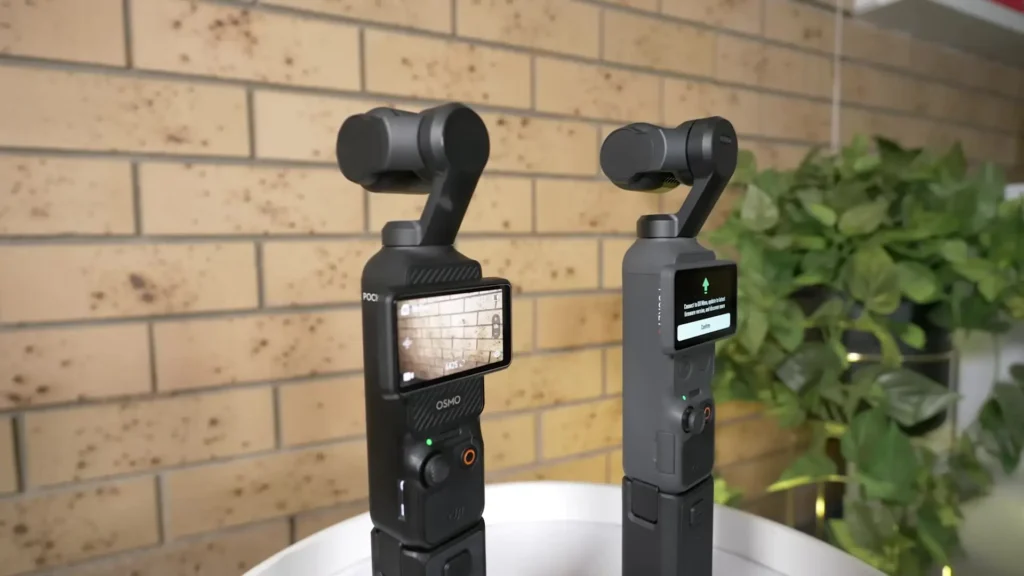
We get a dedicated zooming button and a dedicated custom button as well, which at this point either swaps into the zoom mode or the joystick control. You can also customize that custom button as well. Everything else below the camera system feels quite similar here.
The Biggest Upgrade
The biggest upgrade, as you would imagine, is the fact that now we have got a dual camera system. We have that 1-inch main camera system, which is remarkable, and then we also have a 3x optical camera system.
Interestingly enough, this reminds a lot of the 3x camera system that we saw on the Air 3S. It definitely feels quite similar here, and it is worth wondering whether this combination, the 1-inch system with the 3x, has come across from the Air 3S.
Usability and User Experience
The usability of the DJI Osmo Pocket 4P feels very natural. The joystick controls are very responsive. All the buttons work nicely. The software is flawless as always. The overall user experience has been great with no bugs, errors, or issues whatsoever. Everything works really nicely, and jumping between the two camera systems, from 1x to 3x, actually feels very natural.
There is not much of a delay at all. Considering these are two distinctly different camera systems, it feels incredibly seamless. Even when you are zooming in, there is a slight stutter and delay as it transitions to three times, but that also feels very natural. You can go between the perspectives quickly and capture the shot without having to waste any time.

Video Quality and Resolution
What is most interesting here is that we are still getting 4K 60 frames per second. We are not getting a leap into 6K or 8K at this stage. Maybe we will see that with future updates. At this point, we are getting 4K 60 frames per second on both the 1x and the 3x camera systems.
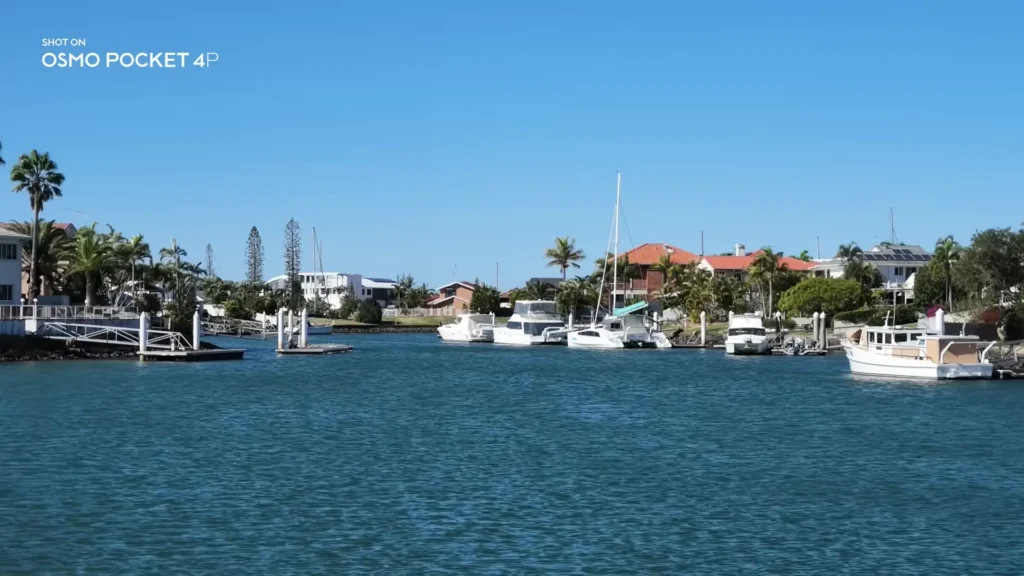
When it comes to vertical video, we are not getting a leap into 4K either. It is still 3K 60 frames per second. It would have been great to see vertical video go into 4K. The biggest leaps forward are actually the dynamic range, the new D-Log profile, and the slow motion options available here.
Also Read: DJI Pocket 4 vs Insta360 Luna Ultra
Camera Specifications
Before diving deeper, here are the specifics of the two camera systems. The main camera system features a 1-inch sensor with a 20mm equivalent focal length and a fixed aperture of F2.0. The secondary camera system is a 1/1.28-inch medium tele system with a 60mm equivalent focal length and a fixed aperture of F1.8.
We are getting 10-bit color throughout, regardless of which camera system you are using. You have the choice between Normal, D-Log, and D-Log 2 color profiles.
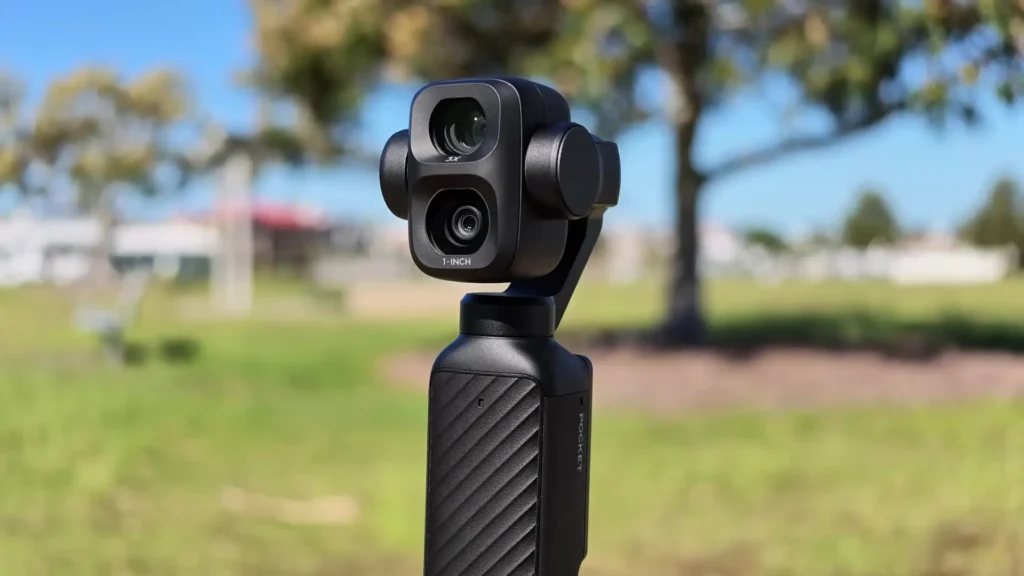
It is worth noting that D-Log 2 is exclusively available on the main camera and is not available on the medium tele system. The main camera system delivers 17 stops of dynamic range, which is a huge leap forward and very impressive. When you apply a LUT and a bit of color tweaking on top of D-Log 2, you will really see how much you can get out of it. It is a really nice advancement from DJI.
With the 60mm medium tele camera system, this is a 3x optical zoom system, but you can go up to 12x digital zoom, giving you a fair bit of control. Although you cannot get D-Log 2 on the telephoto system, DJI has done a really nice job of maintaining that blurry perspective, layering, and bokeh effect.
The two cameras actually feel quite similar when using them. The video quality matches up, the color matches up, and it is a really nice combination overall.

Impressive Slow Motion Capabilities
Going a little bit deeper into the video quality, and in particular the slow motion options available on the DJI Osmo Pocket 4P. Impressively enough, with the main camera system, you get 4K up to 240 frames per second, which is just so exciting to see on a three-axis gimbal that you can simply point and shoot.
You can capture some awesome slow motion with this camera. On the medium tele system, you can only go up to 4K 200 frames per second, so you cannot reach 240 on that medium tele system. Both of them look really nice though, and you can match the footage relatively well.
Accessories
This is by far the favorite accompanying accessory of the Pocket 4P, the Frame Tap. It basically functions as a remote controller, giving you full wireless control over the camera along with a direct video feed. You can flip the camera around by triple tapping.
It is a full operating system, so you can go in and change all the different settings you might need to change. You can also change modes, switching between video mode, photo mode, or slow motion, all through this little device. It has a fair bit of control and is an impressive little device to use.
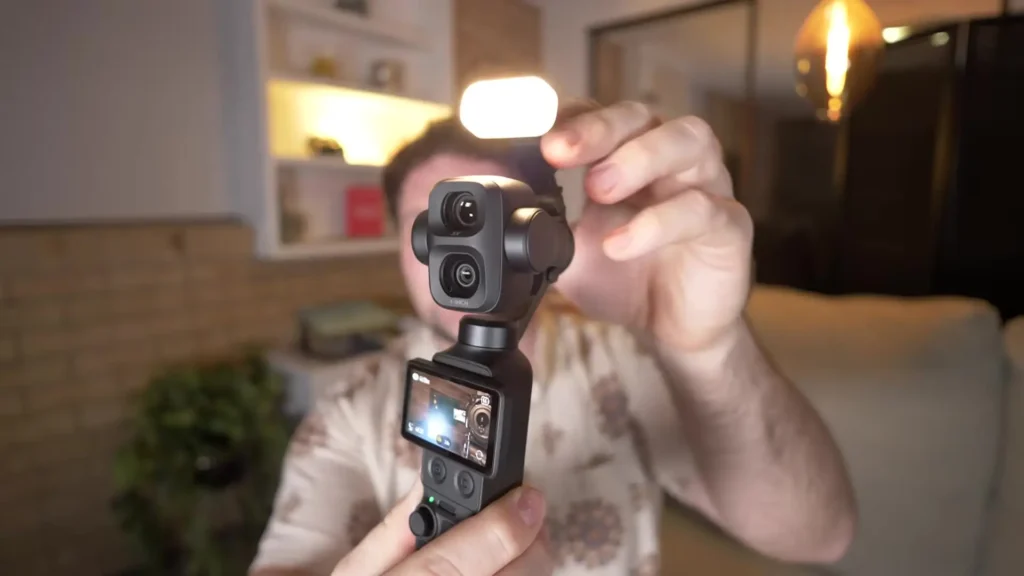
Another really cool accessory that has carried over from the Pocket 4 is a small magnetic light attachment. It connects magnetically, and as soon as you connect it, it powers on the unit. When you disconnect it, it powers down. It is such a simple little design, and you have a fair bit of control over how you want it to be positioned as well as the intensity and temperature of the light.
One thing that would have been really nice to see is a hard case for the camera. The kit comes with two different material bags, one main bag that contains all the accessories and another bag that you can slot the camera into and take it out with you.
There is no plastic case over the camera system, and it would have been so much nicer to have DJI include a hard case to make it easier to carry in your pocket or handbag.
Additional Features Worth Mentioning
The DJI Osmo Pocket 4P comes with 4K live photos, which are quite common on smartphones nowadays. It captures a 1.5-second clip before and after the moment to allow you to choose the better image.
The unit itself weighs 230g, making it very lightweight. For someone with larger hands, it almost feels too small, and you might find yourself wanting to connect up the battery handle or the attachment handle on the base for a more comfortable grip.
The improved ActiveTrack on the Pocket 4P works really nicely. You now have more control to choose the framing as well, so you can place your subject off to the left, leaving the right-hand side of the frame free, or have them centered. ActiveTrack also works up to 12x zoom, which is really impressive.
There is also intelligent autofocus with subject focusing, which draws a box around a person to lock onto the subject, as well as multi-tracking, so you can have multiple tracking points if there are multiple people in the frame.
The Pocket 4P also comes with 103GB of internal storage, which is a great addition. DJI including internal storage in most of their products nowadays is something that is hard to fault. The stated operating time is 210 minutes, but that is only when shooting 1080p at 24 frames per second.
If you are shooting 4K, you will get considerably less than that. However, battery life has never really been an issue, especially when using the battery handle, which you can buy separately. With fast charging, you can charge up to 80% within just 18 minutes, which is absolutely amazing.
Specifications Table
| Feature | Main Camera | Medium Tele Camera |
|---|---|---|
| Sensor Size | 1-inch | 1/1.28-inch |
| Focal Length (Equivalent) | 20mm | 60mm |
| Aperture | F2.0 (Fixed) | F1.8 (Fixed) |
| Max Video Resolution | 4K 60fps | 4K 60fps |
| Slow Motion | 4K up to 240fps | 4K up to 200fps |
| Vertical Video | 3K 60fps | 3K 60fps |
| Color Profiles | Normal, D-Log, D-Log 2 | Normal, D-Log |
| Dynamic Range | 17 Stops | Not Specified |
| Digital Zoom | Up to 12x | Up to 12x |
| Color Bit Depth | 10-bit | 10-bit |
| Internal Storage | 103GB (Shared) | 103GB (Shared) |
| Weight | 230g | 230g |
| Battery Life | Up to 210 mins (1080p 24fps) | Up to 210 mins (1080p 24fps) |
| Fast Charging | 80% in 18 minutes | 80% in 18 minutes |
| ActiveTrack | Up to 12x Zoom | Up to 12x Zoom |
| Live Photo | 4K Live Photos | 4K Live Photos |
Is the DJI Osmo Pocket 4P Worth It?
Overall, this is a really impressive upgrade from DJI. If you have the Pocket 3 or anything older, you are definitely going to want to get yourself the Pocket 4P. Even if you currently own the Pocket 4 and you are wanting that dual camera system, it might be worth selling it privately or returning it for the Pocket 4P if you can, because that extra camera system makes a world of difference.
Read More: DJI Osmo Mobile 8P Review & Tested