
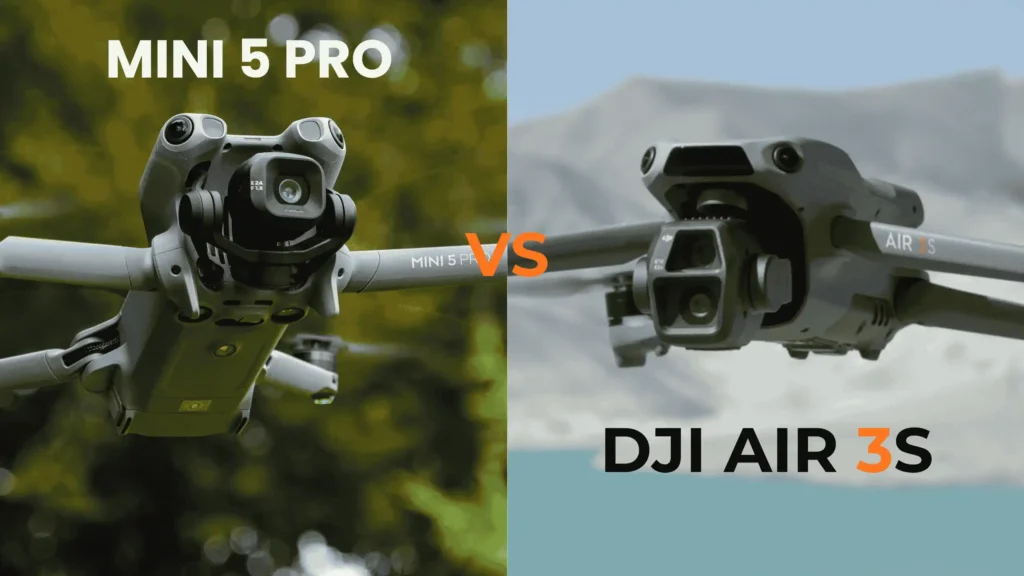
Choosing between the DJI Mini 5 Pro and Air 3S can be challenging, especially when both drones deliver exceptional performance. After extensive field testing on glaciers and mountaintops, this comprehensive comparison reveals which drone suits your specific needs. While these drones share numerous similarities, each excels in distinct areas that could make or break your decision.
Understanding the Key Differences
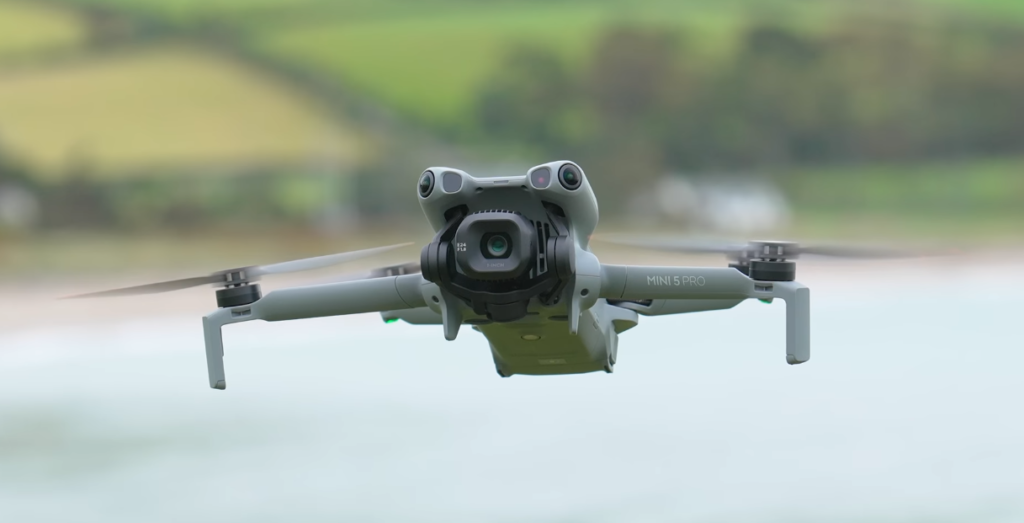
The Mini 5 Pro and Air 3S represent two different philosophies in drone design. The Mini 5 Pro prioritizes portability without sacrificing image quality, making it ideal for travelers and content creators constantly on the move. The Air 3S, conversely, focuses on maximum performance and versatility, offering features that professional pilots demand.
Both drones capture stunning 4K footage at 60fps, feature dual focal lengths, and support impressive slow-motion capabilities including 4K at 120fps and HD at 240fps. However, the real differences emerge when you push these drones to their limits in challenging environments.
Slow Motion Capabilities
Slow motion reveals one of the first meaningful distinctions between these two aircraft. The Mini 5 Pro can shoot 4K at 120fps, but only in its full field of view. The 2x lens doesn’t support this high frame rate yet, which limits your creative options when you need both slow motion and telephoto reach simultaneously.
The Air 3S provides greater flexibility by allowing slow-motion recording with its 3x telephoto lens. This capability proves invaluable when tracking fast-moving subjects like boats or cars from a distance. You can achieve beautiful depth of field and lens compression without flying dangerously close to your subject, giving you both safety and cinematic results.
Video Quality
Historically, Mini series drones struggled with their single focal length limitation. Drones like the Air 3 or Air 3S would easily win comparisons simply because they offered multiple camera options. The Mini 5 Pro changes this equation with its 2x crop mode. While not a separate physical camera or lens, this digital crop delivers surprisingly impressive results that hold up well against dedicated telephoto lenses.
For those seeking deeper depth of field and stronger lens compression between background and foreground elements, the Air 3S with its 70mm equivalent lens remains difficult to beat. However, the Mini 5 Pro’s 48mm equivalent lens isn’t far behind, and in one crucial area, it actually surpasses the Air 3S: close focus distance.
Read More: DJI Mini 5 Pro Review
70mm vs 48mm lens comparison
If you want a deeper depth of field and stronger lens compression between the background and foreground, the Air 3S is still hard to beat. But the Mini 4 or Mini 5 Pro isn’t far behind.
In fact, in one area close focus distance the Mini 5 actually outperforms the Air 3S in image quality.
Close focus
One thing about this glacier it has tons of ice worms. And I literally mean ice worms tiny creatures that live in the ice.
The Mini 5 Pro, with its close focus distance, can actually capture them up close. Since both drones share a 1-inch sensor on the main camera, you won’t notice a major difference in video quality. Both can shoot 4K 60 in D-Log M with 10-bit color, which looks fantastic.
The main difference is that the Mini 5 Pro seems to have a slightly better
Dynamic Range
The Mini 5 Pro seems to have slightly better dynamic range thanks to DJI’s new dual ISO fusion system. In these two shots, you can see a bit more detail in the shadows compared to the Air 3S.
So, the Mini 5 Pro wins when it comes to dynamic range though the Air 3S still delivers excellent image quality. The Mini 5 Pro just has the edge in pure raw dynamic range.
The catch is that you need to shoot in auto ISO to take advantage of this feature. So, while the Air 3S is better for getting closer to a subject (its 70mm lens), the Mini 5 Pro outperforms it in dynamic range.

Vertical Video
For content creators focusing on social media platforms like Instagram, TikTok, and YouTube Shorts, vertical video capability matters enormously. The Mini 5 Pro possesses a significant advantage here because its camera physically rotates, enabling true 4K vertical recording with full sensor utilization.
The Air 3S can only capture vertical video at 2.7K resolution, a meaningful limitation for creators prioritizing vertical content quality. Additionally, the Mini 5 Pro provides a wider field of view when shooting vertically due to its rotating camera design, giving you more compositional flexibility.
If vertical content represents a substantial portion of your workflow, the Mini 5 Pro and other Mini series drones remain unmatched in this specific capability.
Image Quality
Both drones feature identical 1-inch, 50-megapixel sensors on their main cameras, delivering stunning detail and beautiful imagery suitable for professional applications. The sensor equivalence means that in standard shooting conditions, photo quality remains virtually indistinguishable between the two aircraft.
The Air 3S gains an advantage through its second telephoto lens, enabling tight, zoomed-in compositions that would be impossible with the Mini 5 Pro. This additional focal length proves invaluable for specific scenes where you need subject isolation or simply cannot position the drone close enough to your subject.
The Mini 5 Pro still produces amazing photographs, but you face more limitations in compositional flexibility and available fields of view. For landscape photographers who rarely need telephoto reach, this limitation matters less. For wildlife or event photographers, the Air 3S’s dual-camera system becomes increasingly valuable.
Low Light
Now, let’s talk about low light. I found a spot that works really well for testing. I ran an actual low-light test, and since both drones have essentially the same sensor and camera, there’s almost no difference in image quality when settings are matched.
Here, I’m ramping through the ISOs in D-Log. Switching to normal mode triggers automatic night mode at higher ISOs. Honestly, both drones perform surprisingly well in very low light conditions.
Read More: DJI Air 3 Review
Active Track
The Mini 5 Pro has received notable improvements in subject tracking capabilities. New tracking modes including cycling and enhanced recognition algorithms improve overall performance. Hopefully, DJI will bring these features to the Air 3S through future firmware updates.
In practical testing across various scenarios, both drones tracked subjects with impressive accuracy and consistency. Neither demonstrated clear superiority in real-world tracking performance, making this feature largely equivalent between the two models.
Size and Weight
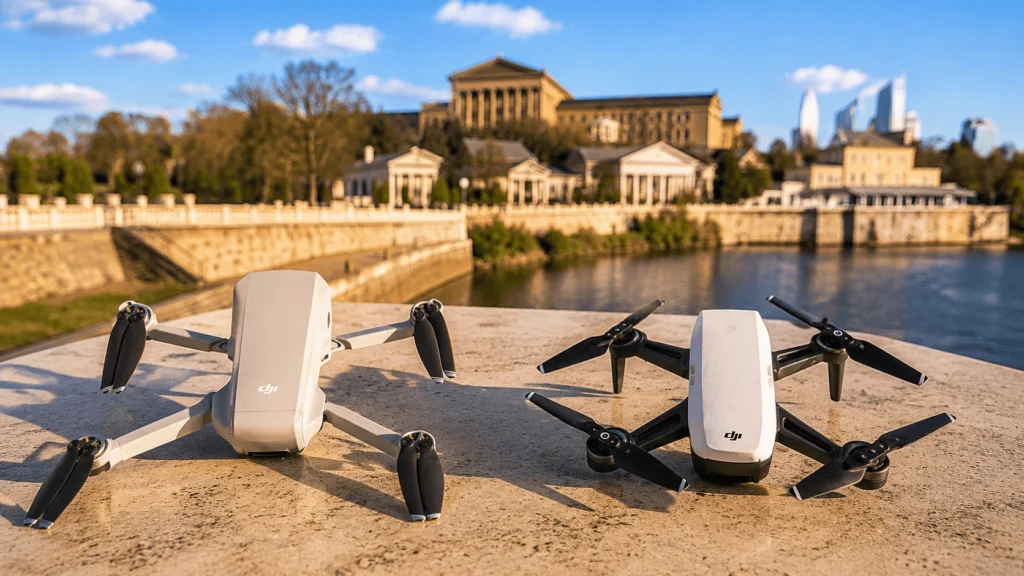
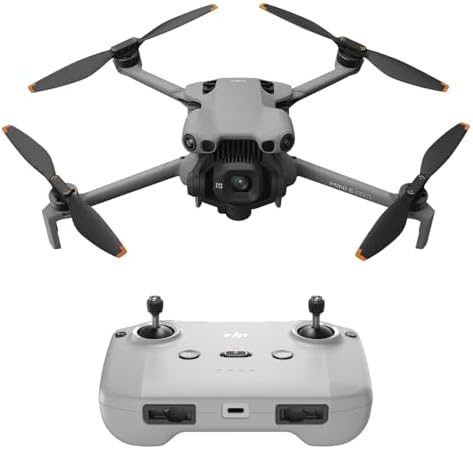
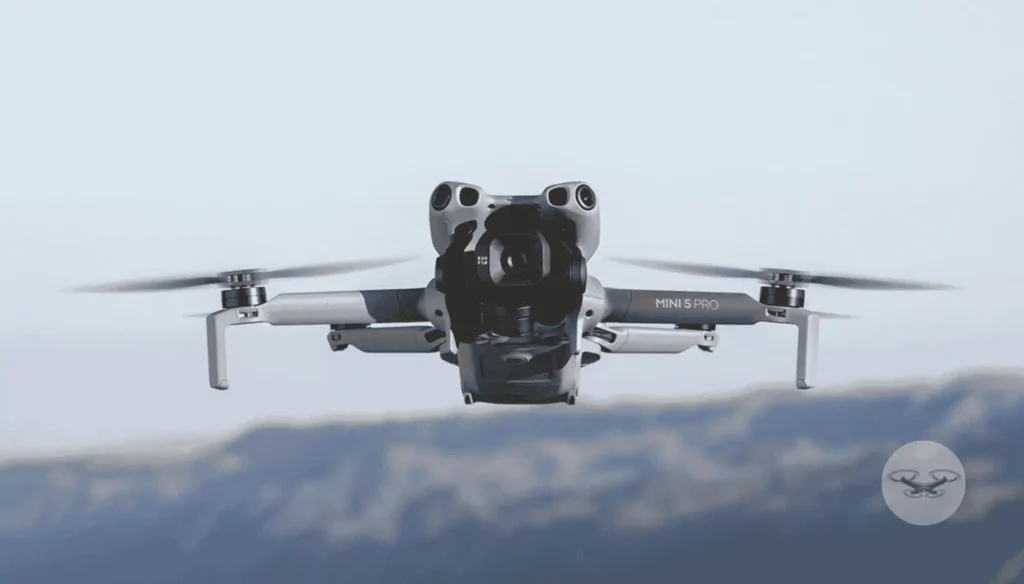
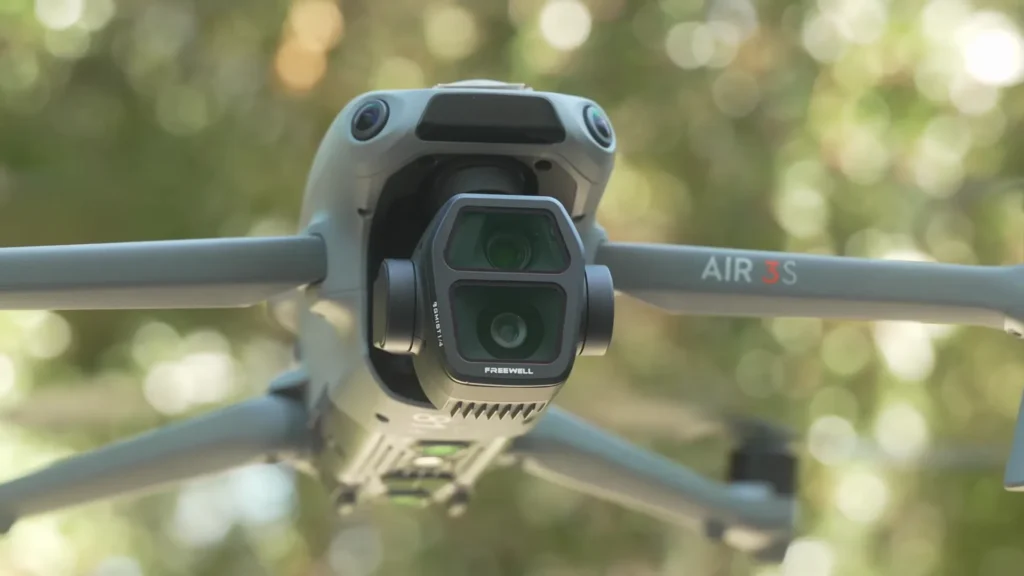
One of the biggest differences is size and weight. The Mini 5 Pro is much smaller and easier to carry. When you include extra batteries, the whole Mini 5 Pro setup is tiny compared to the Air 3S.
There’s been some controversy over its weight yes, the Mini 5 Pro is over the 249g (0.55 lbs) limit. For me, it doesn’t matter since I operate commercially and have to register it anyway. But in some regions, this could be a concern, and the Mini 4 Pro might be a better choice. Regulations are inconsistent right now, so it’s a bit of a mess hopefully, that gets clarified in the future.
Battery Life and Speed Performance
Now let’s talk about battery life, flight time, and speed. In my tests, the Mini 5 Pro outperforms the Air 3S by about 10 minutes. I was getting a solid 40–42 minutes with the Mini 5 Pro, depending on how I flew, while the Air 3S usually gave me 30–35 minutes.
When it comes to speed, the Mini 5 Pro has seen a big improvement over its predecessor, with a higher top speed. Still, the Air 3S takes the lead, reaching nearly 60 mph with a slight tailwind impressive and sometimes really useful.
Wind Resistance tests
Wind resistance testing on exposed mountaintops with strong winds revealed perhaps the most significant practical difference between these drones. Both aircraft performed adequately, but the Mini 5 Pro, while improved compared to the Mini 4 Pro in similar conditions, still exhibits noticeable movement and bobbing in strong winds.
The Air 3S maintains substantially more stable positioning. Its larger size, more powerful motors, and slightly heavier weight make it less susceptible to wind disturbance. In strong wind conditions, this stability translates directly to smoother, more professional-looking footage.
That said, when flying extremely close to subjects in strong winds, some movement becomes visible with any drone regardless of size or power.
Noise Comparison Tests
Noise testing at close range revealed differences in acoustic signatures. At approximately 1.5 meters distance, both drones produce audible motor and propeller noise, though the specific tonal qualities differ slightly between the two models.
The practical impact of these noise differences depends entirely on your shooting scenarios. For wildlife work or situations requiring minimal audio disturbance, the subtle variations in sound characteristics might influence your decision.
Final verdict
In terms of overall capability and image quality, the Air 3S stands as arguably the best consumer drone currently available from DJI. Its combination of dual telephoto capabilities, superior wind resistance, impressive speed, and excellent image quality make it the ultimate tool for serious aerial cinematography.
However, if portability matters significantly to your workflow while still demanding excellent image quality, the Mini 5 Pro becomes the obvious choice. Its superior dynamic range, better battery life, true 4K vertical video capability, and remarkably compact form factor make it ideal for travel videographers, social media content creators, and anyone who values portability without compromising creative potential.
The decision ultimately depends on your specific priorities. If you need maximum versatility and performance in challenging conditions, choose the Air 3S. If portability and convenience matter more while still demanding professional results, the Mini 5 Pro delivers exceptional value in a remarkably small package.
Table of Contents
Read More: Top 10 DJI Mini 5 Pro Accessories