
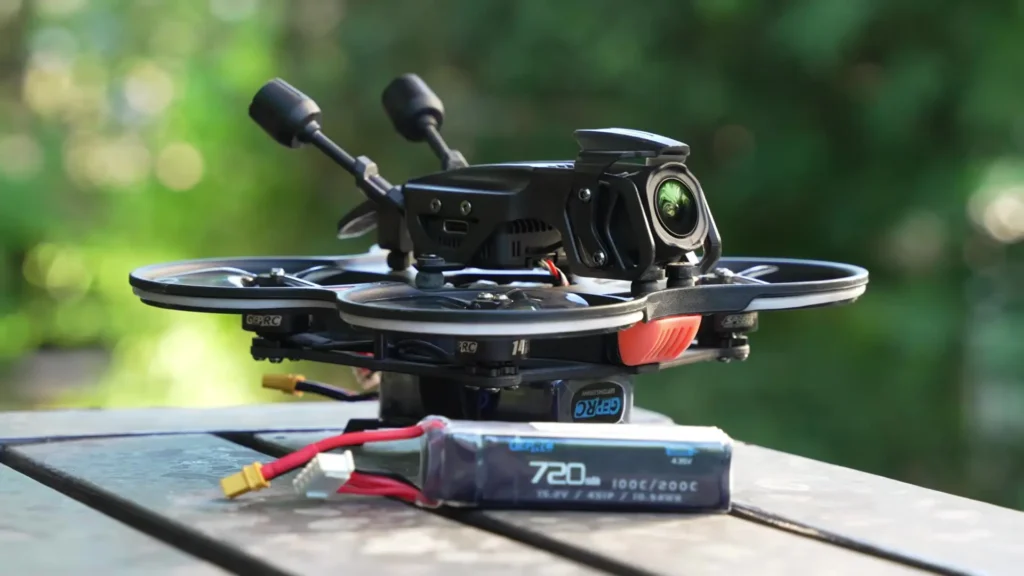
GepRC took one of my favourite CineWhoops and made it bigger, more powerful, and 4S. This is the new GEPRC DarkStar25. But going bigger also means more weight, and after flying it, I am not convinced bigger automatically means better.
So does the DarkStar25 actually improve on its smaller brother? And if you are choosing between the DarkStar 22 and 25, which one should you actually buy? Let us take a closer look at the design before diving into the full flying experience. For full transparency, yes, GepRC did send me this drone. However, they have not paid me for this review. All thoughts and opinions are my own.
Table of Contents
What Is Inside the Box?
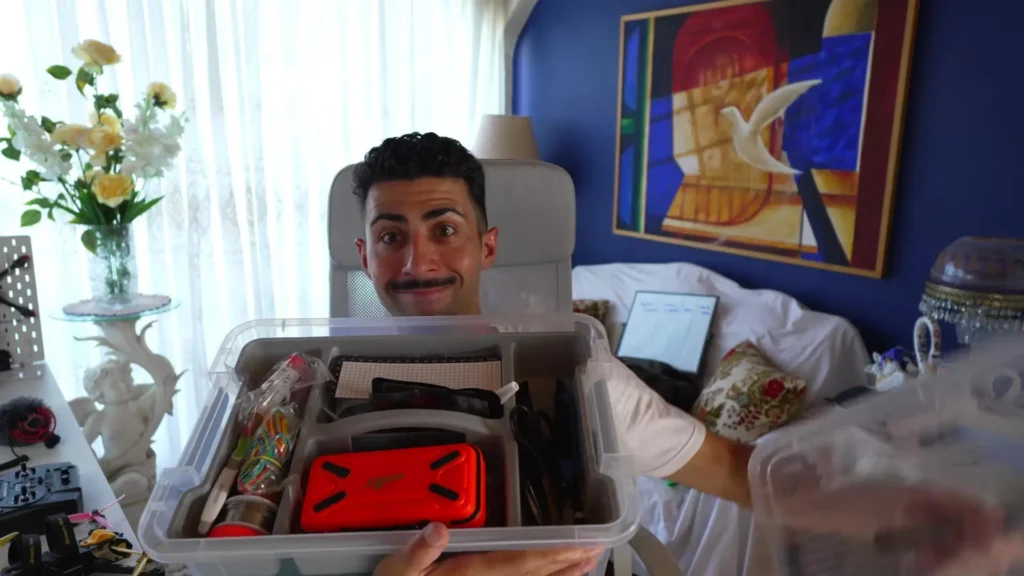
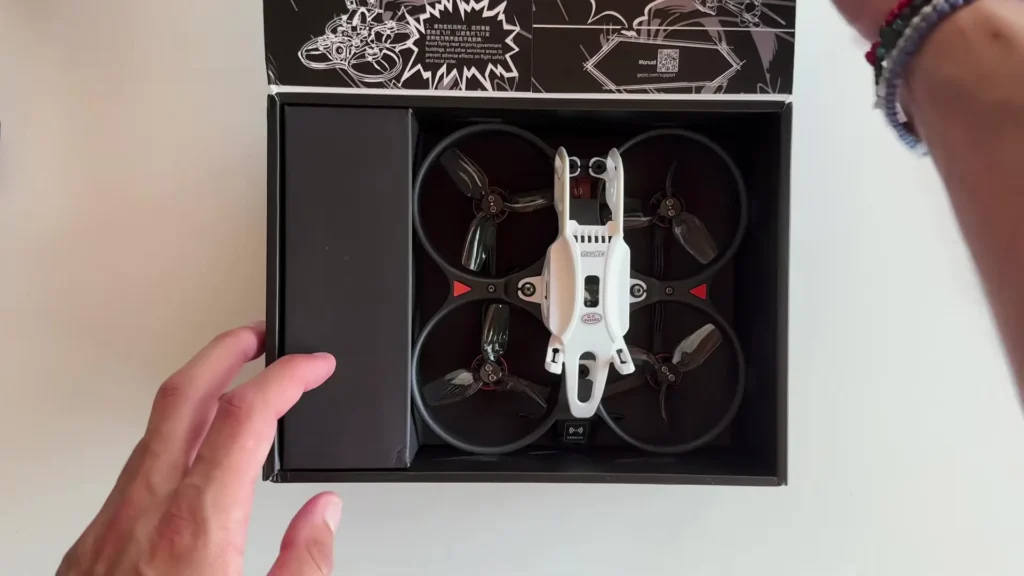
When you pick up the GEPRC DarkStar25, here is everything included in the package. You get a spare canopy, the battery tray, one set of spare props, documentation and stickers, a spare battery strap which is slightly larger than the standard one, battery anti-slip pads for both the battery tray and the drone itself, a basic toolkit that includes the tool needed to install the side retaining screws, an assortment of screws and spare cables, and a USB-C cable.
Design and Build Quality
GepRC have clearly listened to the feedback from the DarkStar 22. One of the biggest complaints with the 22 was that during crashes, the canopy would rip off. This time, GepRC have added two side retaining screws on either side to secure the canopy while still keeping the 5.8 dampening system in place. That is probably the most welcome improvement for existing DarkStar users.
The XT30 is now located underneath the chassis of the drone, making the included battery tray useful for protecting the battery lead. You also have the option to add a nano GPS straight from the factory, which is a great addition.
This drone also uses the same HQ props as the CineWhoop 25 V2, and that is something I genuinely appreciate because it means you can share components and parts between drones, which makes maintenance and replacements much easier.
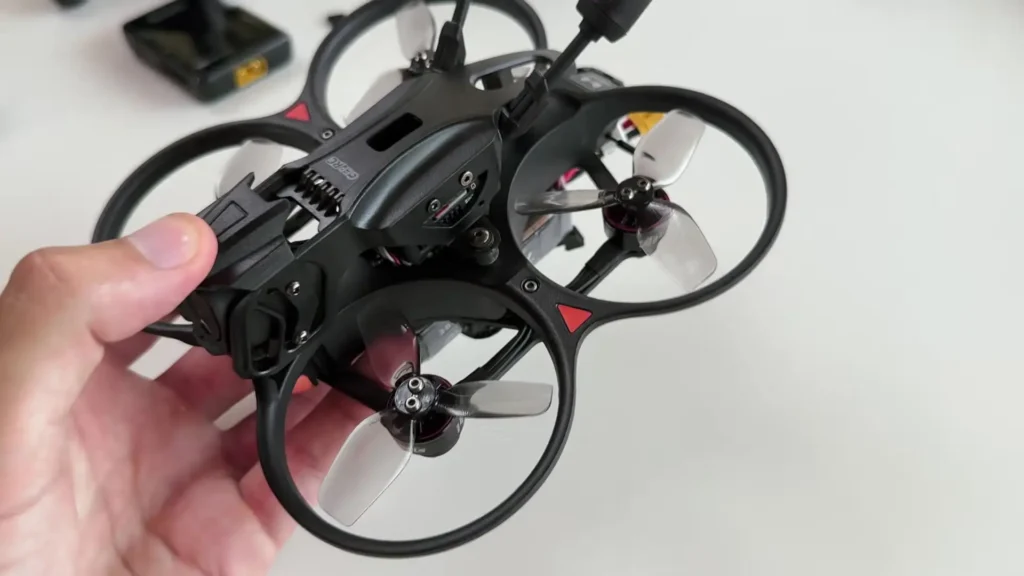
Honestly, I think this drone looks great. It stands out compared to others on the market. Both the white and black canopy color options look fantastic. I personally went for the black version because with those red LEDs, it honestly reminds me of Darth Vader, while the white version has a definite Stormtrooper energy to it.
Other than the size and power upgrade, it follows the same core concept as the DarkStar 22, just bigger and now running on 4S.
How Does the GEPRC DarkStar25 Fly?
The first thing I noticed when taking the DarkStar25 out for a spin was how smooth it felt right out of the box. I flew it on GepRC’s stock rates deliberately, because if you are someone new to FPV, you will be flying on stock rates and I wanted to give you an honest picture of what that experience is like.
GepRC’s stock rates are quite slow, which is actually a great thing for beginners. The drone still handles power loops and split S manoeuvres reasonably well, and while there is a little prop wash if you land in your own wake, it is nothing out of the ordinary for a CineWhoop of this size.
Slow, controlled movements are very manageable with this drone, which is important if you are thinking about indoor flying. Controllability at reduced speeds is solid, and the camera angle plays a role in how cinematic your footage ends up looking. Overall, flying on stock rates, this drone is suitable for someone just getting into FPV.
After the initial test, I switched over to my own rates, which are around 700 compared to GepRC’s roughly 500. The difference is noticeable. The drone becomes more responsive and fluid, and the flying experience feels more natural if you are already accustomed to faster rates.
The good news is you can always set up a second rate profile on a switch or dial, so you can quickly toggle between stock and your personal rates depending on the situation.
GPS Performance and Features
Because I reflashed the firmware, I was able to unlock altitude hold and position hold on this drone, and the results were genuinely impressive. With position lock engaged, the drone holds its spot with no hands on the sticks, which is incredibly useful when you need a moment to recompose or if you are flying solo without anyone to assist.
GPS rescue also works well. I demonstrated this during the flight, and the drone made its way back reliably after simulating a lost connection. One thing to note is that my review unit did not have GPS rescue pre-set, so make sure you check and configure this when you receive your drone. Joshua Bardwell has excellent tutorials on setting this up if you need guidance.
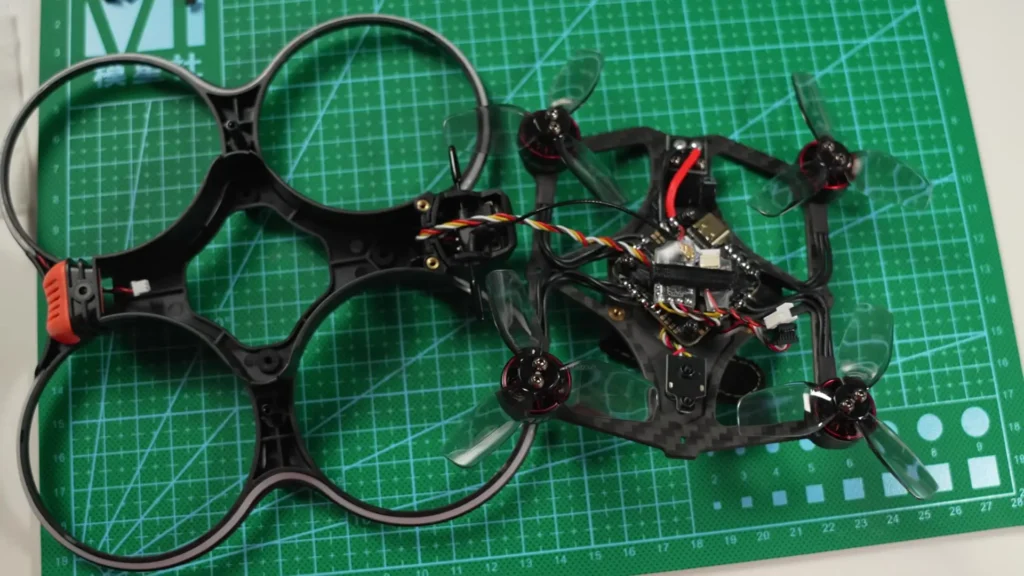
The GPS module sits in a much better position compared to the DarkStar 22, and it is a great addition for showing speed, altitude, and home direction, especially in situations where the drone loses signal.
That said, it is worth asking yourself how often you are flying far enough with a CineWhoop to truly need GPS rescue. For most indoor and close-range cinematic work, it is more of a nice-to-have than an essential feature.
Also Read: GEPRC DarkStar22 vs BETAFPV Pavo20 Pro II
Weight, Batteries, and Flight Times
Weight and battery choice are probably the most important factors to think about with the GEPRC DarkStar25, and this is where things get a little more nuanced.
I tested several batteries with this drone. The GEPRC 720 lithium high voltage battery offers a solid flight time and is significantly lighter than the alternatives I tried. The Tattu batteries, despite being older and less frequently used, still performed surprisingly well.
The BusPower 960, while outside GepRC’s official recommendation, gave the longest flight time of everything I tested. However, you can definitely feel the added weight with the larger batteries during turns, and fitting them under the strap is quite tight, so you may need to use the larger battery strap and skip the battery tray altogether to make it work.
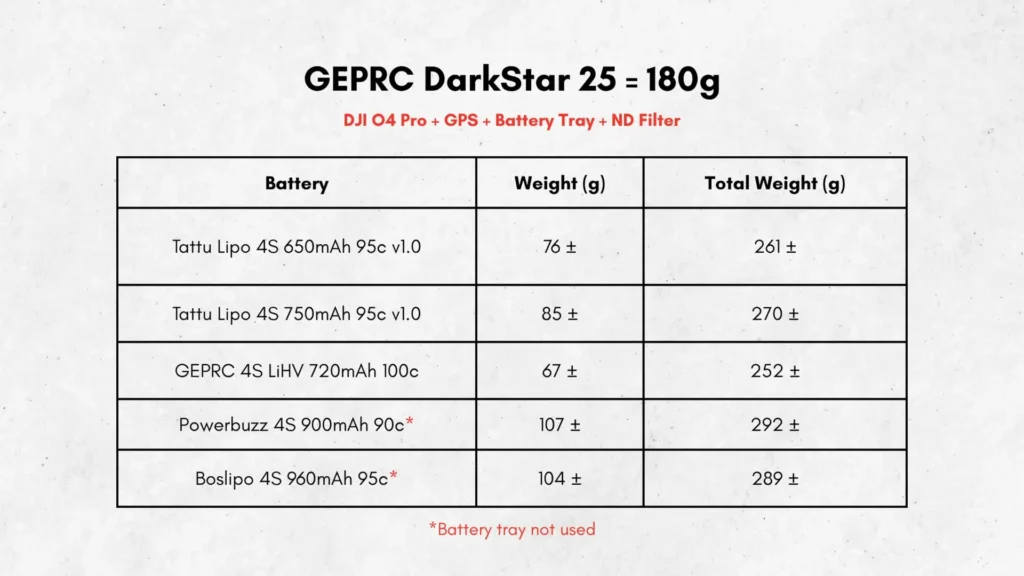
Now, the question everyone wants answered: is the DarkStar25 sub 250g? The answer is yes and no, and it genuinely depends on your configuration and battery choice. The version I have, which includes the DJI O4 Pro and the nano GPS, is the heaviest configuration.
Using the GEPRC 720 lithium high voltage battery without the battery tray gets you under 250g. Every other battery configuration I tested pushed the drone over the 250g limit. If you want to stay under the limit more easily, opting for the DJI O4 Wide and skipping the GPS and battery tray will help you get there.
Indoor Viability
Some people are considering the DarkStar25 for indoor real estate work, which is a fair question. I have not personally tested this specific drone indoors, but I have flown the CineLog 30 V3 indoors, which is a larger drone, and that worked fine. The DarkStar25 is smaller, so it should handle indoor environments more comfortably. It is also a comparable size to the CineLog 25, which I have used indoors previously.
Based on size alone, I see no reason it could not be used indoors. However, one thing worth knowing is that the DarkStar25 uses a puller configuration rather than a pusher configuration. For indoor flying, a pusher configuration generally offers better stability, so just keep that in mind when making your decision.
What I Do Not Like About the GEPRC DarkStar25
Every drone has its drawbacks, and the DarkStar25 is no exception. The USB-C port is a welcome addition because it allows you to connect directly to Betaflight without needing an adapter.
But having it located underneath the drone is genuinely frustrating. If you need to calibrate your accelerometer, it is nearly impossible without placing the drone on some kind of stand. Relocating this to a more accessible spot would be a meaningful improvement.
The second issue I encountered may be specific to my review unit. When I tried to flash the latest firmware to enable position and altitude hold, the drone kept disconnecting during the DFU flash process. I had to manually hold the DFU button to get it to work.
It was not a dealbreaker, but it was an unexpected hurdle. Outside of those two points, I genuinely struggle to find fault with this drone, particularly given that I have not had it long-term yet. I will update you in a future video if anything else comes up.
GEPRC DarkStar25 vs DarkStar 22
This is the real question, and the honest answer depends on what you need.
If you want something that comfortably stays under 250g and still flies brilliantly, the DarkStar 22 is the easier recommendation. 3S power is still plenty for most cinematic work, flight times are very similar, and the drone itself is slightly cheaper, with batteries also costing less. It is a proven, capable CineWhoop that I already love.
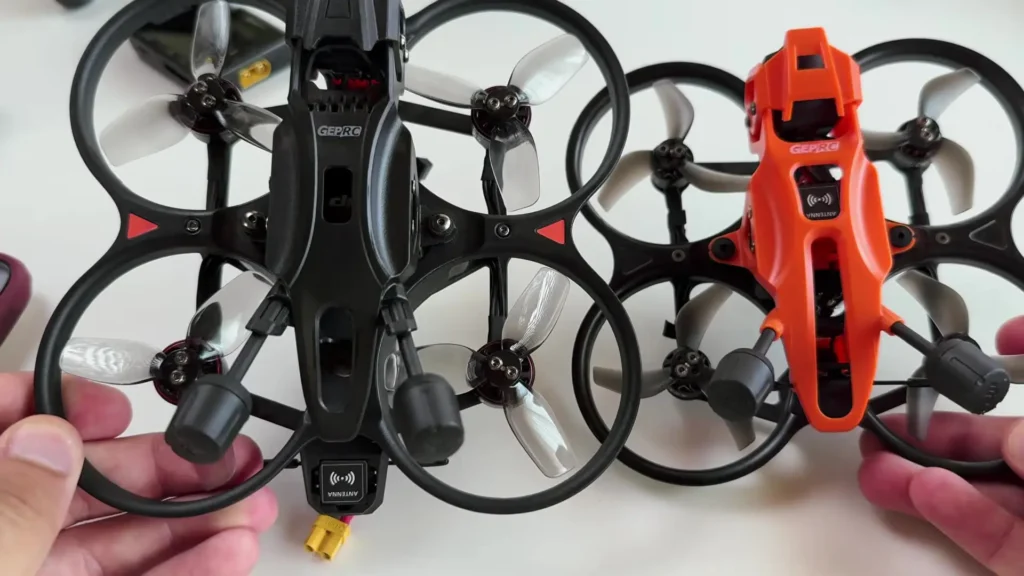
If you want something a little larger that handles wind slightly better, enjoy the new color options, prefer the added canopy security from the retaining screws, and want GPS installed directly from the factory rather than as a DIY job, then the DarkStar25 is worth the step up. Just be aware that staying under 250g requires a specific configuration and battery choice.
As a side note for ELRS users, the DarkStar25 comes with version 3.x pre-installed. If you are running version 4, you will need to flash the firmware to the appropriate target before getting started.
Camera Recommendation
If you are trying to decide which camera to pair with the DarkStar25, I recommend the DJI O4 Pro. It will give you the best cinematic results, including Dlog-M and an SD card slot.

However, if saving weight is your priority, the O4 Wide is a solid alternative. Just keep in mind that the O4 Wide does not support Dlog-M, has no SD card slot, and comes with approximately 40GB of internal memory.
Specification Table
| Specification | Details |
|---|---|
| Model | GEPRC DarkStar25 |
| Size | 25 Class CineWhoop |
| Battery | 4S LiPo / LiHV |
| Recommended Battery | GEPRC 720mAh LiHV |
| Props | HQ CineWhoop 25 V2 Compatible |
| GPS | Optional Nano GPS (factory installed) |
| Connector | XT30 (located under chassis) |
| USB Port | USB-C (located underneath) |
| Camera Options | DJI O4 Pro / DJI O4 Wide |
| ELRS Version (Pre-installed) | Version 3.x |
| Configuration | Puller |
| Sub 250g Capable | Yes (specific config required) |
| Canopy Securing | Side retaining screws and 5.8 dampening system |
| Color Options | White / Black |
| Flight Controller Software | Betaflight |
| GPS Features | Position Hold, Altitude Hold, GPS Rescue |
| Box Inclusions | Spare canopy, battery tray, spare props, toolkit, spare strap, screws, cables, USB-C cable |
Final Verdict
So is bigger better? Not entirely. But GepRC did make meaningful improvements over the DarkStar 22 with the DarkStar25. The canopy retaining screws fix a genuine complaint, the GPS integration is cleaner, the color options are fresh, and the 4S power gives it a bit more character in the air. The weight question is the main thing holding it back from being a universal upgrade, and that is something you need to think carefully about based on your specific use case.
Read More: FPV Gear Every Beginner Needs to Know About | Part-3