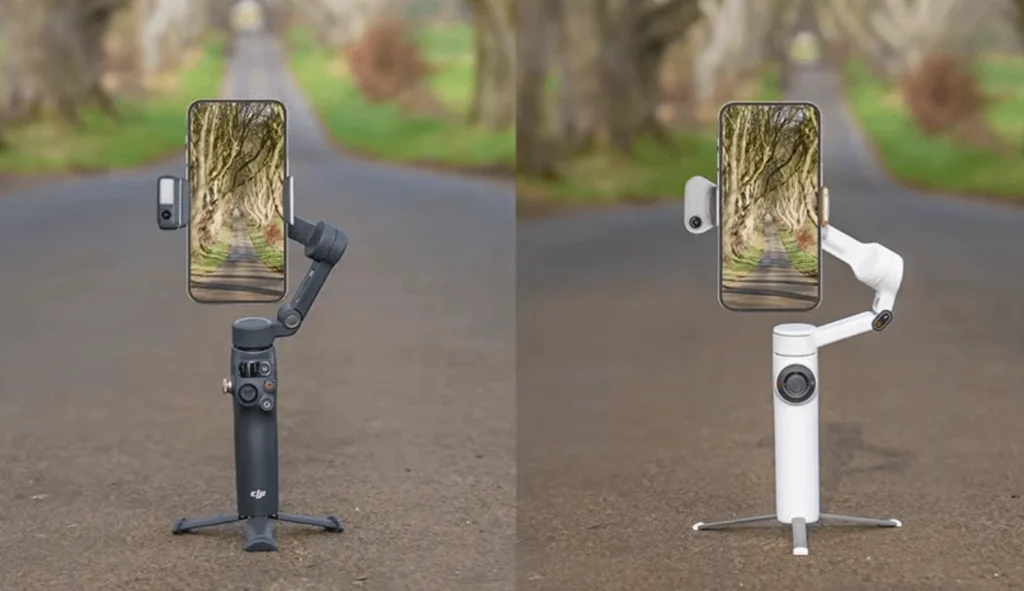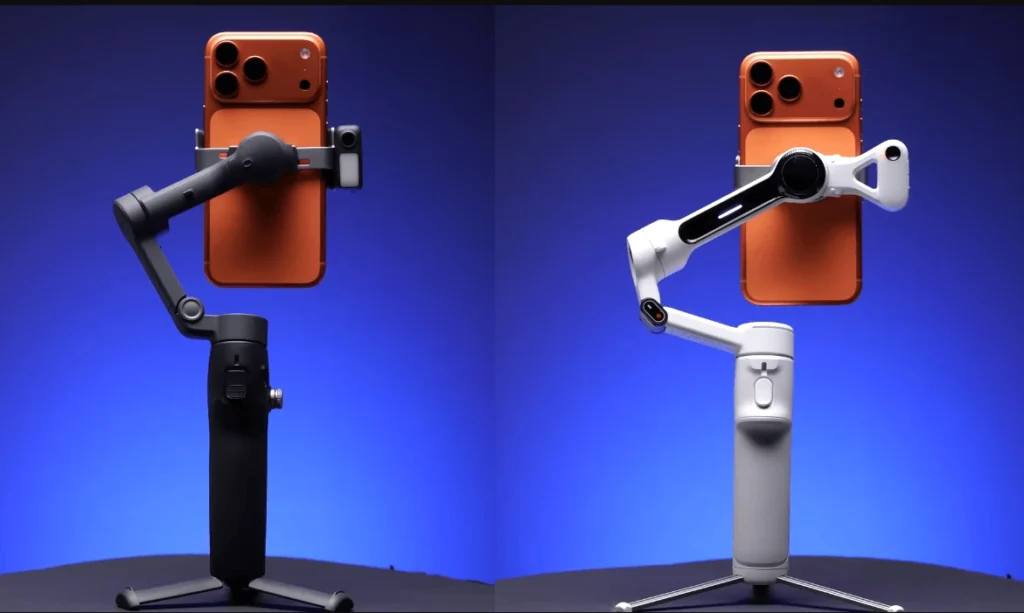

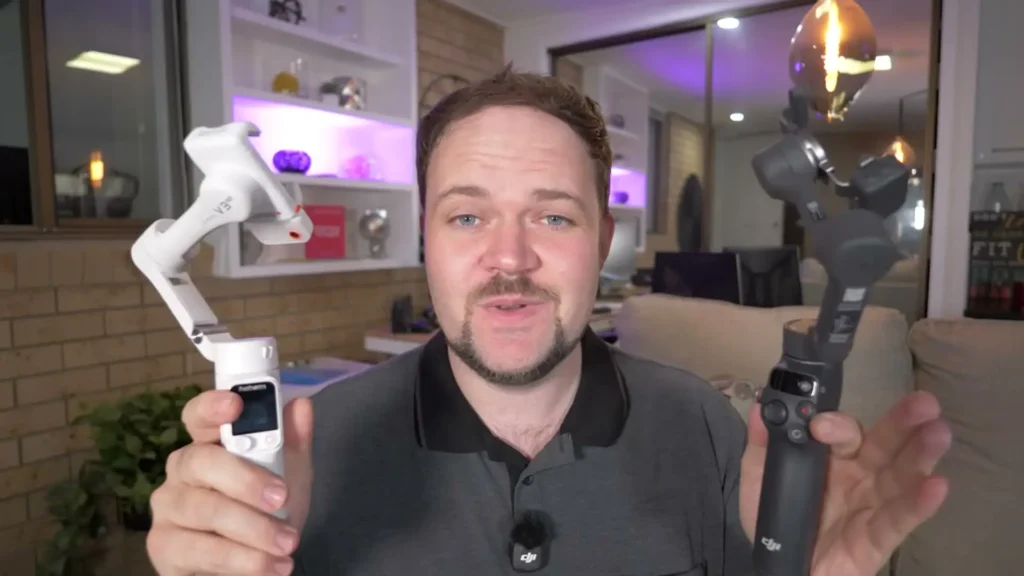
You are spoiled for choice when it comes to smartphone gimbals, and today we have a detailed comparison between two of the leaders in the space. We have the Hohem iSteady V3 Ultra, the brand new smartphone gimbal from Hohem, going head to head against the DJI Osmo Mobile 7P.
Table of Contents
Design and Build
Right off the bat, the design of the Hohem iSteady V3 Ultra stands out immediately. It features a detachable remote control that lets you control the gimbal movement, view a live feed on its built-in display, and access all sorts of customization options.
This is genuinely the coolest feature seen on a smartphone gimbal to date, and it is something you simply are not getting on any other smartphone gimbal currently on the market, including the DJI Osmo Mobile 7P.
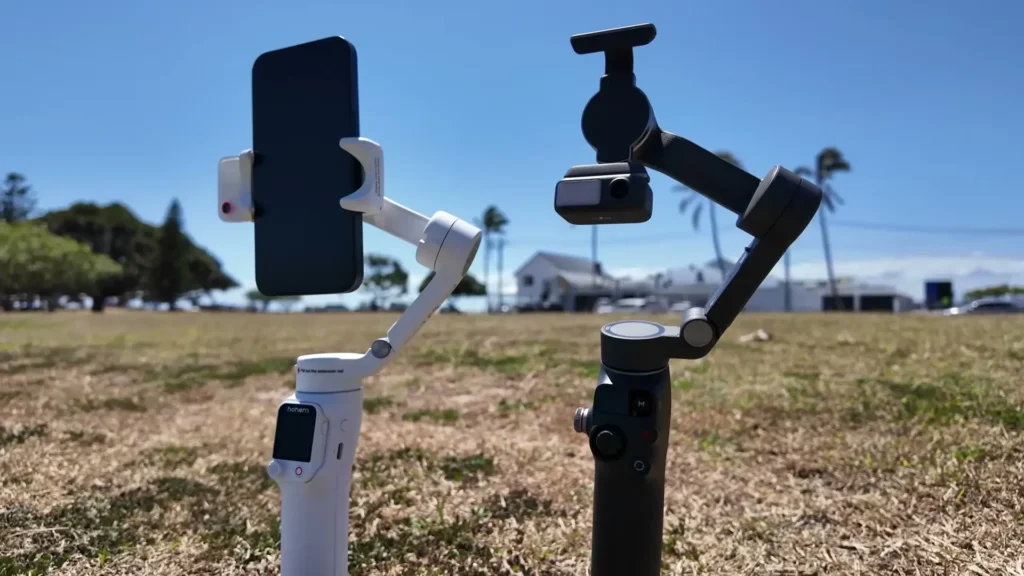
Both gimbals share a relatively similar footprint. They are comparable in size and button layout, and both come equipped with AI tracking modules that allow you to use a native camera application instead of a third-party one. Both also feature a built-in fill light, which is a welcome addition for content creators shooting in varied lighting conditions.


AI Tracking Modules
Both gimbals include a multi-functional module housing the AI tracking camera and fill light. The Hohem module sits at the bottom, while the Osmo Mobile 7P’s module sits on top. Functionally, they are quite similar in concept, but there are some notable differences in execution.
The tracking on both units is solid. Neither has produced any major issues during testing, and both perform reliably across a range of scenarios. It is genuinely difficult to say one is significantly better than the other when it comes to standard AI tracking performance as they both simply get the job done.
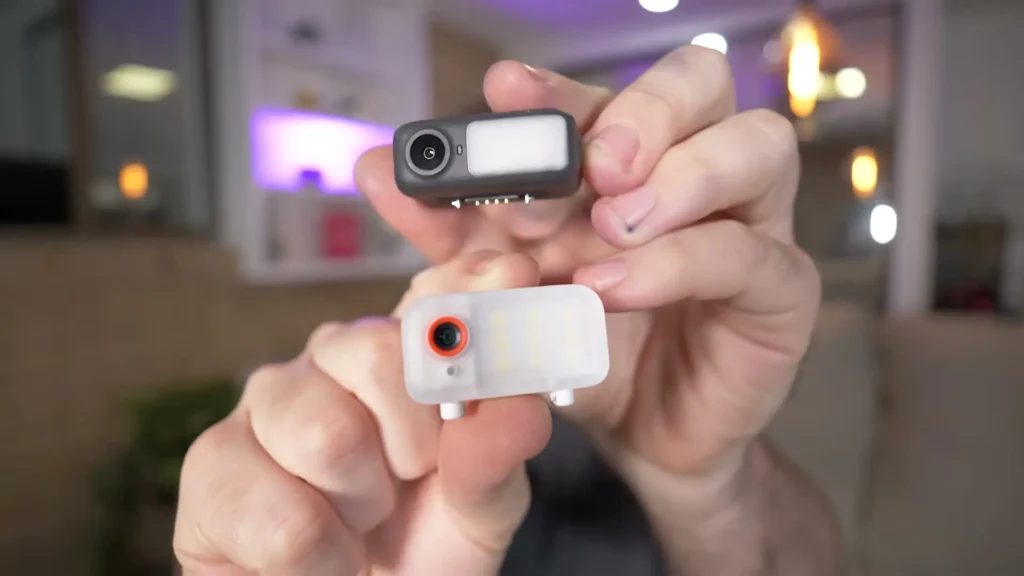
However, Hohem makes a compelling claim here. With the iSteady V3 Ultra, the AI tracking module can natively track not just people but also animals, vehicles, and other objects. This means you can use your native camera application without needing to open the Hohem app at all.
The detachable remote control even lets you draw a box around whatever you want to track, and the system handles it from there. During testing, it tracked most targets accurately, though it occasionally lost focus on less defined subjects, which is understandable given how broad the tracking parameters are.
With the DJI Osmo Mobile 7P, the AI tracking via the module appears to be limited to people. You can draw a box in the Mimo application to track other subjects, but at that point it likely is not utilizing the module’s dedicated camera system. So if tracking versatility through the native camera app matters to you, Hohem has a clear edge here.
Both units support gesture controls, allowing you to start and stop tracking, reframe your shot, and reset compositions with simple hand gestures. The experience is quite similar across both devices in this regard.
Also Read: Hohem iSteady MT3 PRO KIT Review
The Detachable Remote Control
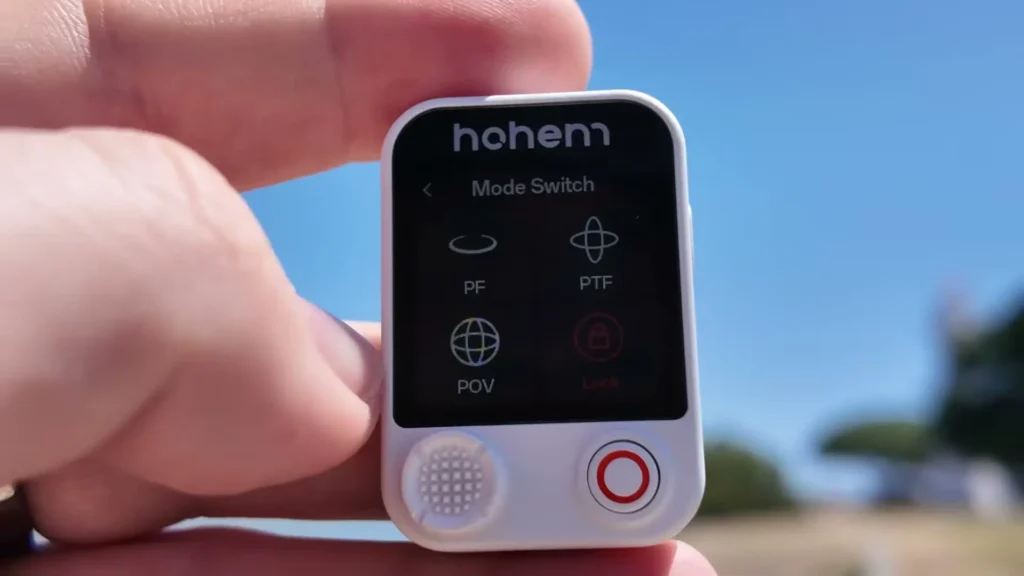
The detachable remote control on the Hohem iSteady V3 Ultra deserves its own dedicated section because it is that significant. When you remove the remote from the gimbal, it becomes your standalone controller. It features a small joystick, a record button, and a mode button on the side.
The touchscreen itself, despite its compact size, is very responsive. Swiping between settings is smooth, and being able to see the live video feed from the tracking module directly on the remote is an excellent touch.
Hohem states that the remote offers approximately 10 meters of range, which feels realistic and practical. For solo content creators using the rear camera on their phone, this is a game changer.
You can frame your shot, draw a tracking box around yourself on the remote screen, and walk into frame without ever needing to check your phone. For group shots and social content creation scenarios, having that level of remote control at a distance is genuinely useful.
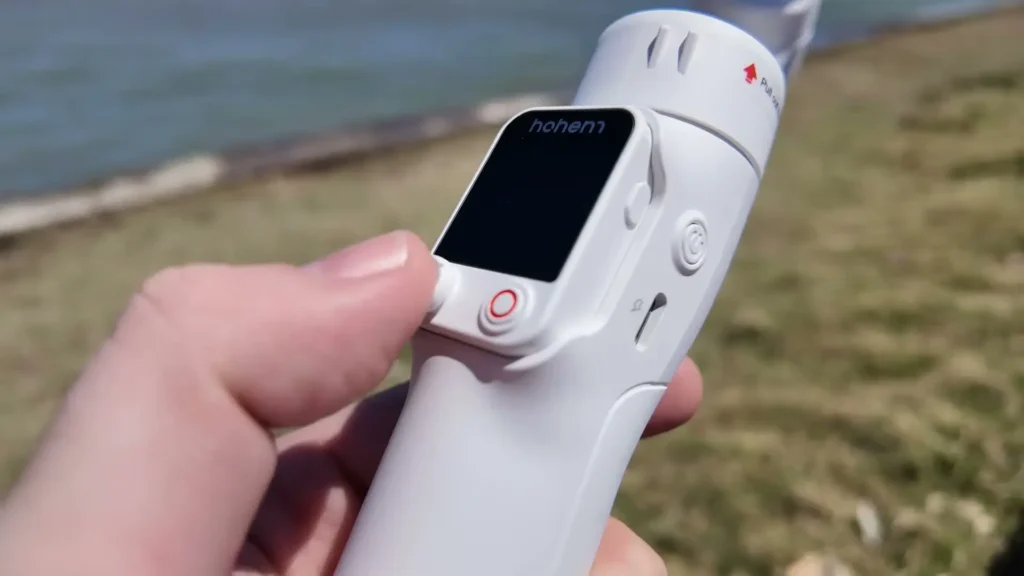
The one minor criticism here is the size of the joystick on the remote. Because the unit is so compact, the thumb stick feels slightly too small and does not offer the same grip or travel as the larger joystick found on the DJI Osmo Mobile 7P. It is not a dealbreaker by any means, but it is worth noting for those with larger hands.
The remote connects to the gimbal magnetically. While it connects securely enough for normal use and has not released on its own during testing, it does feel slightly less locked in compared to how DJI handles its module connection. Giving it a light wiggle reveals a bit of movement, and pressing the release button accidentally is possible.
The DJI Osmo Mobile 7P, by comparison, features a physical release button with a more robust hook system that feels noticeably more secure. Again, not a major functional issue, but a difference in perceived build quality that is worth acknowledging.
Comparing the DJI Osmo Mobile 7P Module
The DJI Osmo Mobile 7P’s multi-functional module is a well-built, secure system. The magnetic connection is tighter, the hook system is more substantial, and the physical release button provides a satisfying and confident feel. It is simply more secure, and that matters when you are out in the field.
On the back of the module, there is a USB-C port that opens up some genuinely useful possibilities. Most notably, this allows you to connect compatible DJI audio systems, effectively turning the module into a wireless audio receiver. If you already own a microphone within the DJI Osmo Audio ecosystem, this setup becomes incredibly powerful.
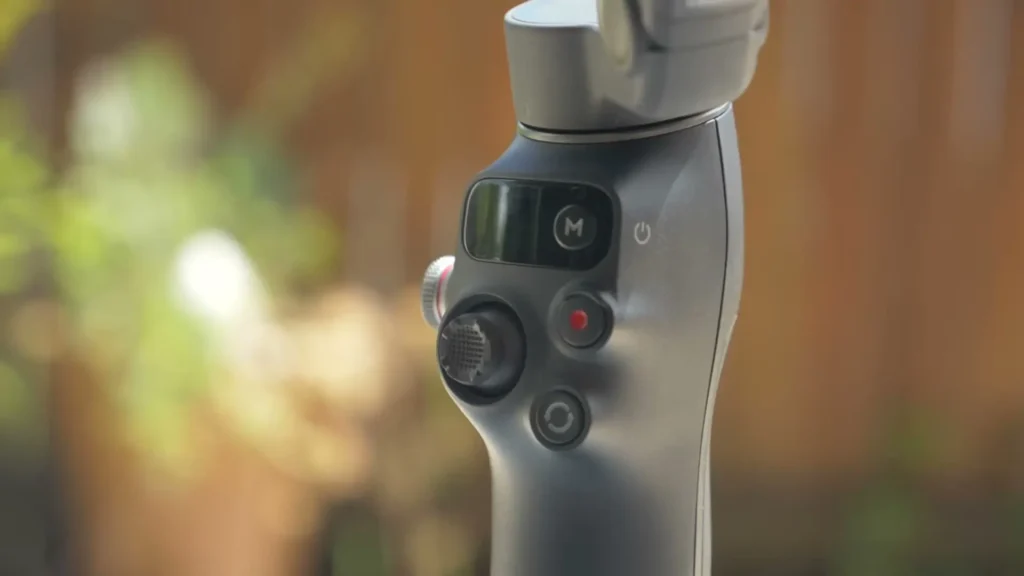
You get stable, gimbal-smoothed footage combined with clean, wireless audio routed directly into your phone, and setting it all up is straightforward since the required cable is included in the package.
The module also allows you to charge your phone directly from the gimbal, which is something the Hohem iSteady V3 Ultra does not support. For longer shooting sessions, this can be a meaningful advantage.
Apple Watch Control vs. Hohem Remote Control
One of the more recent additions to the DJI Osmo Mobile 7P ecosystem is Apple Watch support. You can control gimbal movement, start and stop recording, and take photos directly from your wrist. It works and it covers the basic functions, but it does not come close to the experience offered by Hohem’s dedicated detachable remote.
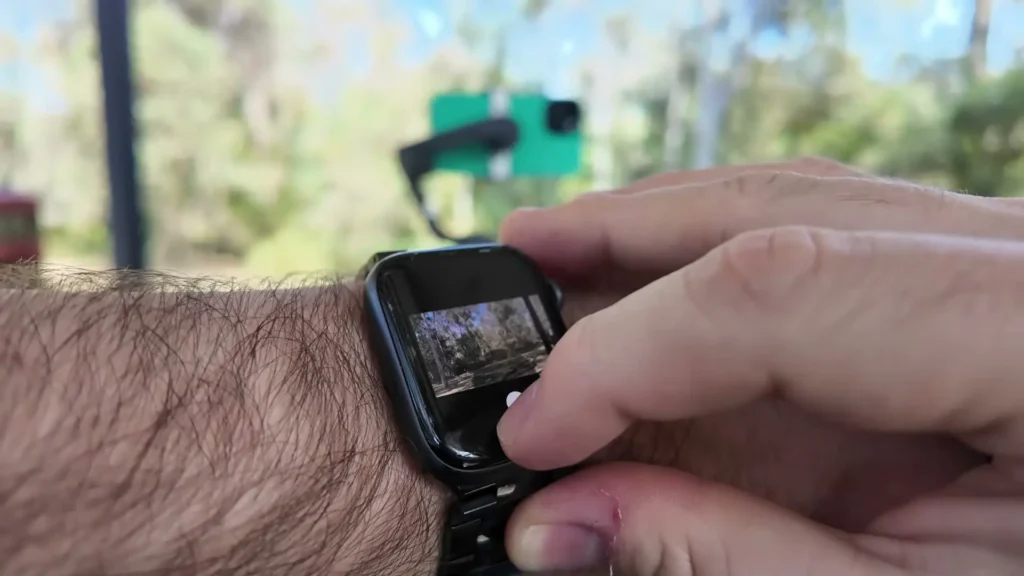
The Hohem remote gives you a live video feed, drawing-based tracking control, and a more intuitive interface overall. The Apple Watch integration on the 7P is a nice bonus feature, but Hohem’s standalone remote is a more complete and capable solution for remote control use cases.
Ergonomics & Button Layout
Both gimbals feel natural and comfortable in hand. The weight difference, while measurable on a scale, is barely noticeable during actual use. The DJI Osmo Mobile 7P weighs 368 grams, while the Hohem iSteady V3 Ultra comes in at 428 grams.
In practice, neither feels particularly heavy or causes any strain during extended use. The Osmo Mobile 7P handle does feel slightly more hollow, but beyond that, ergonomics are comparable across both units.
The Hohem iSteady V3 Ultra features a power button on the side, a USB-C charging port, a trigger on the back, and an orange scroll wheel that controls the fill light intensity. The scroll wheel feels fluid and smooth, with lighting transitions that are gradual and natural rather than jumping abruptly between settings. It is a small detail, but one that contributes to the overall premium feel of the device.
One shared criticism across both gimbals is the trigger design. On both units, the trigger feels more like a button than an actual trigger, with limited travel. Those who are used to larger camera rigs may find this slightly unsatisfying.
That said, the Hohem version does offer marginally more travel and a slightly better curve to the trigger compared to the Osmo Mobile 7P, where the trigger feels almost entirely like a flat button press.
The DJI Osmo Mobile 7P also includes a side scroll wheel that adds additional functionality. You can use it to control fill light intensity, adjust gimbal roll for an FPV-style effect, control zoom, and navigate other settings.
It glides smoothly and feels premium, making it easy to operate even while maintaining a steady grip on the gimbal. This is a feature you do not get on the Hohem device, and it does provide a meaningful layer of additional control.
Tripod Legs and Mounting Options
Both gimbals include built-in tripod legs and quarter-inch screw mounts on the base for attaching to a full-size tripod. Both also come with an extension rod that extends to a similar length, offering comparable versatility when it comes to framing options.
The legs themselves differ slightly in design. The Hohem iSteady V3 Ultra has thinner, skinnier metal legs, while the DJI Osmo Mobile 7P features thicker legs. In practical use, thinner legs can occasionally get caught on uneven surfaces like rocks when angling the gimbal, whereas the thicker legs tend to offer a bit more stability and versatility across different surfaces. It is a minor point, but if you frequently shoot on varied terrain, it is worth considering.
Quick Fold Feature
The DJI Osmo Mobile 7P features a quick fold mechanism that powers the device on when you unfold it and powers it off when you fold it back down. It is a convenient feature, especially for travelers who are frequently picking up and putting down their gimbal.
The Hohem iSteady V3 Ultra does not have this feature, though powering it on requires only a press and hold of the power button for about a second and a half, which is hardly inconvenient.\
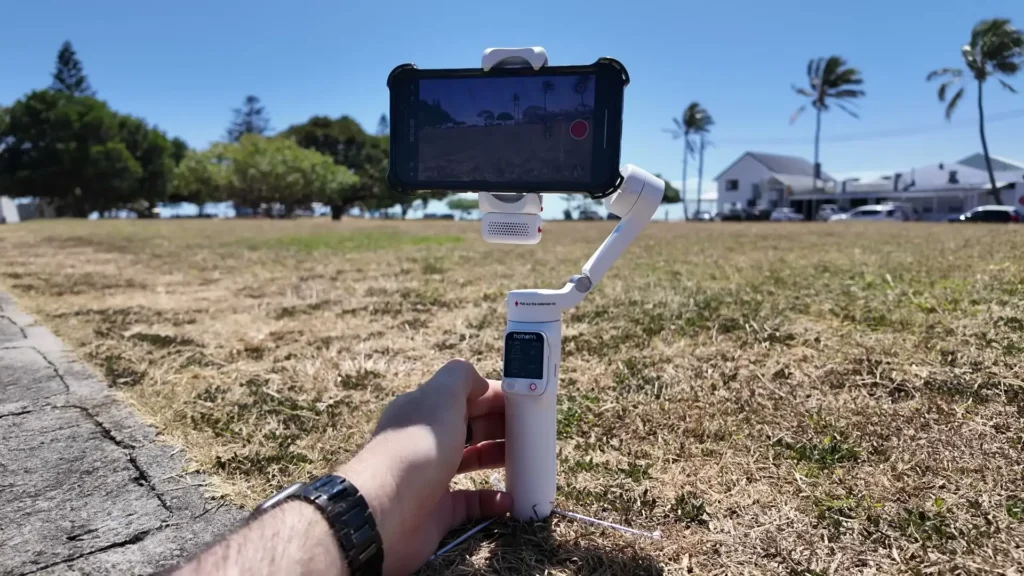
It is also worth noting that the automatic power-on feature of the DJI version can occasionally be slightly annoying if you are not quite ready to start shooting when you unfold it. As with many things in this comparison, it comes down to personal preference.
Battery Life and Phone Charging
Battery life is close between the two devices. The Hohem iSteady V3 Ultra offers up to 9 hours of battery life, while the DJI Osmo Mobile 7P offers up to 10 hours. In real-world use, neither is likely to run out during a typical day of shooting.
The DJI Osmo Mobile 7P does hold a slight advantage here through its ability to charge your phone directly from the gimbal, which is something the Hohem cannot do. For most users, however, 9 hours of gimbal battery life is more than sufficient, and carrying a portable power bank addresses any remaining concerns.
Pan Range and 360-Degree Rotation
One area where the Hohem iSteady V3 Ultra has a clear and significant advantage is pan range. The Hohem offers full 360-degree continuous rotation with no locking point or physical stop.
This is even prominently labeled on the unit itself. For certain shooting styles, creative transitions, and dynamic movement shots, this is an incredibly useful capability.
The DJI Osmo Mobile 7P, by contrast, has a pan range of -99 degrees to 210 degrees. There is a physical locking point that you can feel when you reach the limit, and the gimbal simply stops there.
For most everyday use cases, this limitation will not be a problem. But for those who want or need that full rotation capability, the Hohem is the clear winner in this category.
Payload Rating
Payload rating is one of the most frequently asked about specifications when it comes to smartphone gimbals, particularly as phone sizes and weights continue to increase. The Hohem iSteady V3 Ultra supports a payload of up to 400 grams, while the DJI Osmo Mobile 7P supports up to 300 grams.
That 100-gram difference can absolutely be the deciding factor for someone using a larger, heavier smartphone. If you are using a Pro Max model or any other large-format phone and have been uncertain whether a gimbal can handle the weight, the Hohem iSteady V3 Ultra offers significantly more confidence and headroom here. This is one of the most practical advantages the Hohem brings to the table.
Stabilization Technology
Both gimbals feature their respective stabilization systems. The Hohem iSteady V3 Ultra uses iSteady 9.0, while the DJI Osmo Mobile 7P uses ActiveTrack 7.0. In real-world use, both systems perform well and deliver smooth, stable footage across a variety of shooting conditions.
Neither is the most advanced stabilization system ever tested, but both are genuinely solid performing smartphone gimbal stabilization solutions that will satisfy the needs of most content creators.
Comparison Table: Hohem iSteady V3 Ultra vs DJI Osmo Mobile 7P
| Feature | Hohem iSteady V3 Ultra | DJI Osmo Mobile 7P |
|---|---|---|
| Weight | 428g | 368g |
| Payload Rating | Up to 400g | Up to 300g |
| Battery Life | Up to 9 hours | Up to 10 hours |
| Phone Charging | No | Yes |
| Stabilization System | iSteady 9.0 | ActiveTrack 7.0 |
| AI Tracking Module | Yes | Yes |
| Tracking Subjects | People, Animals, Vehicles, Objects | People (module); Others via app |
| Native App Required for Tracking | No | Partially |
| Gesture Controls | Yes | Yes |
| Detachable Remote Control | Yes (with live screen) | No |
| Remote Range | Up to 10 meters | Not applicable |
| Apple Watch Support | No | Yes |
| Fill Light | Yes | Yes |
| Side Scroll Wheel | No | Yes |
| Pan Range | Full 360 degrees continuous | -99 degrees to 210 degrees |
| Quick Fold Power On/Off | No | Yes |
| Built-in Tripod Legs | Yes (thinner metal legs) | Yes (thicker legs) |
| Extension Rod | Yes | Yes |
| Quarter-Inch Mount | Yes | Yes |
| Audio Integration | No | DJI Osmo Audio compatible |
| USB-C Charging Port | Yes (gimbal only) | Yes (gimbal and phone) |
| Module Security | Magnetic, moderate | Magnetic with robust hooks, more secure |
Which Gimbal Should You Choose?
Both the Hohem iSteady V3 Ultra and the DJI Osmo Mobile 7P are excellent smartphone gimbals. They are both flagship-level products from their respective brands, and either one will serve you well depending on your specific needs and preferences.
The Hohem iSteady V3 Ultra stands out with its detachable remote control with live screen feed, broader AI tracking capability through the native camera app, full 360-degree continuous rotation, and a higher payload rating of up to 400 grams. These are meaningful innovations, particularly the remote control, which genuinely changes how you interact with a gimbal during solo or group content creation.
The DJI Osmo Mobile 7P counters with a slightly lighter build, more secure module attachment, a smoother and more functional side scroll wheel, integration with the DJI Osmo Audio ecosystem for wireless audio, the ability to charge your phone, and marginally better battery life at 10 hours. If you are already invested in the DJI ecosystem and value those integrations, the Osmo Mobile 7P remains a compelling choice.
Read More: DJI Osmo Pocket 4 vs Pocket 3 Comparison