
Water landing floats for the DJI Mini 2 have been showing up on Amazon, promising drone pilots the ability to safely land their aircraft on water instead of sinking it. The obvious question is: do they actually work, or is this a recipe for an expensive swim?
To find out, I picked up a set myself (this is not a sponsored review) and put them through a full round of real-world testing: attaching them, flying with them, and, most importantly, taking off and landing on open water.
Here’s everything I learned.
What Are the Floats?
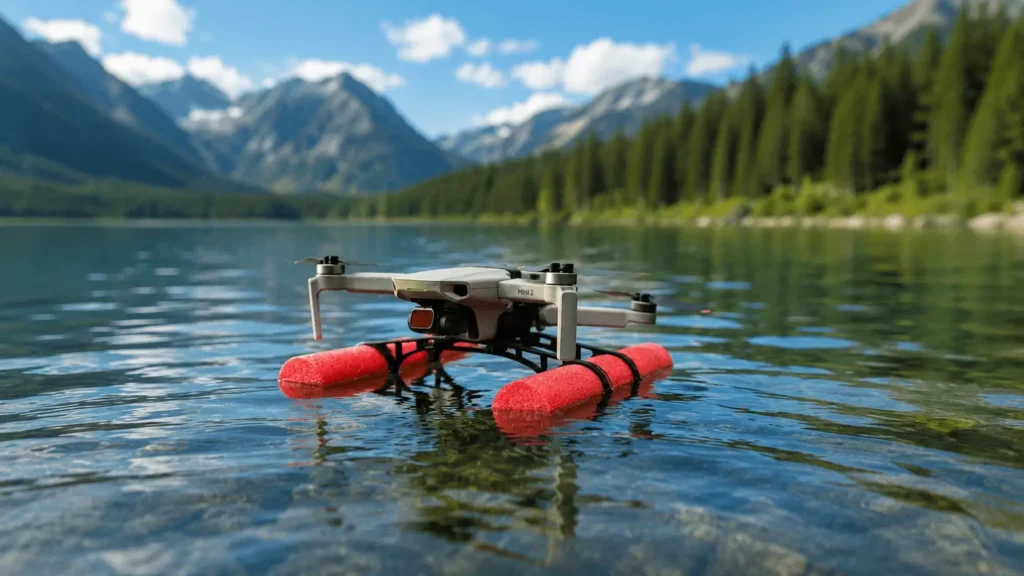
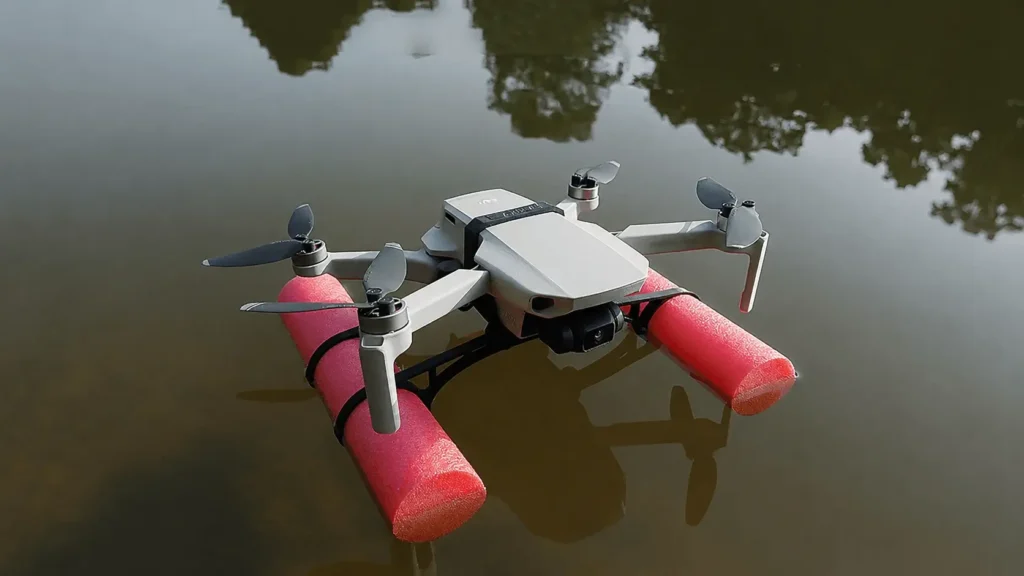
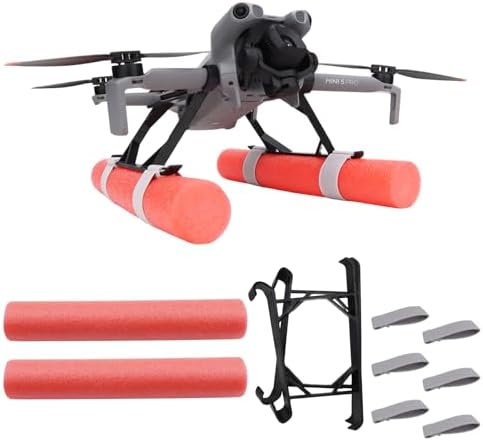
The product is a plastic cage system that attaches to the DJI Mini 2 in two parts: a top clamp and a bottom clamp. These clamps secure a set of legs to the drone’s body, and two foam floats then attach to those legs, one on each side of the aircraft. The end result is a lightweight flotation setup mounted directly beneath the drone.

How to Attach the Floats
Installation is fairly straightforward:
- Open the drone’s arms and position the bottom half of the cage underneath it. The cage locates itself naturally, with small notches that fit into the drone’s vents.
- Place the top clamp over the drone and secure both halves together with two screws. A thin rubber lining sits under the top clamp to protect the drone’s body from damage.
- Attach the foam floats to the arms extending from the cage.
One thing to watch for: the arms holding the floats to the cage are quite sharp, and they can cut into the foam if you’re not careful during attachment.
The manufacturer recommends placing the drone in water after assembly to check balance, and adjusting the floats forward or backward as needed. In practice, getting the static balance right on the water was easy, but as you’ll see below, that balance doesn’t always hold up once you try to take off.
Weight and Legal Considerations
With the floats attached, the DJI Mini 2 weighs 282 grams, enough to push it over the 250-gram threshold. This means the drone no longer qualifies for the A1 flight category once the floats are fitted, which is an important regulatory consideration before you fly.
In-Flight Performance
Beyond takeoff and landing, how the floats affect handling in the air matters just as much; an unstable accessory isn’t a safe one.
Key observations from flight testing:
- No payload mode required. Unlike some accessories (such as 360 cameras or certain safety cages), the floats didn’t trigger payload mode, which normally restricts range and altitude.
- Increased wind sensitivity. Because of the floats’ larger surface area, the drone had to work noticeably harder to hold a stationary position, and wind pushed it around more than usual. Despite this, it remained stable.
- Water drip-back. The foam floats absorb water quickly, and once airborne, the propellers blow some of that water back up around the drone body. Regular landings and wiping the drone down with a microfiber cloth are recommended to prevent excess moisture buildup.
- Stability under aggressive flying. After building up confidence with slow, gentle maneuvers, testing progressed to sharp turns, banks, Sport Mode, and aggressive strafing. Throughout all of this, the drone showed no instability, a strong indicator that the floats don’t compromise flight control even under stress.
Does It Actually Float?
Yes, but with a caveat. When placed in water, the drone floated as expected initially. However, the foam floats absorb water over time, causing the drone to gradually sink lower the longer it sits. Notably, the two floats didn’t absorb water evenly: the rear float tended to take on water faster than the front, causing the drone to list backward the longer it remained on the surface.
Takeaway: Don’t leave the drone sitting in water longer than necessary between takeoff and landing.
Takeoff From Water
The first takeoff attempt was the most nerve-wracking part of the test. As power was applied, the drone visibly banked forward, enough that the initial instinct was to abort the takeoff, fearing a nose-dive into the water.
After building up the confidence to push through it, the result was surprising: despite the dramatic forward lean, the drone pulled itself upright and lifted off smoothly and stably. This forward-banking behavior appears to be tied to the float balance, and because the floats absorb water unevenly over time, that balance can shift between attempts, meaning pilots should expect this dramatic-looking (but ultimately safe) takeoff behavior fairly consistently.
Both manual stick-controlled takeoffs and the drone’s automatic takeoff function worked without issue.
Landing on Water
Landing required a bit more mental preparation than takeoff, simply due to the inherent risk of intentionally setting a drone down on water.
- Manual landing: Flown down slowly and close to the water’s edge, the drone landed cleanly and without incident.
- Auto landing: Despite some online reports suggesting that accessories like flotation cages can interfere with or block auto-landing functionality, this was not the case in testing; auto landing worked perfectly and the drone touched down smoothly.
One important caution: landing far from shore is not advisable. Retrieval becomes far riskier the farther out the drone lands, so keeping landings close to the water’s edge is the safer approach.
Final Verdict
Across multiple takeoffs and landings, both manual and automatic, the floats performed reliably:
- The drone remained stable in flight, even under aggressive maneuvers.
- Takeoff, despite an alarming forward bank, consistently resolved into a clean, stable climb.
- Landings, both manual and automatic, were successful every time.
The main points of caution are the added weight (pushing the drone over the 250g A1 category limit), the uneven water absorption that shifts balance over time, and the general reminder not to leave the drone sitting on the water’s surface for extended periods.
For pilots looking to safely land a DJI Mini 2 on water, for photography over lakes, rivers, or coastal areas, this product delivers on its core promise.
Read More: How to Fly Your drone Over Water Safely: A Complete Guide