
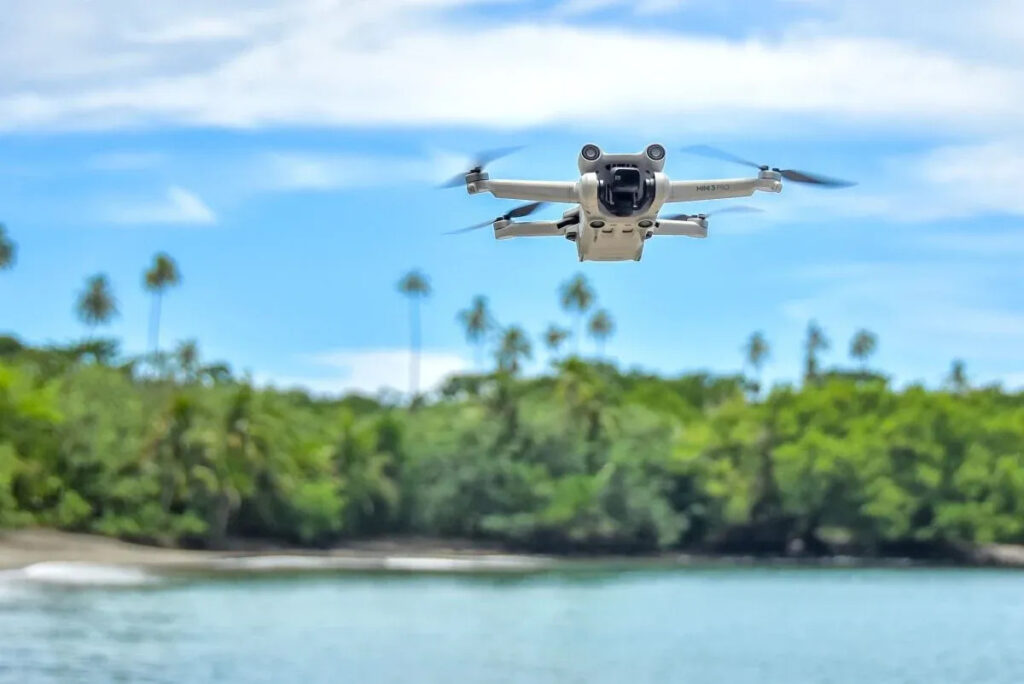
Flying your DJI Mini 2 over water can give you some genuinely stunning shots, coastlines, open ocean, lakes catching the light just right. But if you’ve ever lined up a shot over a large body of water and felt a knot in your stomach, you’re not alone. Beginners and experienced pilots alike get nervous flying over water, and honestly, that nervousness is justified. A simple shift in wind direction is sometimes all it takes for your drone to never make it back to shore.
In this guide, I’m walking through the tips I rely on to fly over water safely. Stick with it until the end, because the last section covers exactly what to do if something does go wrong, and it could genuinely save your drone.
Get Comfortable Flying Over Land First
Before you even think about heading out over open water, make sure you’re completely comfortable flying over land.
There’s a common misconception among newer pilots that flying over water is actually the safer option, since there’s less chance of hitting a tree, building, or power line. The logic seems sound on the surface, but it’s backwards. Flying over water demands more skill and more nuance than flying over land, because if something goes wrong out there, getting your drone home safely is a much harder problem to solve.
So before attempting any large body of water, get your reps in somewhere forgiving, like an open field or a large football pitch, and build up your muscle memory with the controls first.

Trust Your Drone
This one comes from experience: trust the drone’s return-to-home functionality.
I’ve personally lost signal to my DJI Mini 2 more times than I can count, and every single time, one of two things happens. Either I’m able to fly it back into range without needing the live video feed, using the mini-map in the corner of the screen as a guide, or the return-to-home feature kicks in automatically and brings it back safely on its own.
I’ve never actually lost a Mini 2. The system works. Trust it.
Don’t Let Online Scare Stories Get in Your Head
If you spend any time in drone forums or Facebook groups, you’ll come across plenty of stories about people losing their drones over water. It’s easy to let those stories talk you out of ever attempting a water shot.
But here’s the thing: nine times out of ten, those losses come down to user error, not some inherent flaw in the drone. If you follow sensible practices (the kind covered in this guide), your odds of losing a drone over water become extremely slim. It’s not impossible, but common sense goes a long way here.
Pay Close Attention to Wind Direction
This is arguably the single most critical factor when flying over water: wind, and specifically, wind direction.
The DJI Mini 2 has solid wind resistance for its size, but a strong headwind can genuinely push it to its limits. One of the most common mistakes pilots make, often only once, is flying out to sea with a tailwind behind them, only to realize on the way back that they now have a headwind fighting against them the entire return trip. The same wind that helped you glide out effortlessly is now working against you as you try to fly home.
A few practical steps to prepare for this:
- Check the wind direction before you fly. Look it up online or use a weather app ahead of time.
- Do a short test flight first. Don’t head a mile out to sea on your very first attempt. Fly a couple of hundred meters out, then turn around and fly back. Even in a strong headwind, Sport Mode should get you back on a full battery over that shorter distance, and it gives you a real sense of how the wind is affecting your return before you commit to going further.
Stay Close to the Coastline
You don’t need to fly miles out to sea to get incredible footage. In fact, a lot of the water shots I capture are taken while staying close to the coastline or cliff edge.
Flying this way still gets you the dramatic, sweeping shots over water, but if anything goes wrong, you’re never far from land. Even if you catch a headwind, flying at a slight diagonal angle back toward the shoreline will usually get you home safely, and recovery is far easier if your drone does need to land unexpectedly.
So: do that short test flight, stay close to the shoreline, and use it as an opportunity to gauge exactly how the wind is behaving that day.
One more thing worth knowing: wind speed tends to increase the higher you fly. You might find conditions feel calm at head height, but climb up toward 120 meters and suddenly you’re getting strong wind warnings on your drone. If you’re flying high and dealing with a strong headwind, try dropping your altitude. Lower down, you’ll often pick up noticeably more speed on your way back.
Always Confirm Return-to-Home Is Set
Before you fly out over the ocean, double-check that your return-to-home point is actually set.
Here’s an easy mistake to make: taking off and flying away before the GPS has fully locked in. It typically takes a few seconds after takeoff for GPS to engage, and a few more seconds after that for your drone to confirm the return-to-home point has been set. If you fly off before that confirmation comes through, your return-to-home location could end up somewhere out over the water instead of on solid ground. And if your drone ever needs to activate return-to-home and that point is set over water, that’s not going to end well.
Always let your drone hover for a moment after takeoff and confirm return-to-home is properly set before heading out.
If you’re flying from a boat, this becomes even more important. You need to continually update your return-to-home point as the boat moves. If you haven’t updated it recently and you lose connection, your drone will try to fly back to a return-to-home point that may no longer be anywhere near you, and it could attempt to land in open water.
It’s worth noting that you can change your drone’s default “loss of signal” behavior from return-to-home to hover instead. For pilots on a moving boat, this might actually make more sense, since you can navigate over to a hovering drone rather than have it fly back to an outdated location. For my own flying style (heading out over water and back to a fixed shore point) I don’t find much use for the hover setting, but it’s worth knowing it exists and considering it if you’re flying from a boat.
Remember: The DJI Mini 2 Is Not Waterproof
This might sound obvious, but there are a few less obvious ways your drone can end up damaged by water without ever actually “landing” in it.
Watch where you take off and land. If you’re flying from a beach or near the coast, avoid taking off or landing on stagnant water or even slightly wet sand. Near beaches especially, water and sand can mix on the surface, and wind can kick that mixture up around your drone. Sand and moisture together are a bad combination for any drone.
Avoid wave spray. If you’re flying low over open water, be very mindful of salty spray coming off waves. Saltwater spray can cause serious damage. This is especially important if you’re flying with your back to the waves, since a larger wave crashing up behind you could easily reach your drone and cause irreversible damage.
Always Fly on a Full Battery
Never head out over water without a fully charged battery, and there’s one specific reason for this.
If you get caught out at sea with a strong headwind pushing against you, and you need to switch into Sport Mode to fight your way back, battery drain happens fast. You can genuinely watch the percentage drop in real time. Now imagine you’re a couple of hundred meters out, fighting a headwind in Sport Mode, crawling back slowly while your battery ticks down. That’s a stressful situation on a full battery. On a half-charged one, it’s significantly more dangerous.
Starting with a full charge gives you the best possible margin of safety to make it back to land, even in a worst-case scenario.
What to Do If Something Goes Wrong
Picture this: you’re out over the water, capturing exactly the shot you wanted, feeling great about it. You turn to head home and push forward on the stick, but your drone is actually drifting backward. The wind is stronger than expected, and for a moment it doesn’t feel like you’re going to make it back.
Here are three things that will dramatically improve your odds of getting your drone home safely in that moment.
1. Don’t Use Return-to-Home in an Emergency
This might sound counterintuitive, but hear me out. When you activate return-to-home, the very first thing your drone does is climb to its programmed return-to-home altitude before flying back toward you. In an emergency wind situation, that climb wastes precious time and battery, and it also takes you higher into stronger wind. What you actually want is your drone moving forward toward you immediately, not gaining altitude first.
2. Lower Your Altitude
As mentioned earlier, wind strength increases significantly with altitude. If your drone is struggling to make headway against the wind, bring it down. Lower altitude often means substantially less wind resistance, sometimes enough that a drone that was barely holding its position suddenly starts making steady progress home. The lower you can safely fly, the better your chances.
3. Use Sport Mode, Full Throttle, and Zigzag
Switch into Sport Mode and use full throttle to get the most performance possible out of the propellers. If you’re fighting a strong headwind, try zigzagging back rather than flying straight into it. Flying at a slight diagonal angle to the wind, rather than dead into it, often lets you make more effective progress than fighting the headwind head-on.
Combine all three of these, lower altitude, Sport Mode with full throttle, and a zigzag flight path, and you give yourself a genuinely strong chance of bringing your drone home safely, even in challenging wind conditions.
Final Thoughts
Flying over water doesn’t have to be a nerve-wracking gamble. With the right preparation, checking wind direction, confirming your return-to-home point, keeping a full battery, staying close to the coastline when possible, and knowing exactly what to do if the wind turns against you, you can capture incredible water shots with confidence.
The drone is more capable than most people give it credit for. The real variable is preparation, and now you’ve got the tips to fly smart.
Read More: 34 Must-Know Tips & Settings for DJI Neo 2 (Part 2)