
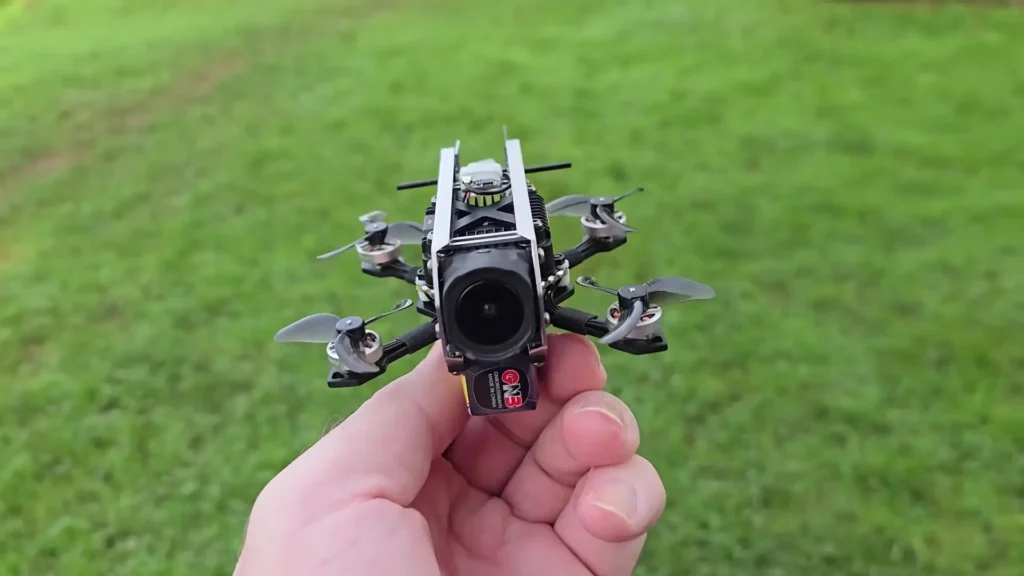
The WalleFPV Eagle 2 O4 Pro is a mini quad that stands out as one of the smallest drones on the market capable of carrying a DJI O4 Pro air unit. What makes this drone particularly appealing is the flexibility it offers in terms of how you can buy it.
You can purchase it as a bind and fly version that comes ready to go with the air unit already fitted. You can also buy it ready for you to fit your own air unit, or you can go with just the frame kit if you prefer to build it yourself.
In this review, I am going to give you a full overview of this little quad, walk you through its features and capabilities, take it out for a fly, and then at the very end share my honest thoughts.
Table of Contents
What Is in the Box
In the box, you get the drone itself along with a couple of bags of accessories. There are also a few warning notices included, letting you know that the motor direction is reversed, advising you not to modify the PIDs or firmware, reminding you not to overtighten the screws, and informing you that the power output has been limited to 80% for new users, though you can remove that limit if you want to.
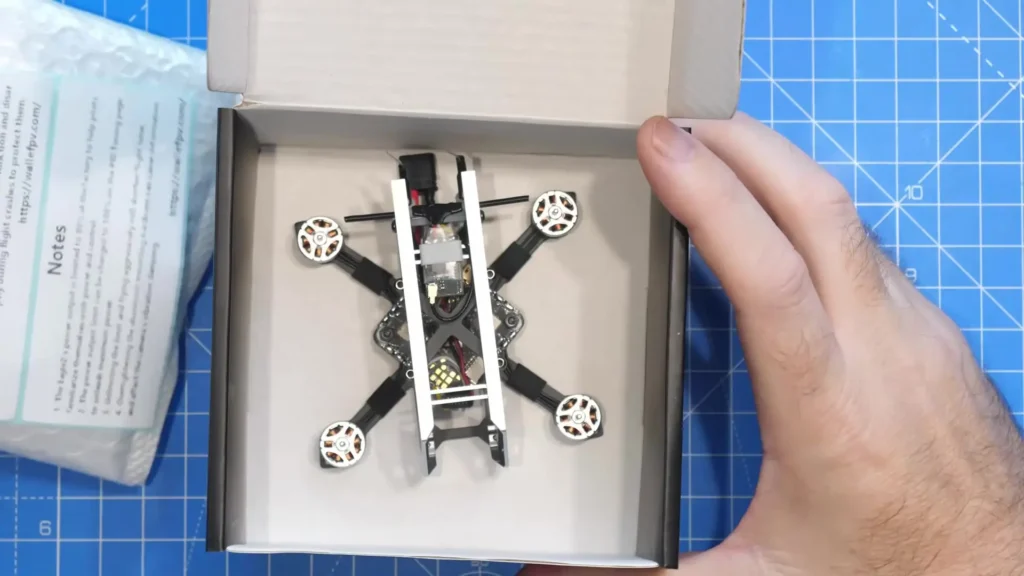
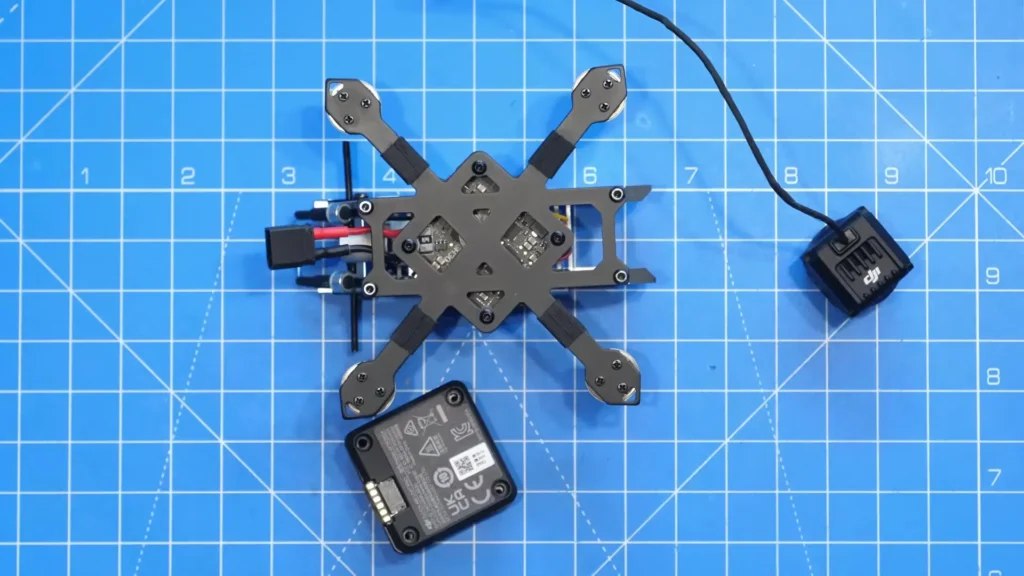
Looking around the quad, it is really nicely put together. The open frame design is something I really like, as everything is nice and easy to access while still being very tidy.
On the back, you have an XT30 connector for power, a capacitor, and the antennas are all mounted neatly in their little standoffs. The Express LRS antenna is there too, and all the motor wires are taped down cleanly as well.
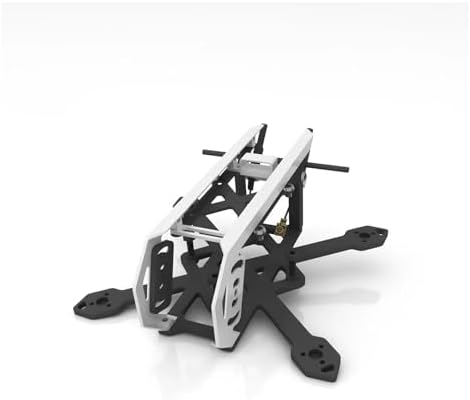
- Precise Compatibility with Specific Model: this 1.6 – inch frame kit offers a perfect fit, providing…
- Supports Multiple Devices:It can support either O4 PRO or O3 Air Unit, meeting different users’ need…
Key Specs and Components
When it comes to the main specs of the quad, it is built around the GHMCU AIO flight controller, which I believe is the GHF45. This features a 40 amp ESC using the STM32 F405 processor. It also has the ICM 4268P gyro, a barometer sensor on board, an analog OSD chip (even though it is designed for use with DJI digital), and 8 megabytes of onboard blackbox storage.
There is plenty of IO, all the usual UARTs, and a dedicated digital connector that has been pre-wired for use with DJI O4. The harness for that is located right there on the board, making it essentially plug and play with the O4 Pro air unit. Your harness is right there and your antennas are positioned ready to go.
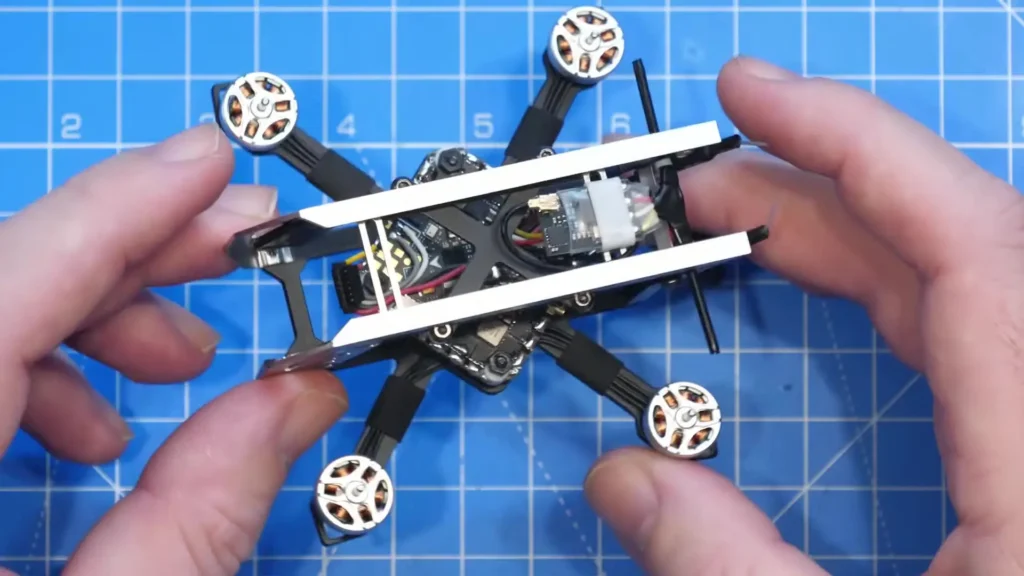
On the motor side, it is fitted with what appears to be WalleFPV’s own branded motors. These are 1002 motors running at 14,000 KV, and the kit includes 40mm props, specifically the 1.6 by 8 configuration. Regarding the ESC, it is an AIO 8-bit ESC, which means it will be running either BLHeli_S or Bluejay,
though I am not entirely certain which of the two is being used here. As for the receiver, it is an external Express LRS receiver neatly mounted on the top of the quad, made by BetaFPV and based on the SX series chipset running on 2.4 GHz.
In terms of weight, WalleFPV states that the quad comes in at around 71 grams with the DJI O4 Pro Air Unit installed. When I put it on my scales without the air unit, I got a reading of 38.7 grams. With the air unit fitted and everything assembled, I weighed in at 70.66 grams, which is just barely below the 71 grams stated on their website. So those figures are pretty accurate.
Read More: Beta FPV Aquila 20 HD FPV Kit Review
Configuration and Software
When it comes to configuration, the quad runs Betaflight and there is a micro USB port on the flight controller. However, you should not really need to do any configuration, even for the digital FPV system.
WalleFPV makes it very clear in the included leaflet and stickers not to modify the factory firmware and PID parameters. The quad comes ready to go right out of the box. They have limited the power output to 80% for new users, but you can remove that restriction if you choose to.
Accessories Included
Taking a look inside the accessory bags, the first one contains the O4 Pro camera screws along with some spare screws, which is a nice touch, and a couple of screwdrivers.
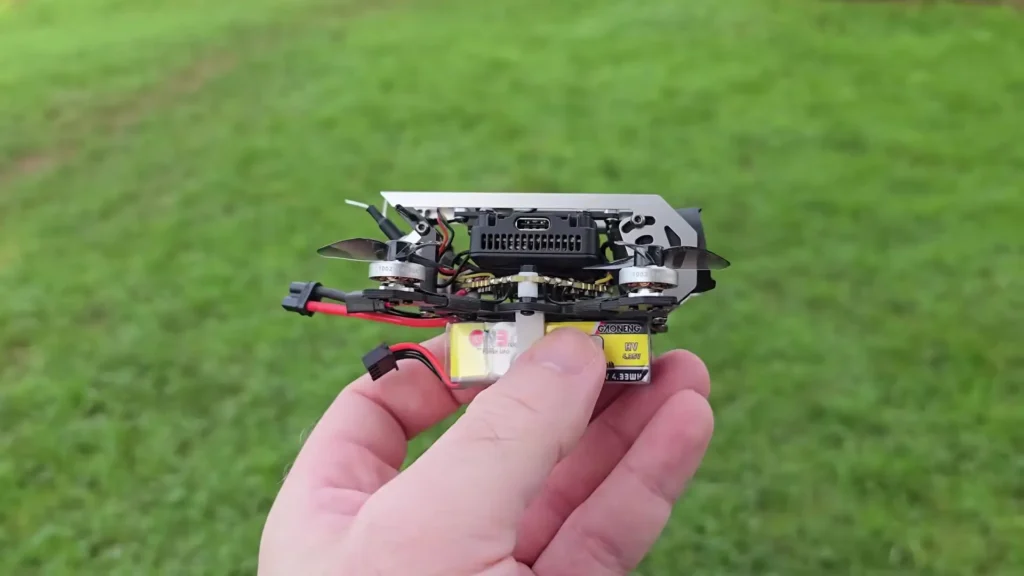
The second bag contains the props, which for this version are 40mm, along with the battery adapters that hold your battery in place at the bottom of the frame. These appear to be 3D printed from TPU and they simply clip into place on the underside of the frame, holding your battery securely.
Installing the DJI O4 Pro Air Unit
The next step was getting the DJI O4 Pro Air Unit installed, which turned out to be fairly straightforward. There is a dedicated mounting plate for it on the top of the frame, and there are also little mounts for the camera included. They do advise not to overtighten anything during installation.
Flying the WalleFPV Eagle 2 O4 Pro
One thing that came up during the first session was flight time. I started getting low battery warnings at just over 2 minutes into the flight. I later realised that I had been charging the HV batteries as standard batteries, which will have had some impact on performance and available capacity.
Regardless, it was clear that with the 380 mAh packs and a quad of this size running an DJI O4 Pro Air Unit, flight time is going to be on the shorter side.
Unstabilized Footage
After getting more time on the sticks and becoming more comfortable with how the quad handles, I shifted to recording with Rock Steady turned off. I have gyroflow data for the footage, but I have not applied any stabilisation to what you are seeing.
The footage is coming directly off the SD card, completely raw, and I have to say I am genuinely impressed. You can spot the odd little jitter and movement here and there, but for footage that has had absolutely no stabilisation applied, it is remarkably smooth. That speaks well to both the tune and the overall build quality of this little quad.
Flight Time and Performance
After putting a good number of packs through the WalleFPV Eagle 2 , I can say with confidence that the overall flight experience is a really positive one. The tune out of the box is great, the image quality from the O4 Pro system is exactly what you would expect, and the quad is simply a lot of fun to fly.
If I had one complaint, it would be flight time. Once I was charging the HV batteries correctly, I was getting just over 2 and a half minutes on the 380 mAh packs. For a quad that is supposed to be a fun little freestyle machine, that is not a lot of time to work with. If you are pushing it hard and throwing it around, you are going to chew through that flight time very quickly.
That is not necessarily a deal breaker, but it is something to be aware of when planning your flying sessions. Beyond that though, there is genuinely very little to complain about. It has got plenty of performance, the image quality is great, and it flies brilliantly right out of the box.
Read More: BETAFPV Pavo Pico 2 Review
Pricing and Options
When it comes to pricing, WalleFPV offers the WalleFPV Eagle 2 in a number of different configurations to suit different budgets and needs. The version I have been flying here, which is the bind and fly without the O4 Pro but with Express LRS 2.4 GHz, is priced at $200. If you want it with the O4 Pro and Express LRS 2.4 GHz already fitted and ready to go, that version is available for $450.
The frame kit on its own, which I also showed earlier in this review, is available for $40. For those who want everything included, WalleFPV also offers the Eagle 2 O4 Pro full kit for $1,268, covering all the components you could need. There are plenty of options available depending on what you already own and what you want to spend.
Specification
| Category | Specification |
|---|---|
| Drone Name | WalleFPV Eagle 2 O4 Pro |
| Frame Type | Open Frame Mini Quad |
| All-Up Weight | 70.66g (with O4 Pro Air Unit) |
| Weight (Without Air Unit) | 38.7g |
| Flight Controller | GHMCU AIO (GHF45) |
| Processor | STM32 F405 |
| ESC | 40 Amp AIO 8-bit (BLHeli_S / Bluejay) |
| Gyro | ICM 4268P |
| Barometer | Yes (On Board) |
| OSD Chip | Analog OSD (Digital FPV Compatible) |
| Blackbox Storage | 8MB Onboard |
| Motors | WalleFPV Branded 1002, 14,000 KV |
| Propellers | 40mm (1.6×8 Configuration) |
| Receiver | BetaFPV Express LRS (SX Series, 2.4 GHz) |
| Power Connector | XT30 |
| FPV System | DJI O4 Pro Air Unit (Compatible) |
| Video Resolution | 4K 60fps |
| Firmware | Betaflight |
| USB Port | Micro USB |
| Battery | 380 mAh 3S HV |
| Flight Time | Just over 2.5 minutes |
| Power Output Limit | 80% (Removable) |
| Frame Connector | Dedicated Digital Connector (Pre-wired for DJI O4) |
Final Thoughts
Overall, if you are in the market for a small quad built around the DJI O4 Pro system, the WalleFPV Eagle 2 O4 Pro is well worth your attention. It is one of the most enjoyable small quads I have flown in quite some time. The build quality is solid, the tune out of the box is genuinely impressive, and the footage quality you get from the O4 Pro system in such a small and light package is really something.
The flight time is the one area where this quad falls short of what you might ideally want, particularly if you are planning on flying it in a more aggressive freestyle style. The 380 mAh 3S batteries will get you a little over 2 and a half minutes of flying when charged correctly, and pushing the quad hard is going to bring that number down further.
Read More: DJI Lito X1 vs Lito 1 Comparison