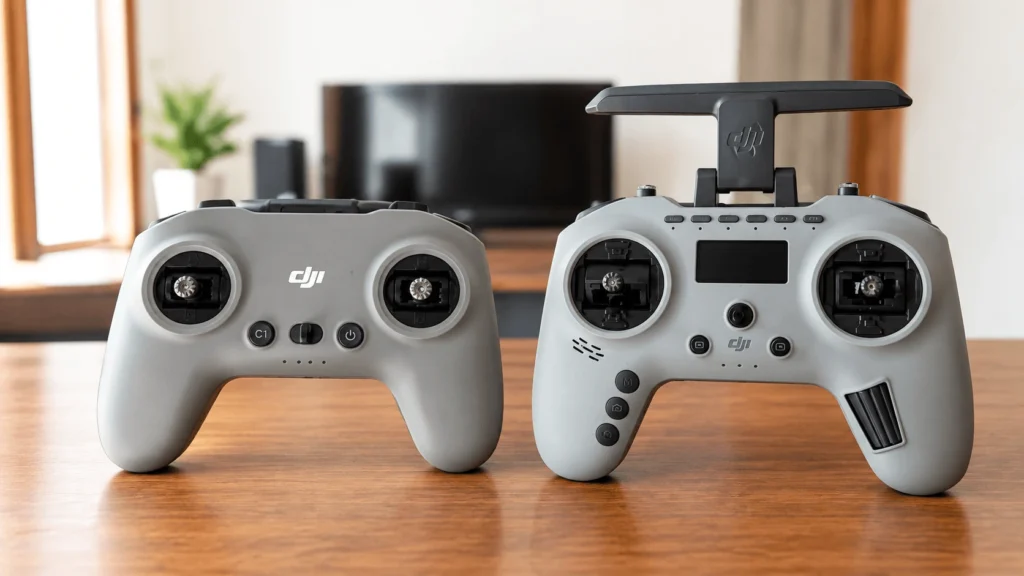

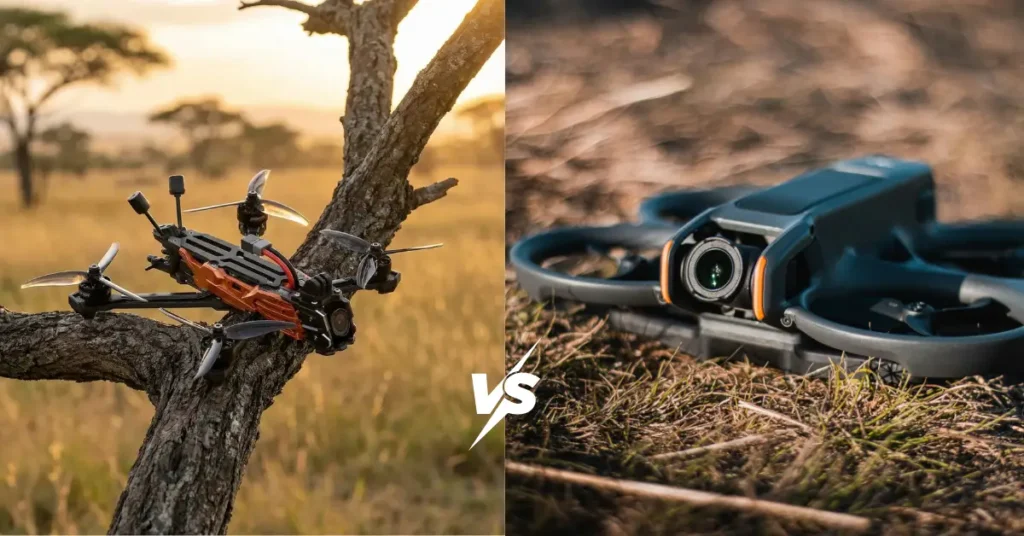
I have been flying the DJI Avata 2 for almost two years and this 5-inch FPV drone for about six months. In this article, I am going to put them head-to-head to see how they stack up across every major category that matters to FPV pilots and drone filmmakers. let see how the DJI Avata 2 vs GEPRC Vapor-D5 compare.
Table of Contents
Battery Life and Flight Time
The DJI Avata 2 is rated at 23 minutes of maximum flight time on paper. In the real world, doing cinematic flights in the 30 to 40 miles per hour range, you are realistically going to get about 8 to 10 minutes of flight time per battery.
If you push the drone harder, trying to sustain speeds over 40 or 45 miles per hour, that drops down to around 6 or 7 minutes per battery. With the GEPRC Vapor-D5 using a 1,600 or 1,800 milliamp-hour battery and flying at similar cinematic speeds of around 35 to 45 miles per hour, you get about 7 to 8 minutes of battery life.
If you cruise very gently and try to use as little power as possible, you can stretch that to about 9 or 9.5 minutes. Push it harder at 50 to 60 miles per hour or do a lot of aggressive freestyle, and it drops down to around 5 or 6 minutes.
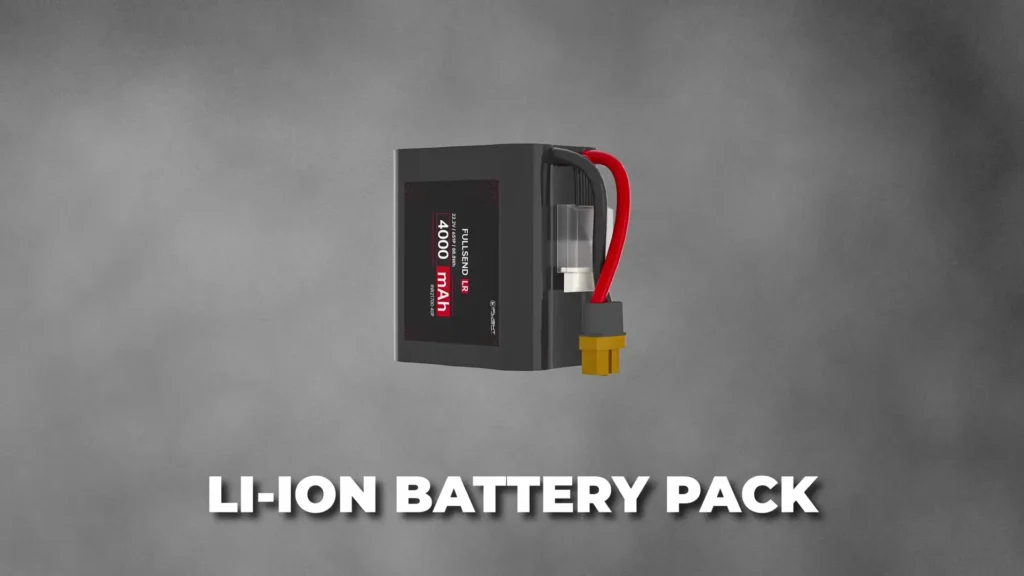
So while on paper the DJI Avata 2 looks like it has a significantly longer flight time, in real-world conditions the difference is not that dramatic. There is also the option to get lithium-ion packs for a 5-inch FPV drone.
They do not have as much punch-out power as regular lipo packs, but they are more energy dense. Reportedly, you can get 20-plus minutes of flight time with those packs, albeit at the cost of some of the extra punch-out power. Overall, battery life is a tie between these two drones.
Speed
When it comes to speed, the DJI Avata 2 comfortably cruises at around 35 miles per hour. If you push it really hard, you can get it all the way up to 55 or 60 miles per hour maximum, but at that point you are just draining the battery and the drone is not really meant to sustain those speeds for any meaningful length of time.
With the GEPRC Vapor-D5, on the other hand, you are very comfortably cruising at 40 to 45 miles per hour without even trying. If you push it a little more, you can easily sustain 55 to 60 miles per hour with no problem. And if you really want to see what it can do, the 5-inch FPV can easily hit 100 miles per hour. Speed is a big win for the GEPRC Vapor-D5.
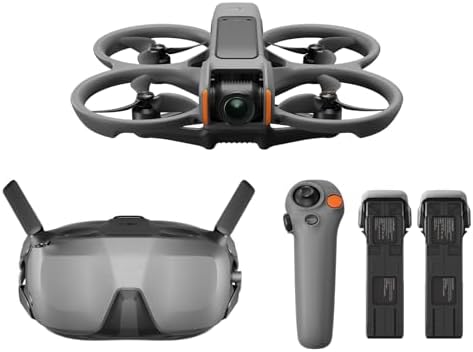
- Unlock Adrenaline-Pumping Immersive Flying – Promp…
- Intuitive Motion Control – Effortlessly control th…
- Easy Acrobatics, Fly like a pro in no time- Perfor…
Camera Options and Video Quality
The O4 Pro camera installed on the GEPRC Vapor-D5 is literally the exact same camera that is on the Avata 2. That means video quality is essentially a tie between these two drones when shooting with the built-in camera. However, the GEPRC Vapor-D5 has an edge because you can also mount a GoPro on top of it.
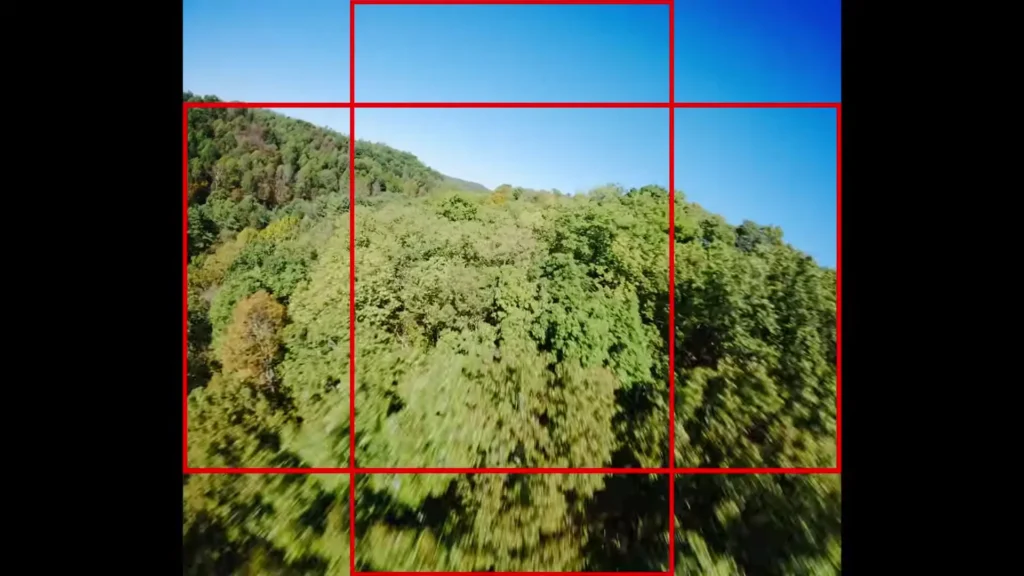
A GoPro can shoot in 5K rather than 4K, and it also shoots in an 8×7 aspect ratio, which means you can capture horizontal and vertical video simultaneously, something the Avata 2 cannot do with its 4×3 aspect ratio sensor.
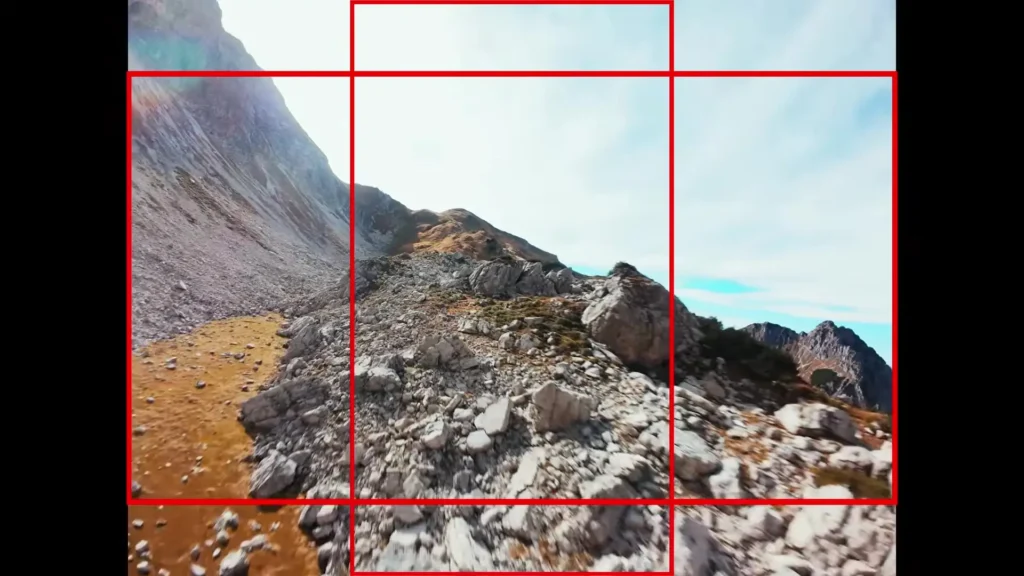
The downside of adding a GoPro is that it reduces your flight time per battery due to the added weight. For that reason, most pilots end up just using the built-in camera. But the ability to carry a GoPro gives the 5-inch FPV a meaningful edge in this category.
Control and Video Transmission Range
If you are using an O4 Pro system in your FPV drone, the video transmission system is essentially the same as what is in the Avata 2. Through real-world testing, the range on both systems was found to be quite similar. This category is a tie.
Read More: DJI Avata 360 VS Antigravity A1
Batteries
When it comes to the cost of batteries, the GEPRC Vapor-D5 wins by a wide margin. Lipo batteries for the 5-inch FPV cost around $35 each, compared to around $110 each for Avata 2 batteries. That means you can get three batteries for the 5-inch FPV drone for less than the cost of a single Avata 2 battery.

Even if the lipo batteries are somewhat easier to damage, they are far easier and cheaper to replace, and you can stock up on a large number of them without breaking the bank.
However, managing raw lipo batteries requires significantly more knowledge and attention than simply plugging a DJI battery into a charger. With FPV lipo batteries, you need to charge them at the right speed and to the right voltage to avoid degrading the battery or, in serious cases, causing a fire.
It is not that difficult once you learn the process, but it is a real learning curve compared to the fully automated DJI battery management system. You also have to monitor voltage while flying, making sure it does not drop too far below 3.5 volts, and you need to manually discharge your batteries to around 3.8 volts for storage rather than leaving them fully charged.
Because storing them fully charged will degrade their capacity over time. The Avata 2 handles all of this automatically. So while the GEPRC Vapor-D5 wins on battery cost, the Avata 2 wins decisively on ease of battery management.
Learning Curve
There is definitely a significantly larger learning curve with the GEPRC Vapor-D5 compared to the Avata 2. There is more to figure out during setup and more to learn about flying and managing the drone safely.
The DJI Avata 2, by contrast, works right out of the box. There is really nothing to figure out technically. The only thing you need to learn is the actual skill of flying FPV in the first place.
The Avata 2 also allows you to get the experience of flying in goggles while still in GPS mode, which gives beginners a much safer environment to build their skills.
And the pause button on the remote is always there to save you if you get disoriented, which is something the 5-inch FPV simply does not offer. The Avata 2 wins this category clearly on both learning curve and ease of use.

- O4 Air Unit Pro features a powerful CMOS sensor for improved…
- CNC aluminum lens housing for a durable, bold design.
- GEPRC SPEEDX2 E-series motors for smooth, powerful performan…
Durability and Crash Resistance
In the durability category, the GEPRC Vapor-D5 wins without question. Five-inch drones like this are built like absolute tanks. Through testing, it was flown into trees, into wires, and into various other obstacles, and the only things that broke were props.
Even after all of that abuse, the drone just keeps working. That is the general philosophy behind how real FPV drones are built. The Avata 2 is considerably tougher than your standard DJI camera drone, and it deserves credit for that.
But arms have been broken on multiple Avata units, and overall it is simply not in the same league as a 5-inch FPV when it comes to raw crash resistance.
Safety
When it comes to safety, the Avata 2 takes this category. The ducted props on the Avata 2 mean that the spinning blades are enclosed and not exposed near people or objects. The GEPRC Vapor-D5, by contrast, has relatively large, extremely fast-spinning exposed props that can cause serious damage to people or property if something goes wrong.
The Avata 2 also has more fail-safes built in, including the emergency pause button and GPS-assisted stability. The 5-inch FPV is harder to take off and land because everything is in manual mode, and flying it responsibly requires a greater level of awareness and caution.
Flying a 5-inch FPV definitely feels like more of a responsibility. Most pilots would not fly a 5-inch drone in as close proximity to people or in as tight of spaces as they would with an Avata 2. Safety is a clear win for the Avata 2.
Read More: GEPRC DarkStar 16 vs DarkStar 22 vs Cinelog 30 V3
GPS Failsafe
The DJI Avata 2 is a DJI drone, which means it comes with DJI’s world-class GPS return-to-home system. If you lose signal to the drone, it will automatically navigate back to you.
The GEPRC Vapor-D5 does have GPS failsafe capability if you equip it with a GPS unit, but the level of integration and the proven track record of DJI’s system is simply not matched by what you get on the 5-inch FPV. The Avata 2 wins this category.
Fun Factor
When it comes to which drone is more fun to fly, the GEPRC Vapor-D5 wins this one. The experience of flying a 5-inch FPV is just way more thrilling, way more adrenaline-filled, and far more dynamic.
The amount of power this drone has is extraordinary, and the range of fun freestylish maneuvers you can do with it is something the Avata 2 simply cannot compete with.
That said, the Avata 2 is genuinely a ton of fun too. It provides real enjoyment and plenty of exciting flying experiences. But once you have flown a proper 5-inch FPV, it is hard to go back. The GEPRC Vapor-D5 wins the fun category.
Cost and Repairability
The DJI Avata 2 comes in at around $450 for just the drone, without extra batteries, a controller, or goggles. The GEPRC Vapor-D5 comes in at around $550 if you purchase it in the US.
You can get it somewhat cheaper through AliExpress or Banggood from China, but shipping can take several weeks and there is always some risk of the package getting lost in transit. Keeping the comparison fair, the 5-inch FPV is about $100 more expensive.
However, the GEPRC Vapor-D5 uses standard parts that can be sourced and swapped out if something breaks, which gives it a significant advantage when it comes to long-term repairability. The Avata 2 does not offer that kind of modularity.
It is also worth noting that outside the US, DJI still offers Care Refresh, which provides up to four replacements over two years for $50 to $100 each. That is a very reasonable deal, and in those markets it largely takes away the repairability advantage of the 5-inch FPV.
In the US, however, DJI Care Refresh is no longer available for the Avata 2, which makes repairability a meaningful advantage for the GEPRC Vapor-D5. Overall, this category is a tie.
Cinematic Potential
Neither drone clearly wins the cinematic category because they are simply better suited to different types of shots. The DJI Avata 2 is the better choice for shots where you are flying closer to subjects, moving at slower speeds, and needing precise control in tight spaces.
It also holds up well for certain long-range shots. The tradeoff is that your footage will often be a bit slower and may need to be sped up in post-production.
The GEPRC Vapor-D5, on the other hand, is far better for high-speed shots, less close-in work, chasing fast-moving subjects, and any situation where you need the power to navigate challenging environments and punch out of trouble quickly.
Both drones have distinct cinematic strengths and weaknesses, and the best choice depends entirely on the kind of shots you are trying to create.
So Which Drone Should You Choose?
Both of these drones have a real place in a drone filmmaker’s toolkit, and both continue to get regular use for different purposes.
The DJI Avata 2 is the right choice for slower, more deliberate shots. It is what you reach for when you want to get closer to your subject, when you need the ability to hover in place if something goes wrong, or when you want to fly through extremely tight spaces in GPS mode with the confidence of automated safety systems behind you.
It is also the better choice for newer pilots who are still building their skills, and for situations where you need to fly near people or in sensitive environments where safety is the top priority.
The GEPRC Vapor-D5 is the right choice when you want to go further, faster, and get more high-energy cinematic shots. It is also the drone you reach for when you just want to have an absolutely amazing time flying.
The raw power, the speed, the crash resistance, and the pure thrill of flying a proper 5-inch FPV drone make it a completely different experience, and one that is very difficult to give up once you have had a taste of it.
Comparison Table
| Category | DJI Avata 2 | GEPRC Vapor-D5 | Winner |
|---|---|---|---|
| Battery Life | 8-10 min (cinematic), 6-7 min (fast) | 7-8 min (cinematic), 5-6 min (fast) | Tie |
| Top Speed | ~55-60 mph max | 100+ mph | GEPRC Vapor-D5 |
| Cruise Speed | ~35 mph | 40-45 mph | GEPRC Vapor-D5 |
| Camera Quality | O4 Pro (4K, 4×3) | O4 Pro (4K) + GoPro option (5K, 8×7) | GEPRC Vapor-D5 |
| Video Transmission | O4 Pro system | O4 Pro system | Tie |
| Battery Cost | ~$110 each | ~$35 each | GEPRC Vapor-D5 |
| Battery Management | Fully automatic | Manual monitoring required | DJI Avata 2 |
| Learning Curve | Beginner friendly | Steep learning curve | DJI Avata 2 |
| Durability | Moderate (arms break) | Tank-like (props only break) | GEPRC Vapor-D5 |
| Safety | Ducted props, panic button, GPS | Exposed props, manual control | DJI Avata 2 |
| GPS Failsafe | DJI world-class RTH | Basic GPS (less proven) | DJI Avata 2 |
| Fun Factor | High | Extremely high | GEPRC Vapor-D5 |
| Price | ~$450 | ~$550 (US) | DJI Avata 2 |
| Repairability | Limited (no DJI Care in US) | Standard swappable parts | Tie |
| Cinematic Use | Slow, close, tight spaces | Fast, high-energy, chase shots | Tie |
| Flight Modes | Normal / Sport / Acro / GPS | Acro / Angle (no GPS mode) | DJI Avata 2 |
Article Summary
The bottom line is that if you can only choose one, your decision should be based on your current skill level, your intended use case, and how much you are willing to invest in learning the additional technical side of FPV flying. But if you can fly both, they complement each other beautifully and cover a wide range of situations that neither could handle as well on its own.
Read More: WalleFPV Eagle 2 O4 Pro Review